Irwin Shaw - The Young Lions
Здесь есть возможность читать онлайн «Irwin Shaw - The Young Lions» весь текст электронной книги совершенно бесплатно (целиком полную версию без сокращений). В некоторых случаях можно слушать аудио, скачать через торрент в формате fb2 и присутствует краткое содержание. Жанр: Классическая проза, на английском языке. Описание произведения, (предисловие) а так же отзывы посетителей доступны на портале библиотеки ЛибКат.
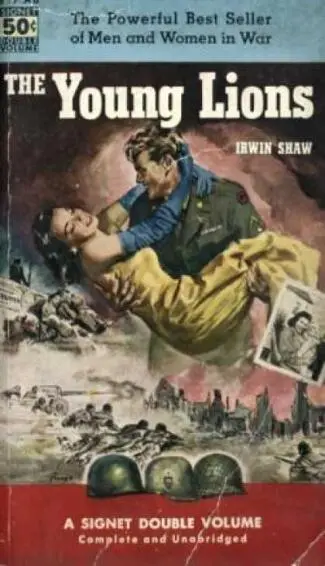
- Название:The Young Lions
- Автор:
- Жанр:
- Год:неизвестен
- ISBN:нет данных
- Рейтинг книги:4 / 5. Голосов: 1
-
Избранное:Добавить в избранное
- Отзывы:
-
Ваша оценка:
The Young Lions: краткое содержание, описание и аннотация
Предлагаем к чтению аннотацию, описание, краткое содержание или предисловие (зависит от того, что написал сам автор книги «The Young Lions»). Если вы не нашли необходимую информацию о книге — напишите в комментариях, мы постараемся отыскать её.
The Young Lions — читать онлайн бесплатно полную книгу (весь текст) целиком
Ниже представлен текст книги, разбитый по страницам. Система сохранения места последней прочитанной страницы, позволяет с удобством читать онлайн бесплатно книгу «The Young Lions», без необходимости каждый раз заново искать на чём Вы остановились. Поставьте закладку, и сможете в любой момент перейти на страницу, на которой закончили чтение.
Интервал:
Закладка:
"Hello, Tom," he said. "It's not poverty. It's just that I don't have the necessary quarters and dimes."
"Hello, Michael," Cahoon said, sounding very pleased. "It's all right. I'll take it off my income tax."
"Tom," Michael said, "listen carefully. Do you know anybody in the Special Services Division in New York, the people who put on shows and camp entertainments and things like that?"
"Yes," Cahoon said. "Quite a few people. I work with them all the time."
"I'm tired of the infantry," Michael said. "Will you try to arrange a transfer for me? I want to get out of this country. There are Special Services units going overseas every day. Can you get me into one of them?"
There was a slight pause at the other end of the wire. "Oh," Cahoon said, and there was a tinge of disappointment and reproof in his voice. "Of course. If you want it."
"I'll send you a special-delivery letter tonight," Michael said.
"Serial number, rank, and unit designation. You'll need that."
"Yes," said Cahoon. "I'll get right on to it." Still the slight coolness in his voice.
"I'm sorry, Tom," Michael said. "I can't explain why I'm doing this over the phone. It will have to wait until I get there."
"You don't have to explain anything to me," Cahoon said.
"You know that. I'm sure you have your reasons."
"Yes," said Michael. "I have my reasons. Thanks again. Now I have to get off. There's an expectant sergeant here who wants to call the maternity ward of the Dallas City Hospital."
"Good luck, Michael," Cahoon said, and Michael could sense the effort at warmth that Cahoon put into the words, almost convincingly.
"Goodbye. I hope I see you soon."
"Of course," Cahoon said. "Of course you will."
Michael hung up and opened the door of the booth. He stepped out and a large, sad-looking Technical Sergeant, with a handful of quarters, flung himself on to the small bench under the phone.
Michael went out into the street and walked down the saloon-lined pavement, in the misty neon glow, to the USO establishment at the end of the block. He sat at one of the spindly desks among the sprawling soldiers, some of them sleeping in wretched positions in the battered chairs, others writing with painful intensity at the desks.
I'm doing it, Michael thought, as he pulled a piece of paper towards him and opened his fountain pen, I'm doing what I said I'd never do, what none of these weary, innocent boys could ever do. I'm using my friends and their influence and my civilian privileges. Cahoon is right perhaps to be disappointed. It was easy to imagine what Cahoon must be thinking now, sitting near the phone, in his own apartment, over which he had just spoken to Michael. Intellectuals, Cahoon probably was thinking; they're all alike, no matter what they say. When it finally gets down to it, they pull back. When the sound of the guns finally draws close, they suddenly find they have more important business elsewhere…
He would have to tell Cahoon about Colclough, about the man in the office at the FBI, who approved of Franco, but not of Roosevelt, who had your ultimate fate at the tip of his pencil, and against whom no redress, no appeal, was possible. He would have to tell him about Ackerman and the ten bloody fights before the pitiless eyes of the Company. He would have to tell him what it was like to be under the command of a man who wanted to see you killed. Civilians couldn't really understand things like that, but he would have to try to tell. It was the big difference between civilian life and life in a military establishment. An American civilian always could feel that he could present his case to some authorities who were committed to the idea of justice. But a soldier… You lost any hope of appeal to anyone when you put on your first pair of Army shoes. "Tell it to the Chaplain, Bud, and get a TS slip."
He would try to explain it to Cahoon, and he knew Cahoon would try to understand. But even so, at the end, he knew that that little echo of disappointment would never finally leave Cahoon's voice. And, being honest with himself, Michael knew that he would not blame Cahoon, because the echo of disappointment in himself would never fully leave his own consciousness, either.
He started to write the letter to Cahoon, carefully printing out his serial number and unit, feeling, as he wrote the familiar ciphers that would seem so unfamiliar to Cahoon, that he was writing a letter to a stranger.
CHAPTER EIGHTEEN
"I'm afraid this may sound crazy," Captain Lewis read, "and I'm not crazy, and I don't want anyone to think that I am. This is being written in the main reading-room of the New York Public Library on Fifth Avenue and 42nd Street at five o'clock in the afternoon. I have a copy of the Articles of War in front of me on the table and a volume of Winston Churchill's biography of the Duke of Marlborough and the man next to me is taking notes from Spinoza's Ethics. I tell you these things to show you that I know what I am doing and that my powers of reason and observation are in no way impaired…"
"In all my time in the Army," Captain Lewis said to the WAC secretary who sat at the next desk, "I never read anything like this. Where did we get this from?"
"The Provost Marshal's office sent it over," the WAC said.
"They want you to go and look at the prisoner and tell them whether you think he's faking lunacy or not."
"I am going to finish writing this letter," Captain Lewis read, "and then I am going to get on the subway to the Battery and take the ferry to Governor's Island, and give myself up."
Captain Lewis sighed, and for a moment he was sorry that he had studied psychiatry. Almost any other job in the Army, he felt, would be simpler and more rewarding.
"First of all," the letter went on, in the nervous, irregular handwriting on the flimsy paper, "I want to make it clear that no one helped me leave the camp, and no one knew that I was going to do it. My wife is not to be bothered, either, because I have refrained from going to see her or getting in touch with her in any way since I arrived in New York. I had to figure this question out and I did not wish to be swayed one way or another by any claims of sentiment. No one in New York has sheltered me or even spoke to me since I arrived two weeks ago, and I have not even by accident met anyone I ever knew. I have walked around most of the day and slept at night in various hotels. I still have seven dollars, which would have kept me going for three or four more days, but slowly my mind has been made up on the proper course that I must follow, and I do not wish to delay any longer."
Captain Lewis looked at his watch. He had a date for lunch in the city and he didn't want to be late. He got up and put on his coat and tucked the letter into his pocket, to be read on the ferry.
"If anybody wants to know where I am," Captain Lewis said to the WAG, "I am visiting the hospital."
"Yes, Sir," the girl said gravely.
Captain Lewis put on his cap and went out. It was a sunny, windy day, and across the harbour New York City, rooted in the green water, stood secure against the gale. Captain Lewis experienced the usual little twinge when he saw the city standing there, peaceful, tall and shining, and hardly the place for a soldier to spend the war. But he saluted with snap and precision in answer to the salutes of the enlisted men who passed him on the way down to the ferry, and he felt more soldierly by the time he went forward to the section of the upper deck reserved for officers and their families. Captain Lewis was not a bad man, and he suffered often from pangs of guilt and conscience, which he dutifully recognized. He would undoubtedly have been brave and useful if the Army had put him into a place of danger and responsibility. But he was having a good time in New York. He lived at a good hotel at a cut military rate; his wife remained home in Kansas City with the children, and he was sleeping with two girls who worked as models and did Red Cross things on the side, both of them prettier and more expert than any girl he had ever known before. Every once in a while he woke up gloomily in the morning and resolved that his time-wasting must come to a halt, that he must ask for a more active assignment in a combat zone, or at least take some steps to inject some real vitality into his own work on the Island. But after a morning or two of grumbling and cleaning out his desk and complaining to Colonel Bruce, he relaxed again and drifted back into the easy-going routine as before.
Читать дальшеИнтервал:
Закладка:
Похожие книги на «The Young Lions»
Представляем Вашему вниманию похожие книги на «The Young Lions» списком для выбора. Мы отобрали схожую по названию и смыслу литературу в надежде предоставить читателям больше вариантов отыскать новые, интересные, ещё непрочитанные произведения.








Обсуждение, отзывы о книге «The Young Lions» и просто собственные мнения читателей. Оставьте ваши комментарии, напишите, что Вы думаете о произведении, его смысле или главных героях. Укажите что конкретно понравилось, а что нет, и почему Вы так считаете.