Herman Melville - Billy Budd
Здесь есть возможность читать онлайн «Herman Melville - Billy Budd» весь текст электронной книги совершенно бесплатно (целиком полную версию без сокращений). В некоторых случаях можно слушать аудио, скачать через торрент в формате fb2 и присутствует краткое содержание. Жанр: Классическая проза, на английском языке. Описание произведения, (предисловие) а так же отзывы посетителей доступны на портале библиотеки ЛибКат.
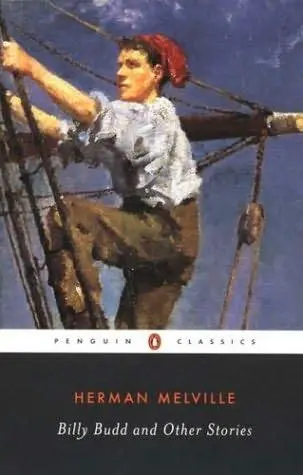
- Название:Billy Budd
- Автор:
- Жанр:
- Год:неизвестен
- ISBN:нет данных
- Рейтинг книги:4 / 5. Голосов: 2
-
Избранное:Добавить в избранное
- Отзывы:
-
Ваша оценка:
Billy Budd: краткое содержание, описание и аннотация
Предлагаем к чтению аннотацию, описание, краткое содержание или предисловие (зависит от того, что написал сам автор книги «Billy Budd»). Если вы не нашли необходимую информацию о книге — напишите в комментариях, мы постараемся отыскать её.
The main theme of the novel, however, is generally considered to be the vulnerability of innocence in a fallen world. Billy, a victim of one man's unnatural hatred, is the embodiment of goodness destroyed by evil, but as "the criminal pays the penalty of his crime", a greater justice comes into play.
The original source for this text has not been identified. The text has been checked for italics against Harrison Hayford and Merton M. Sealts, Jr., eds, Billy Budd: Sailor (An Inside Narrative) (Chicago: University of Chicago Press, 1962).
Published: 1924
Billy Budd — читать онлайн бесплатно полную книгу (весь текст) целиком
Ниже представлен текст книги, разбитый по страницам. Система сохранения места последней прочитанной страницы, позволяет с удобством читать онлайн бесплатно книгу «Billy Budd», без необходимости каждый раз заново искать на чём Вы остановились. Поставьте закладку, и сможете в любой момент перейти на страницу, на которой закончили чтение.
Интервал:
Закладка:
"Say what?" demanded Billy.
"Why, Jimmy Legs is down on you."
"And what," rejoined Billy in amazement, "has Jimmy Legs to do with that cracked afterguardsman?"
"Ho, it was an afterguardsman then. A cat's-paw, a cat's-paw!" And with that exclamation, which, whether it had reference to a light puff of air just then coming over the calm sea, or subtler relation to the afterguardsman there is no telling, the old Merlin gave a twisting wrench with his black teeth at his plug of tobacco, vouchsafing no reply to Billy's impetuous question, tho' now repeated, for it was his wont to relapse into grim silence when interrogated in skeptical sort as to any of his sententious oracles, not always very clear ones, rather partaking of that obscurity which invests most Delphic deliverances from any quarter.
Long experience had very likely brought this old man to that bitter prudence which never interferes in aught and never gives advice.
CHAPTER 17
Yes, despite the Dansker's pithy insistence as to the Master-at-arms being at the bottom of these strange experiences of Billy on board the Indomitable , the young sailor was ready to ascribe them to almost anybody but the man who, to use Billy's own expression, "always had a pleasant word for him." This is to be wondered at. Yet not so much to be wondered at. In certain matters, some sailors even in mature life remain unsophisticated enough. But a young seafarer of the disposition of our athletic Foretopman, is much of a child-man. And yet a child's utter innocence is but its blank ignorance, and the innocence more or less wanes as intelligence waxes. But in Billy Budd intelligence, such as it was, had advanced, while yet his simplemindedness remained for the most part unaffected. Experience is a teacher indeed; yet did Billy's years make his experience small. Besides, he had none of that intuitive knowledge of the bad which in natures not good or incompletely so foreruns experience, and therefore may pertain, as in some instances it too clearly does pertain, even to youth.
And what could Billy know of man except of man as a mere sailor? And the old-fashioned sailor, the veritable man-before-the-mast, the sailor from boyhood up, he, tho' indeed of the same species as a landsman, is in some respects singularly distinct from him. The sailor is frankness, the landsman is finesse. Life is not a game with the sailor, demanding the long head; no intricate game of chess where few moves are made in straightforwardness, and ends are attained by indirection; an oblique, tedious, barren game hardly worth that poor candle burnt out in playing it.
Yes, as a class, sailors are in character a juvenile race. Even their deviations are marked by juvenility. And this more especially holding true with the sailors of Billy's time. Then, too, certain things which apply to all sailors, do more pointedly operate, here and there, upon the junior one. Every sailor, too, is accustomed to obey orders without debating them; his life afloat is externally ruled for him; he is not brought into that promiscuous commerce with mankind where unobstructed free agency on equal terms — equal superficially, at least — soon teaches one that unless upon occasion he exercise a distrust keen in proportion to the fairness of the appearance, some foul turn may be served him. A ruled undemonstrative distrustfulness is so habitual, not with business-men so much, as with men who know their kind in less shallow relations than business, namely, certain men-of-the-world, that they come at last to employ it all but unconsciously; and some of them would very likely feel real surprise at being charged with it as one of their general characteristics.
CHAPTER 18
But after the little matter at the mess Billy Budd no more found himself in strange trouble at times about his hammock or his clothesbag or what not. While, as to that smile that occasionally sunned him, and the pleasant passing word, these were if not more frequent, yet if anything, more pronounced than before.
But for all that, there were certain other demonstrations now. When Claggart's unobserved glance happened to light on belted Billy rolling along the upper gun deck in the leisure of the second dog-watch, exchanging passing broadsides of fun with other young promenaders in the crowd; that glance would follow the cheerful sea-Hyperion with a settled meditative and melancholy expression, his eyes strangely suffused with incipient feverish tears. Then would Claggart look like the man of sorrows. Yes, and sometimes the melancholy expression would have in it a touch of soft yearning, as if Claggart could even have loved Billy but for fate and ban. But this was an evanescence, and quickly repented of, as it were, by an immitigable look, pinching and shrivelling the visage into the momentary semblance of a wrinkled walnut. But sometimes catching sight in advance of the Foretopman coming in his direction, he would, upon their nearing, step aside a little to let him pass, dwelling upon Billy for the moment with the glittering dental satire of a Guise. But upon any abrupt unforeseen encounter a red light would flash forth from his eye like a spark from an anvil in a dusk smithy. That quick fierce light was a strange one, darted from orbs which in repose were of a color nearest approaching a deeper violet, the softest of shades.
Tho' some of these caprices of the pit could not but be observed by their object, yet were they beyond the construing of such a nature. And the thews of Billy were hardly compatible with that sort of sensitive spiritual organisation which in some cases instinctively conveys to ignorant innocence an admonition of the proximity of the malign. He thought the Master-at-arms acted in a manner rather queer at times. That was all. But the occasional frank air and pleasant word went for what they purported to be, the young sailor never having heard as yet of the "too fair-spoken man."
Had the Foretopman been conscious of having done or said anything to provoke the ill will of the official, it would have been different with him, and his sight might have been purged if not sharpened. As it was, innocence was his blinder.
So was it with him in yet another matter. Two minor officers — the Armorer and Captain of the Hold, with whom he had never exchanged a word, his position in the ship not bringing him into contact with them; these men now for the first began to cast upon Billy when they chanced to encounter him, that peculiar glance which evidences that the man from whom it comes has been some way tampered with and to the prejudice of him upon whom the glance lights. Never did it occur to Billy as a thing to be noted or a thing suspicious, tho' he well knew the fact, that the Armorer and Captain of the Hold, with the ship's-yeoman, apothecary, and others of that grade, were by naval usage, messmates of the Master-at-arms, men with ears convenient to his confidential tongue.
But the general popularity that our Handsome Sailor's manly forwardness bred upon occasion, and his irresistible good-nature, indicating no mental superiority tending to excite an invidious feeling, this good will on the part of most of his shipmates made him the less to concern himself about such mute aspects toward him as those whereto allusion has just been made, aspects he could not fathom as to infer their whole import.
As to the afterguardsman, tho' Billy for reasons already given necessarily saw little of him, yet when the two did happen to meet, invariably came the fellow's off-hand cheerful recognition, sometimes accompanied by a passing pleasant word or two. Whatever that equivocal young person's original design may really have been, or the design of which he might have been the deputy, certain it was from his manner upon these occasions, that he had wholly dropped it.
Читать дальшеИнтервал:
Закладка:
Похожие книги на «Billy Budd»
Представляем Вашему вниманию похожие книги на «Billy Budd» списком для выбора. Мы отобрали схожую по названию и смыслу литературу в надежде предоставить читателям больше вариантов отыскать новые, интересные, ещё непрочитанные произведения.






Обсуждение, отзывы о книге «Billy Budd» и просто собственные мнения читателей. Оставьте ваши комментарии, напишите, что Вы думаете о произведении, его смысле или главных героях. Укажите что конкретно понравилось, а что нет, и почему Вы так считаете.