William Maugham - Theatre
Здесь есть возможность читать онлайн «William Maugham - Theatre» весь текст электронной книги совершенно бесплатно (целиком полную версию без сокращений). В некоторых случаях можно слушать аудио, скачать через торрент в формате fb2 и присутствует краткое содержание. Жанр: Классическая проза, на английском языке. Описание произведения, (предисловие) а так же отзывы посетителей доступны на портале библиотеки ЛибКат.
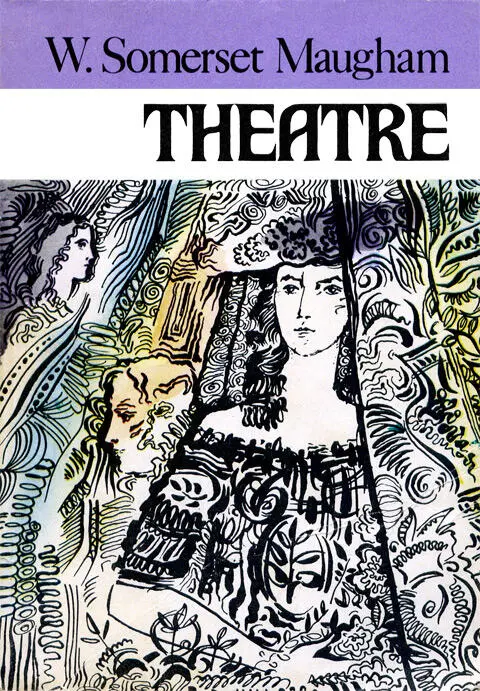
- Название:Theatre
- Автор:
- Жанр:
- Год:неизвестен
- ISBN:нет данных
- Рейтинг книги:3 / 5. Голосов: 2
-
Избранное:Добавить в избранное
- Отзывы:
-
Ваша оценка:
Theatre: краткое содержание, описание и аннотация
Предлагаем к чтению аннотацию, описание, краткое содержание или предисловие (зависит от того, что написал сам автор книги «Theatre»). Если вы не нашли необходимую информацию о книге — напишите в комментариях, мы постараемся отыскать её.
is both a tribute to a world from which he had retired and a persuasive testimony to his enthusiasm for drama and the stage.
Theatre — читать онлайн бесплатно полную книгу (весь текст) целиком
Ниже представлен текст книги, разбитый по страницам. Система сохранения места последней прочитанной страницы, позволяет с удобством читать онлайн бесплатно книгу «Theatre», без необходимости каждый раз заново искать на чём Вы остановились. Поставьте закладку, и сможете в любой момент перейти на страницу, на которой закончили чтение.
Интервал:
Закладка:
‘Well, good night, old boy.’
And Tom’s hearty answer: ‘So long, old man.’
‘Idiots!’ she said to herself crossly.
Next morning while she was having her breakfast Michael came into Julia’s room.
‘The boys have gone off to play golf at Huntercombe. They want to play a couple of rounds and they asked if they need come back to lunch. I told them that was quite all right.’
‘I don’t know that I particularly like the idea of Tom treating the house as if it was a hotel.’
‘Oh, my dear, they’re only a couple of kids. Let them have all the fun they can get, I say.’
She would not see Tom at all that day, for she had to start for London between five and six in order to get to the theatre in good time. It was all very well for Michael to be so damned good-natured about it. She was hurt. She felt a little inclined to cry. He must be entirely indifferent to her, it was Tom she was thinking of now; and she had made up her mind that today was going to be quite different from the day before. She had awakened determined to be tolerant and to take things as they came, but she hadn’t been prepared for a smack in the face like this.
‘Have the papers come yet?’ she asked sulkily.
She drove up to town with rage in her heart.
The following day was not much better. The boys did not go off to play golf, but they played tennis. Their incessant activity profoundly irritated Julia. Tom in shorts, with his bare legs, and a cricket shirt, really did not look more than sixteen. Bathing as they did three or four times a day he could not get his hair to stay down, and the moment it was dry it spread over his head in unruly curls. It made him look younger than ever, but oh, so charming. Julia’s heart was wrung. And it seemed to her that his demeanour had strangely changed; in the constant companionship of Roger he had shed the young man about town who was so careful of his dress, so particular about wearing the right thing, and was become again a sloppy little schoolboy. He never gave a hint, no glance even betrayed, that he was her lover; he treated her as if she were no more than Roger’s mother. In every remark he made, in his mischievousness, in his polite little ways, he made her feel that she belonged to an older generation. His behaviour had nothing of the chivalrous courtesy a young man might show to a fascinating woman; it was the tolerant kindness he might display to a maiden aunt.
Julia was irritated that Tom should docilely follow the lead of a boy so much younger than himself. It indicated lack of character. But she did not blame him; she blamed Roger. Roger’s selfishness revolted her. It was all very well to say he was young. His indifference to anyone’s pleasure but his own showed a vile disposition. He was tactless and inconsiderate. He acted as though the house, the servants, his father and mother were there for his particular convenience. She would often have been rather sharp with him, but that she did not dare before Tom assume the role of the correcting mother. And when you reproved Roger he had a maddening way of looking deeply hurt, like a stricken hind, which made you feel that you had been unkind and unjust. She could look like that too, it was an expression of the eyes that he had inherited from her; she had used it over and over again on the stage with moving effect, and she knew it need not mean very much, but when she saw it in his it shattered her. The mere thought of it now made her feel tenderly towards him. And that sudden change of feeling showed her the truth; she was jealous of Roger, madly jealous. The realization gave her something of a shock; she did not know whether to laugh or to be ashamed. She reflected a moment.
‘Well, I’ll cook his goose all right.’
She was not going to let the following Sunday pass like the last. Thank God, Tom was a snob. ‘A woman attracts men by her charm and holds them by their vices,’ she murmured and wondered whether she had invented the aphorism or remembered it from some play she had once acted in.
She gave instructions for some telephoning to be done. She got the Dennorants to come for the week-end. Charles Tamerley was staying at Henley and accepted an invitation to come over for Sunday and bring his host, Sir Mayhew Bryanston, who was Chancellor of the Exchequer. To amuse him and the Dennorants, because she knew that the upper classes do not want to meet one another in what they think is Bohemia, but artists of one sort or another, she asked Archie Dexter, her leading man, and his pretty wife who acted under her maiden name of Grace Hardwill. She felt pretty sure that with a marquess and marchioness to hover round and a Cabinet Minister to be impressed by, Tom would not go off to play golf with Roger or spend the afternoon in a punt. In such a party Roger would sink into his proper place of a schoolboy that no one took any notice of, and Tom would see how brilliant she could be when she took the trouble. In the anticipation of her triumph she managed to bear the interventing days with fortitude. She saw little of Roger and Tom. On her matinée days she did not see them at all. If they were not playing some game they were careering about the country in Roger’s car.
Julia drove the Dennorants down after the play. Roger had gone to bed, but Michael and Tom were waiting up to have supper with them. It was a very good supper. The servants had gone to bed too and they helped themselves. Julia noticed the shy eagerness with which Tom saw that the Dennorants had everything they wanted, and his alacrity to jump up if he could be of service. His civility was somewhat officious. The Dennorants were an unassuming young couple to whom it had never occurred that their rank could impress anyone, and George Dennorant was a little embarrassed when Tom took away his dirty plate and handed him a dish to help himself to the next course.
‘No golf for Roger tomorrow, I think,’ said Julia to herself.
They stayed up talking and laughing till three in the morning, and when Tom said good night to her his eyes were shining; but whether from love or champagne she did not know. He pressed her hand.
‘What a lovely party,’ he said.
It was late when Julia, dressed in organdie, looking her best, came down into the garden. She saw Roger in a long chair with a book.
‘Reading?’ she said, lifting her really beautiful eyebrows. ‘Why aren’t you playing golf?’
Roger looked a trifle sulky.
‘Tom said it was too hot.’
‘Oh?’ she smiled charmingly. ‘I was afraid you thought you ought to stay and entertain my guests. There are going to be so many people, we could easily have managed without you. Where are the others?’
‘I don’t know. Tom’s making chichi with Cecily Dennorant.’
‘She’s very pretty, you know.’
‘It looks to me as though it’s going to be a crashing bore today.’
‘I hope Tom won’t find it so,’ she said, as though she were seriously concerned. Roger remained silent.
The day passed exactly as she had hoped. It was true that she saw little of Tom, but Roger saw less. Tom made a great hit with the Dennorants; he explained to them how they could get out of paying as much income-tax as they did. He listened respectfully to the Chancellor while he discoursed on the stage and to Archie Dexter while he gave his views on the political situation. Julia was at the top of her form. Archie Dexter had a quick wit, a fund of stage stories and a wonderful gift for telling them; between the two of them they kept the table during luncheon laughing uproariously; and after tea, when the tennis players were tired of playing tennis, Julia was persuaded (not much against her will) to do her imitations of Gladys Cooper, Constance Collier and Gertie Lawrence. But Julia did not forget that Charles Tamerley was her devoted, unrewarded lover, and she took care to have a little stroll alone with him in the gloaming. With him she sought to be neither gay nor brilliant, she was tender and wistful. Her heart ached, notwithstanding the scintillating performance she had given during the day; and it was with almost complete sincerity that with sighs, sad looks and broken sentences, she made him understand that her life was hollow and despite the long continued success of her career she could not but feel that she had missed something. Sometimes she thought of the villa at Sorrento on the bay of Naples. A beautiful dream. Happiness might have been hers for the asking, perhaps; she had been a fool; after all what were the triumphs of the stage but illusion? Pagliacci. People never realized how true that was; Vesti la giubba and all that sort of thing. She was desperately lonely. Of course there was no need to tell Charles that her heart ached not for lost opportunities, but because a young man seemed to prefer playing golf with her son to making love to her.
Читать дальшеИнтервал:
Закладка:
Похожие книги на «Theatre»
Представляем Вашему вниманию похожие книги на «Theatre» списком для выбора. Мы отобрали схожую по названию и смыслу литературу в надежде предоставить читателям больше вариантов отыскать новые, интересные, ещё непрочитанные произведения.








Обсуждение, отзывы о книге «Theatre» и просто собственные мнения читателей. Оставьте ваши комментарии, напишите, что Вы думаете о произведении, его смысле или главных героях. Укажите что конкретно понравилось, а что нет, и почему Вы так считаете.