Gyula Krudy - Sunflower
Здесь есть возможность читать онлайн «Gyula Krudy - Sunflower» весь текст электронной книги совершенно бесплатно (целиком полную версию без сокращений). В некоторых случаях можно слушать аудио, скачать через торрент в формате fb2 и присутствует краткое содержание. Город: New York, Год выпуска: 2007, Издательство: New York Review Books, Жанр: Классическая проза, на английском языке. Описание произведения, (предисловие) а так же отзывы посетителей доступны на портале библиотеки ЛибКат.
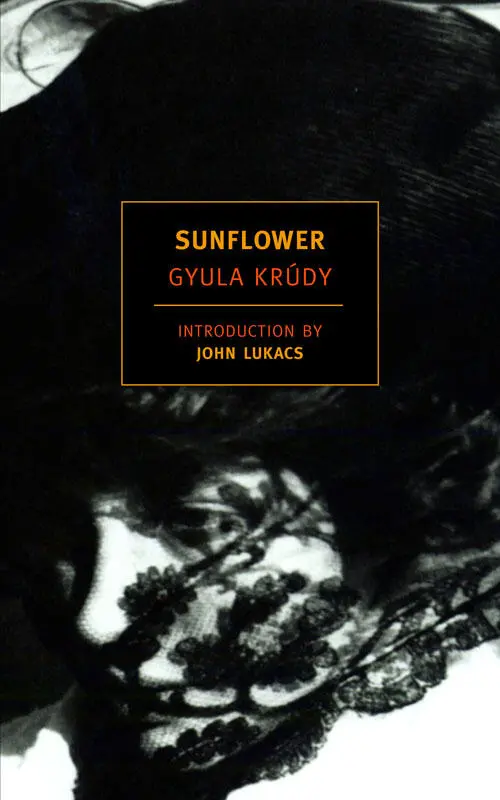
- Название:Sunflower
- Автор:
- Издательство:New York Review Books
- Жанр:
- Год:2007
- Город:New York
- ISBN:нет данных
- Рейтинг книги:4 / 5. Голосов: 1
-
Избранное:Добавить в избранное
- Отзывы:
-
Ваша оценка:
Sunflower: краткое содержание, описание и аннотация
Предлагаем к чтению аннотацию, описание, краткое содержание или предисловие (зависит от того, что написал сам автор книги «Sunflower»). Если вы не нашли необходимую информацию о книге — напишите в комментариях, мы постараемся отыскать её.
In
young Eveline leaves the city and returns to her country estate to escape the memory of her desperate love for the unscrupulous charmer Kálmán. There she encounters the melancholy Álmos-Dreamer, who is languishing for love of her, and is visited by the bizarre and beautiful Miss Maszkerádi, a woman who is a force of nature. The plot twists and turns; elemental myth mingles with sheer farce: Krúdy brilliantly illuminates the shifting contours and acid colors of the landscape of desire.
John Bátki’s outstanding translation of
is the perfect introduction to the world of Gyula Krúdy, a genius as singular as Robert Walser, Bruno Schulz, or Joseph Roth.
Sunflower — читать онлайн бесплатно полную книгу (весь текст) целиком
Ниже представлен текст книги, разбитый по страницам. Система сохранения места последней прочитанной страницы, позволяет с удобством читать онлайн бесплатно книгу «Sunflower», без необходимости каждый раз заново искать на чём Вы остановились. Поставьте закладку, и сможете в любой момент перейти на страницу, на которой закончили чтение.
Интервал:
Закладка:
“Shall I make some caraway-seed soup for you?” asked Stony Dinka when Mr. Pistoli showed up at The Rubadub and reclaimed his place in the innermost room among the embroidered tablecloths, quilt- and eiderdown-laden beds, Hebrew blessings and wardrobes stuffed with many-pleated skirts — as if he had left here only the day before (although years had gone by).
His expression mute and tragic, Pistoli stared off into space. He had pulled his hat over his eyes, clasped his fokos in front of himself, without even bothering to loosen his belt. He fidgeted back and forth, implying that he meant to move right on, that he had merely dropped in to see his former lover for a moment, for a quick drink, and a kiss. But this time Stony Dinka did not take him by storm, to remove his hat and boots as she had in days of old. By now the lady was forty-two years of age, and instead of bangs, she now wore her bleached hair pulled back and in a coil on top.
“If you were still a brunette, you’d look just like Queen Elisabeth. What happened to all your dark hair?” Pistoli inquired with raised eyebrows.
“Never mind about me, you old scoundrel. You tell me, where have you been, what bitch in heat have you been after, since I last saw you? In fact I’ve seen you passing by whenever some devil-sent business brought you to these parts, but not once did you take the pains to show your wretched mug in here.”
“Simmer down,” replied Pistoli, who was taken aback by this tearless reunion. Stony Dinka usually took him in her lap and kissed him like a child that had been lost and found.
“Watch who you’re ordering around,” the woman responded. But her voice had a softer tone now, a reminiscing note, like the sound of a hurdy-gurdy far off on the highway.
Pistoli was as quick to note the change as an outlaw the rainbow. He rested his chin atop his ax-headed staff, and affixed a prolonged gaze at the Madame.
“Listen to me Jolán Weiss, I’m taking my hands off you,” he said at last after a long pause. “I don’t like your behavior. I don’t like the tint in your hair. And I can’t stand the way your red boots creak. And what’s this new soap you wash your face with? Where are those freckles I used to love so much on your face?”
“Is that why you came here, to torment me?” said Stony Dinka, suddenly overcast, her mood shifting as rapidly as the weather on an April day. “Didn’t I suffer enough since you abandoned me? First my father’s illness. I thought the old furrier was on his last leg. I was rending my hair by his bedside — you know I love that man more than anyone in the world. And even then in my despair I thought of you, of the long winter nights I spent talking to you about Father. If only he could still sew, if only his blessed hands could still wield the needle… Why, he could sew you a black lambskin jacket to keep you from freezing when you stray after all those floozies…In my travels I got to see the River Sajó, where I grew up. Where I was a little girl in short skirts, listening to the foxes baying at the moon rising over the reeds. And even there I had to think of you, because I remembered how meekly you listened once when I told you about that place…Then, at a relative’s cellar, I drank some vintage wine. And didn’t I think of you right away…If only you could have been there, drinking this special wine…And now you’ve come to torment me?”
Pistoli wagged his head, twisted and turned his neck. Then slowly, solemnly, he extended one leg:
“It hurts,” he said.
“I knew it!” Stony Dinka suddenly shouted. “You get wrecked elsewhere, then come here to have me treat and cure you. You want my supernatural health and vitality to restore you. Well, until now I didn’t mind. But from now on I’m going to be less generous with you.”
“Well, just this one last time…” Pistoli grunted like a big bear, lifting his leg repeatedly in the air. “Anyway: ‘ kampets dolores ’—it’s all over for me. My boots will soon hang from the rafters. All I ask is: make my last days beautiful.”
“Hmph, you’ve said that before,” a teary-eyed Stony Dinka replied, and yanked the boots off Pistoli’s feet. She immediately went off to soak his foot-rags. She rousted up a ruddy-cheeked serving girl from the courtyard and promised her two quick slaps for her sloth, or some pennies if she shined the frazzled boots. Pistoli just sat there like a Turk carved of wood in front of the tobacconist’s. He felt most in his element when womenfolk took advantage of his physical impotence and handled parts of his body as a midwife does a newborn babe.
“Is it your heel?” asked Stony Dinka.
“Right there.”
“Yes, that’s where all those witches went and hid. So tell me, you old rascal,” murmured Stony Dinka, taking in her lap Pistoli’s ailing foot, and starting to rub it with a gentle hand, “how many women’s heavenly salvation have you got weighing on your conscience?”
Formerly Pistoli would have laughed at this: he would have reeled off a list of the women who went mad on his account, and spent the rest of their lives dancing or rending their hair. But now he felt as melancholy as if the end were near. His enormous intake of alcohol during the three days’ bender, combined with the events recently transpired, suddenly unhinged him. He burst into such choking sobs that he could hardly catch his breath. He sobbed spasmodically, almost joyfully, copious tears easing his heart’s burden, like a woman beating her forehead against the stones. Of course he could not find his handkerchief, so that, childlike, he had to reach for Stony Dinka’s skirt, to wipe his tear-soaked face. There followed a few more hiccups and shooting stabs of pain, much as the rattle of a cart recedes on the highway as it carries the bride far away from her true love. At last he recovered his ability to speak:
“Stony Dinka, you’re the only love I ever had in this whole wide world. Oh, if only my mother were still alive, how happy you would have made her! You’ve been my mother’s kind of woman all your life. Your oven-baked biscuits, the leeches you applied to my side when I had pneumonia, your barbecues and your Gypsy superstitions, your smoked sausages and your downy bed, your early springtime vegetables, your life-restoring chicken soups, the unforgettable aroma of your wieners and Eastertime baked hams, your faith-healing incantations and the way you turned me over in my sleep, your nocturnal bathings, your bread-kneading, your economies, your coat-ironing, your very nature always benevolent and faithful; your desire that I should always be free of care by your side, even when business went poorly for you; the pride you took in always seeing me off rejuvenated, cleaned up, ironed out, ‘fresh from the wash’ when I took my leave, even when I’d come to you straight from the gutter besmirched with blood and mud…
“Everything around your white feet in this house, your friendly watchdog, the stork nesting on your chimney, the dried walnuts in the attic and your aged nanny, all, all proclaim that you are the one, the woman I ought to have married. Not to mention my heart, which was ever yours. There were times when I looked at your concerned, serious face and felt as moved as I’d been in front of the bishop the day I was confirmed…I could always feel secure by your side — let the dogs bark outdoors, but in here, under these rafters no danger could penetrate, for your determination, your extraordinary feminine toughness would make sure that no harm came to me at your place. In my dream you were the tall chestnut mare whose neck I clasped to escape the flood. I saw your wonderful eyes looking at me through that mare’s glance.”
“Oh, you old scoundrel…” giggled Stony Dinka, and took off all of Mr. Pistoli’s clothes. Next, she slapped and pounded the bedding into place. The quilts went flying like geese in the meadow. Pre-warmed bricks and platters lined up in a row. Vinegar water awaited its uses. Pistoli sank into the bed so deep that not even the tip of his mustache could be seen.
Читать дальшеИнтервал:
Закладка:
Похожие книги на «Sunflower»
Представляем Вашему вниманию похожие книги на «Sunflower» списком для выбора. Мы отобрали схожую по названию и смыслу литературу в надежде предоставить читателям больше вариантов отыскать новые, интересные, ещё непрочитанные произведения.












Обсуждение, отзывы о книге «Sunflower» и просто собственные мнения читателей. Оставьте ваши комментарии, напишите, что Вы думаете о произведении, его смысле или главных героях. Укажите что конкретно понравилось, а что нет, и почему Вы так считаете.