Gyula Krudy - Sunflower
Здесь есть возможность читать онлайн «Gyula Krudy - Sunflower» весь текст электронной книги совершенно бесплатно (целиком полную версию без сокращений). В некоторых случаях можно слушать аудио, скачать через торрент в формате fb2 и присутствует краткое содержание. Город: New York, Год выпуска: 2007, Издательство: New York Review Books, Жанр: Классическая проза, на английском языке. Описание произведения, (предисловие) а так же отзывы посетителей доступны на портале библиотеки ЛибКат.
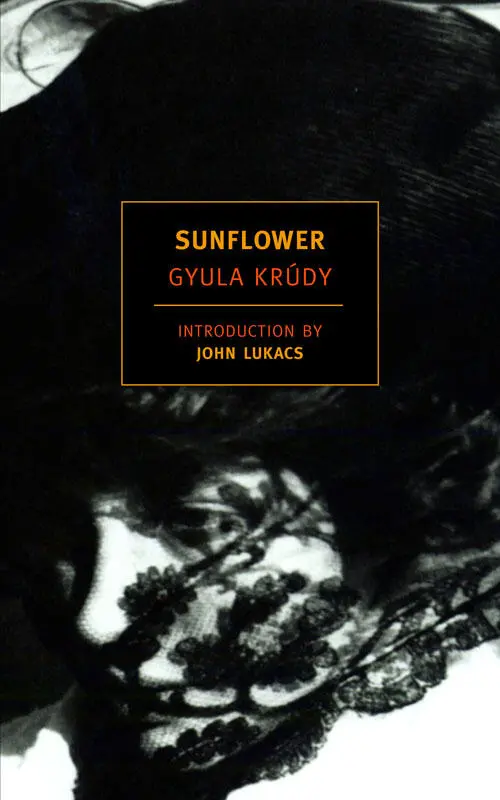
- Название:Sunflower
- Автор:
- Издательство:New York Review Books
- Жанр:
- Год:2007
- Город:New York
- ISBN:нет данных
- Рейтинг книги:4 / 5. Голосов: 1
-
Избранное:Добавить в избранное
- Отзывы:
-
Ваша оценка:
Sunflower: краткое содержание, описание и аннотация
Предлагаем к чтению аннотацию, описание, краткое содержание или предисловие (зависит от того, что написал сам автор книги «Sunflower»). Если вы не нашли необходимую информацию о книге — напишите в комментариях, мы постараемся отыскать её.
In
young Eveline leaves the city and returns to her country estate to escape the memory of her desperate love for the unscrupulous charmer Kálmán. There she encounters the melancholy Álmos-Dreamer, who is languishing for love of her, and is visited by the bizarre and beautiful Miss Maszkerádi, a woman who is a force of nature. The plot twists and turns; elemental myth mingles with sheer farce: Krúdy brilliantly illuminates the shifting contours and acid colors of the landscape of desire.
John Bátki’s outstanding translation of
is the perfect introduction to the world of Gyula Krúdy, a genius as singular as Robert Walser, Bruno Schulz, or Joseph Roth.
Sunflower — читать онлайн бесплатно полную книгу (весь текст) целиком
Ниже представлен текст книги, разбитый по страницам. Система сохранения места последней прочитанной страницы, позволяет с удобством читать онлайн бесплатно книгу «Sunflower», без необходимости каждый раз заново искать на чём Вы остановились. Поставьте закладку, и сможете в любой момент перейти на страницу, на которой закончили чтение.
Интервал:
Закладка:
Everywhere this lugubrious twilight announces an end to pleasures, indicates closing time for the garden in which we had planned our lives and loves to be as ceaseless as the distant waterfall’s murmur. Everywhere shadowy cares tug at our boot-heels, cares that until this moment we had not even noticed, cares that now find us at sunset, the way a lost lapdog finds its owner after the fair ends. Everywhere desolation flutters around human souls as angelus sounds and singers begin to save their voices, the rich tints of the wine in the glass turn color, the smiles now playing on faces fade like silk discolored by the sun; we listen, and wonder if the beating of our heart might not be slowing, this wanderer having taken in such a large chunk of the world in the course of the day, and we involuntarily look back on the still sunny meadows of times past where we would be so happy to return, to be young once again, in our full maturity; but the wandering journeyman cannot change course, and must advance toward nightfall’s vague mountains that numb the heart. Everywhere, all over the world, people now think those tragic twilight thoughts about the pointlessness of days past — loves and songs dying away without a trace — happy hours, like so many grains of sand, trickling away, irreversibly — smiles that will never return — lights falling from heaven to earth, caught for a moment in the eye only to drop toward the grave; everywhere those painful farewells (such an unfair human gesture!); everywhere, reaching out to us, a pleading hand we can no longer clasp — but saddest of all, on any day, is twilight in the Nyírség, the region known as The Birches.
Oh, don’t let me die at eveningtime in this land!
Let the last moment come on tiptoe, peeking through the keyhole one mute, deep night when not even stars are visible and it is an easy task to cross over from one pitch-dark hovel to the next. Or let the guest arrive in broad daylight, after lunch, when not even the strangest vehicle appears menacing, and not even the stoniest-faced messenger appears scary. Let the knock come when one sits, dusty and sleepless, awake, weary with tomorrow’s hopelessness, a miserable night’s knot in one’s throat, ready to renounce everything in favor of attaining rest at last: one wretched dawn, as women of the street slink homeward, carrying their ragged souls, whipped to tatters; when, more dead than alive after their all-night revelry, drunkards slip off the sled to sleep and freeze in the falling snow; when feeble-limbed gamblers and soul-spent, exhausted musicians creep homeward in back alleys — then, may the black herald reach me after the long night’s journey. But spare me at eveningtime, as you would a young doe.
Twilight in The Birches has its own strange creatures that are only found in these parts.
Like conscience itself, they run alongside Eveline’s carriage. Daytime’s bright magpies fly up on hedges to greet you like gossipy old women wearing bonnets. The tangled, leafless grove sticking its head aboveground, a plaything of the winds, now grows quiet and hides those frog-headed, owl-footed, twittering shadows that could any moment ooze away from the tree trunks, to give menacing chase, sticking out their tongues at the carriage. Lingering crows still inscribe wavering circles overhead, in hopes of a feast — it’s all the same to them if they make a meal of a neighbor or kin. In the misty fields wandering Gypsies’ fires flare, as if they were preparing for some great work, these quaint strangers, panting, passionate, with their dramatic locks of hair and their voices like wild birds’, who vanish unnoticed from one day to the next from fields where they for some reason had camped out for a while — leaving at most a colored rag or a few twisted stems of grass to indicate their stay here and the direction they left in. On another side lie canebrakes and rushes, hovering like the dead in midair, capable of coming to life any moment. High above the reeds, where the air is as empty as space floats a nameless solitary bird, musing about the aimlessness of life on earth. The clods on the road, serf-souls many centuries old, cling to the carriage wheels.
Bare birches, like chilly maidens, quiver in this landscape, their twiggy arms crying out that life is unbearable. It is not advisable to travel this way, for at eveningtime the crossroads accost the traveler to tell her speedy horses are no use, the moment, the hour will never be recovered. The desolate roadside crosses offer their services, spreading their Veronica’s kerchief of wilted grass to kneel on for one last prayer before taking leave of life…Here and there by the roadside, somber, heavenward-reaching, sturdy-trunked trees turn morosely wrinkled brows after the passerby, implying they had seen finer sights in their youth; from forlorn treetops the kestrel screams like a banshee banished from this world. Ditches brown with dead leaves and vines squat sprawling alongside the road like people with faces so hideously deformed they must lead a crepuscular, underground existence. And like the lonely plainsong of an outlaw on the run, there is some exhalation in the air that squelches the heart’s joys. It turns one’s mood as dismal as the unseen fisherman’s solitary oarfall among the marshland rushes. It wraps the soul in a desperate futility, as if the scarecrows, exiled into the wasteland, and the haunted, dried-out trees had spilled their venom on the passing traveler.
At the crossroads a man in an overcoat leaped in front of the ambling horses and grabbed the bridle of the near horse.
Eveline was startled from her reverie. Her ancient, liveried coachman jumped down, swearing, from the rear of the spider-cart.
“Kálmán!” Eveline shouted as if roused from a dream. “How did you get here?”
Ossuary stepped up to the girl seated on the coach box and placed his hand on her driving glove.
“I’ve been waiting here for hours. I decided to come after you because I can’t understand why you’re staying away from Pest. I’m not the kind of man you can just drop like a worn boot on the highway. For I get up and come running after you like a hurt, wounded, angry…Anyway, what are you doing here, why haven’t you thought of me all this time?”
Eveline eyed Kálmán, and sensed that her fate was at a turning point. Bewildered, frightened and confused, she shut her eyes. She was a woman. She did not cherish moments of crisis. She merely wanted to live in peace, like a bird on a branch.
But Kálmán clutched her wrist forcefully, like a highwayman. The eyes in his dusty, lean, wolfish face stared, bold and steadfast, into Eveline’s eyes, with the look of a bloodhound that had been chased here by Budapest dogcatchers. He was waiting for the girl’s eyes to flinch. His fingers felt her pulse, trying to guess what went on in her mind. He scrutinized her with eyebrows raised all the way, then watched her with lowered eyelids, like a gambler intent on the fall of dice. She seemed ailing, weary, unhappy. A hundred days’ and a hundred sleepless nights’ remorse showed on her face.
“Easter Sunday it will be four months since you’ve been gone, Eveline. The last time, winter whistled in my chimney, and now spring fills the world, like the tunes from a military band on a Danube steamer. So I surprised myself with a wish to see you — though I should have stayed in hell: back in Pest, in the coffeehouse, or at the horse races, rather than put up with this cold, snooty look from you. What’s with you, girl? Have you totally forgotten me?”
Frightened and curious by turns, Eveline stared at Kálmán’s soldier of fortune visage. It was a face she had dreamed of many times, always trembling with heartache. Kálmán’s eyes had grown larger, like the saucer-eyed dog’s in Andersen’s fairy tale. The hair on his head stood up stiff in spikes. She had so often heard his cocky, defiant voice in daydreams, emerging from behind the tapestry of a brown study. She was afraid of him. And yet, when the daughters of melancholy descended on her, and sat down at the foot of her bed to knit unending stockings from endless balls of yarn, she never failed to think of Kálmán, who surely must have power over these otherworldly beings and the mournful moods of the soul as well, for this man, like a warrior, never shoved any fear. His ruthlessness she found as imposing as a bulldog’s ferocious set of teeth. And his audacity reassured her, like the fidelity of a trustworthy Negro giant who watches unsleeping on your doorstep throughout the night.
Читать дальшеИнтервал:
Закладка:
Похожие книги на «Sunflower»
Представляем Вашему вниманию похожие книги на «Sunflower» списком для выбора. Мы отобрали схожую по названию и смыслу литературу в надежде предоставить читателям больше вариантов отыскать новые, интересные, ещё непрочитанные произведения.









Обсуждение, отзывы о книге «Sunflower» и просто собственные мнения читателей. Оставьте ваши комментарии, напишите, что Вы думаете о произведении, его смысле или главных героях. Укажите что конкретно понравилось, а что нет, и почему Вы так считаете.