Pearl Buck - Kinfolk
Здесь есть возможность читать онлайн «Pearl Buck - Kinfolk» весь текст электронной книги совершенно бесплатно (целиком полную версию без сокращений). В некоторых случаях можно слушать аудио, скачать через торрент в формате fb2 и присутствует краткое содержание. Год выпуска: 2012, Издательство: Open Road Media, Жанр: Классическая проза, на английском языке. Описание произведения, (предисловие) а так же отзывы посетителей доступны на портале библиотеки ЛибКат.
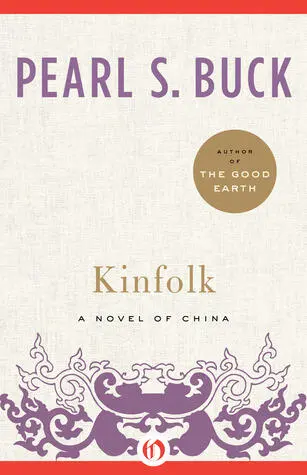
- Название:Kinfolk
- Автор:
- Издательство:Open Road Media
- Жанр:
- Год:2012
- ISBN:нет данных
- Рейтинг книги:4 / 5. Голосов: 1
-
Избранное:Добавить в избранное
- Отзывы:
-
Ваша оценка:
Kinfolk: краткое содержание, описание и аннотация
Предлагаем к чтению аннотацию, описание, краткое содержание или предисловие (зависит от того, что написал сам автор книги «Kinfolk»). Если вы не нашли необходимую информацию о книге — напишите в комментариях, мы постараемся отыскать её.
, a sharp dissection of the expatriate experience, Pearl S. Buck unfurls the story of a Chinese family living in New York. Dr. Liang is a comfortably well-off professor of Confucian philosophy, who spreads the notion of a pure and unchanging homeland. Under his influence, his four grown children decide to move to China, despite having spent their whole lives in America. As the siblings try in various ways to adjust to a new place and culture, they learn that the definition of home is far different from what they expected.
Kinfolk — читать онлайн бесплатно полную книгу (весь текст) целиком
Ниже представлен текст книги, разбитый по страницам. Система сохранения места последней прочитанной страницы, позволяет с удобством читать онлайн бесплатно книгу «Kinfolk», без необходимости каждый раз заново искать на чём Вы остановились. Поставьте закладку, и сможете в любой момент перейти на страницу, на которой закончили чтение.
Интервал:
Закладка:
Young Wang grinned at him from his knees and his white teeth flashed. “Master, this floor!” he exclaimed. “How many days since it was washed?”
“How do I know?” James replied, smiling back at him. Young Wang got up, darted forward and took his hat. He held it in both hands and admired it. “What did you pay for this fine hat, master?” “I bought it in America,” James said.
“Everything is better there than here,” Young Wang said, and he put the hat reverently into the closet. Then he wrung out the cloth, emptied the pail out the window and put it under the bed.
James sat down in the wicker easy chair. The room seemed pleasantly cool after the street. Young Wang had drawn the shutters and had laid out fresh towels. He pattered about the room now dusting everywhere with a damp cloth.
“Peking is a great city full of big dust,” he said cheerfully. James watched him without speaking. Within his mind, always preoccupied with his work and not given to much sorting of thought, he felt that he had come to a dividing place. He would have to become one person or another. Either he must join the league of his fellow doctors and live oblivious of his countrymen, or he must take some sort of plunge which he could not define. The surface life was safe enough and quite pleasant. He need not give up his professional standards. His colleagues were good and careful and sometimes superlative doctors. But except for Liu Chen they were not more than that. They worked the full day, they did their duty to the hospital. No one could complain that when Dr. Kang decided to take a case he was less than competent. Dr. Su, who was more human and therefore more likable, even went further sometimes than his duty. But it would have occurred to none of them, and perhaps not even to Liu Chen, to go beyond the demands of his profession.
“You are thinner,” Young Wang said, staring at him as he whisked his cloth about the legs of the table. “You must think of your body.” He reached the mirror and he paused to stare at himself with humorous eyes. He laughed and pointed a finger at his own image. “That big turnip there,” he said. “Anybody can tell he comes from the country!”
“How did you find your village?” James asked.
Young Wang accepted the invitation to converse. He threw the duster over his shoulder and squatted on his heels.
“Sit on a chair,” James said.
“I do not dare,” Young Wang replied politely, and began at once smoothly and coolly to tell his tale. “When I returned to my village I found it was under water. The rains have been too heavy and the nearest dike of the river overflowed. I had first to hire a boat in the small city nearby and I went to my village. It was nearly gone. The houses had crumbled and only the treetops stood above the water except at one place where the land rises a few feet. Upon this small island my village crowded itself. We are all Wangs and of us there are a hundred and five hearts. Thanks to the gods, the waters had risen slowly and so our men had been able to move food and bedding and some small benches for the old to sit on. Also we have some bamboo mats which we have spread upon willow poles for shelter.”
Young Wang laughed as though the predicament were amusing. Then he looked rueful and shook his head. “It is very hard on old people and small children,” he sighed. “Several small ones have fallen into the water and have been swept away. Three old people have died and there has been no place to bury them and so we let them down into the water. This is very bad because now they cannot lie with our ancestors and so all the old people are afraid to die. This is bad, too, for death is natural to the old and they should find comfort in it.”
James listened with growing horror. “Does no one come from the city to help you?” he demanded.
Young Wang raised his eyebrows at the question. “Who comes to help?” he asked. “People have enough trouble for themselves. Ours is not the only village. There are many like us.”
“The mayor of the city should help,” James declared. “Or the governor of the province should at least take notice.”
“No one takes notice of the folk,” Young Wang said. “Those governors and officials are high people and they have their own affairs.”
He sighed loudly, rose from his heels, and whirled his duster over the mirror, glancing at himself with some admiration as he did so.
James watched this. How deep was Young Wang’s grief for his family? He seemed callous and even gay, and yet surely he had feeling. “Did you leave your family on that island?” he asked.
“My parents I took to the city and also my brothers and sisters.” Young Wang picked up a fountain pen from the table and pulled the top from it cautiously. “I found rooms in an inn for them. But it costs very much money and so I came back to work for you, master. Before this, wages were nothing to me, but now I ask that you give me three months’ in advance, and then I will go back to them at the end of the month and pay for what I owe and if the waters have sunk down, I will help them to move again to the village.”
“But you said there was no house,” James reminded him.
“Oh, the house is never mind,” Young Wang replied. “A few days’ labor will put up a mud house again. I will carry some thatch from the city markets and we have willow trees for poles.”
He tested the pen on a bit of paper. “This is one of those self-come ink pens,” he said. “I wish very much someday to have one. But still why should I have it when I cannot write my own name?”
These last words Young Wang said with more sorrow than he had said anything and a flush of shame rose from his neck and spread over his face. He covered the pen again and laid it on the table. “Shall I bring you some night food?” he asked.
“No,” James replied. “I must return to the hospital and see how my patients are before they sleep. I will eat later in the dining hall downstairs.”
“They give you good food here?” Young Wang asked wistfully.
“Excellent.”
“Do the servants eat what is left?”
“I will see that you get your food,” James replied. He knew that doctors often had their private servants. They were fed, probably at the hospital kitchens.
Young Wang immediately looked cheerful. “With my belly certain of fullness three times each day, I fear no god or man,” he declared.
“That is good,” James replied. He went away to his patients and left Young Wang standing before the mirror, arranging the belt about his thin waist.
5
JAMES LIANG WAS NOT A MAN who put his thoughts easily into words. He had learned to distrust words as gestures and flourishes of the mind, more especially of his father’s mind. As a child and a boy he had sat through long evenings in the big comfortable living room and had listened to his father and his friends, elegant and educated in the cultures of England and Europe. Whatever they discussed, and they discussed everything, was spun into a web of words which yet had no substance. By the end of an evening instead of conclusion and conviction the web had dissolved into a mist, and the mist itself dissolved in the silence of the room when they had gone. His father, so genial and brilliant with his guests, came back from the door silent and empty. If the boy James asked a question he was impatient. “It is time for sleep,” he always said shortly.
In this distrust of words James had turned to his American schoolmates, who spun no webs either of thoughts or of words. A hard-hitting fist was more honored than a graceful phrase, and a fact was always more valuable than an idea. Action instead of feeling was what he had learned outside his home, and action he preferred when his father yielded often to the inexplicable melancholy of the exile. From this melancholy his father’s only escape again was in words. A mood, caught from a gray sky over the river and a chill autumn wind, was translated into an essay of tragedy. James was grown before he understood that nothing his father wrote was from conviction. All was from feeling, transient enough. Therefore the young man had learned also to distrust feeling.
Читать дальшеИнтервал:
Закладка:
Похожие книги на «Kinfolk»
Представляем Вашему вниманию похожие книги на «Kinfolk» списком для выбора. Мы отобрали схожую по названию и смыслу литературу в надежде предоставить читателям больше вариантов отыскать новые, интересные, ещё непрочитанные произведения.



Обсуждение, отзывы о книге «Kinfolk» и просто собственные мнения читателей. Оставьте ваши комментарии, напишите, что Вы думаете о произведении, его смысле или главных героях. Укажите что конкретно понравилось, а что нет, и почему Вы так считаете.