Pearl Buck - Kinfolk
Здесь есть возможность читать онлайн «Pearl Buck - Kinfolk» весь текст электронной книги совершенно бесплатно (целиком полную версию без сокращений). В некоторых случаях можно слушать аудио, скачать через торрент в формате fb2 и присутствует краткое содержание. Год выпуска: 2012, Издательство: Open Road Media, Жанр: Классическая проза, на английском языке. Описание произведения, (предисловие) а так же отзывы посетителей доступны на портале библиотеки ЛибКат.
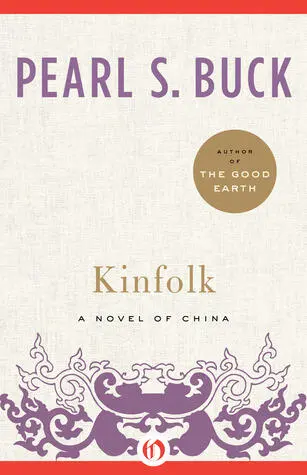
- Название:Kinfolk
- Автор:
- Издательство:Open Road Media
- Жанр:
- Год:2012
- ISBN:нет данных
- Рейтинг книги:4 / 5. Голосов: 1
-
Избранное:Добавить в избранное
- Отзывы:
-
Ваша оценка:
Kinfolk: краткое содержание, описание и аннотация
Предлагаем к чтению аннотацию, описание, краткое содержание или предисловие (зависит от того, что написал сам автор книги «Kinfolk»). Если вы не нашли необходимую информацию о книге — напишите в комментариях, мы постараемся отыскать её.
, a sharp dissection of the expatriate experience, Pearl S. Buck unfurls the story of a Chinese family living in New York. Dr. Liang is a comfortably well-off professor of Confucian philosophy, who spreads the notion of a pure and unchanging homeland. Under his influence, his four grown children decide to move to China, despite having spent their whole lives in America. As the siblings try in various ways to adjust to a new place and culture, they learn that the definition of home is far different from what they expected.
Kinfolk — читать онлайн бесплатно полную книгу (весь текст) целиком
Ниже представлен текст книги, разбитый по страницам. Система сохранения места последней прочитанной страницы, позволяет с удобством читать онлайн бесплатно книгу «Kinfolk», без необходимости каждый раз заново искать на чём Вы остановились. Поставьте закладку, и сможете в любой момент перейти на страницу, на которой закончили чтение.
Интервал:
Закладка:
James glared into the handsome smooth face. Then he turned and went out, slamming the door slightly. What Peng had said was true. The hospital was expensive beyond all proportion to the lives of the people. Only the rich could afford to lie under these massive roofs, only the rich could afford to walk the marble-floored halls and use the tiled baths. There was no place for the poor except in the crowded wards.
He went back to the clinic and patients pressed toward him. “Doctor — doctor — good doctor,” they wailed at him when he came into the room. At first their urgency had confused him and had even made him angry. But now he knew they could not help crying out to him. They had endured so much and there were so many of them. “I am here,” he said quietly. “I will not go away until I have seen each one of you.” Only when they found that they could trust his word did they become quiet.
“Please forgive us,” an old man said gently. “Usually the doctors do not like to see so many sick and poor waiting for them and they choose only a few of us and the rest of us must go away again.”
James had found that this was so. What angered and discouraged him most profoundly was the callousness of his own colleagues to the ills of people who came to them for healing. The selfishness of the rich he had soon come to take for granted, but what he could not take for granted, as the weeks went on, was the heartlessness of doctors and nurses. Not all of them, he granted grudgingly — Dr. Liu Chen was an honor to any hospital, and he learned always to call upon one or another of three nurses. The kindness of these three he could trust, Rose Mei, Kitty Sen, and Marie Yang. All nurses had foreign names and used them carefully, just as they spent half a week’s salary on permanent waves at the hands of a White Russian hairdresser in what had once been the Legation Quarter.
Much of his private thought went into angry pondering over this callousness of his fellows. Dr. Kang, for example, with whom he often operated, was a delightful friend, an enthusiastic companion on the rare evenings when they were free to go to a famous restaurant or to sit in the deserted palace gardens or even to ride outside the city walls to sleep for the night in some cool old temple. Kang was a learned man, and not only a graduate of Johns Hopkins. He knew Chinese literature as well as Western and he had a famous collection of musical instruments from many places in the world. He was the friend of a great actor, and one day in August he took James to his friend’s house, and James met the pleasant round-faced man who had a genius for making himself look like a beautiful woman. The whole afternoon was a dream out of history. The house was huge, room opened into room and court led to court. In an outdoor pavilion they had sat and had eaten the cream-filled Tibetan sweetmeats which the actor loved and dreaded. “My career depends upon my figure,” he said with a rueful merriment, “and my cook, alas, is superb. Only while the Japanese were here could I eat and let myself grow fat. Also I grew a moustache and beard. Now that they are gone I must return to my roles.”
He touched the strings of a flat harp and sang in his high falsetto which gave so perfectly the illusion that it was a woman’s young voice. The air was tender with sweetness and mild sadness. The atmosphere of age and mellow living and thinking suffused the evening.
Every chair, every table, the scrolls upon the walls, the tiles of the floors, the lattices of the windows, the carvings of the outdoor pavilion in which they had sat, the shrubs and rocks of the garden courts — all were exquisite and planned with a sophisticated sense of beauty. Kang had seemed entirely at home there as he had discussed with his friend the detail of a song, the finesse of a gesture. James had listened, feeling himself unlearned and crude because he had spent his life in the West. He began that night to blame his father for taking him away so young into the foreign world.
In the hospital the next day he was shocked afresh by Kang’s arrogance and his complete indifference to suffering. He was an excellent surgeon, one of the best that James had ever seen at work. His thin strong hands were all fine bone and smooth sinew. Any patient might be grateful for those hands working in his vitals with such speed and accuracy. But once the task was over whether the patient lived or died was none of Kang’s concern. He seldom inquired. He often refused altogether to operate on an old woman, on a poor man, or on a frightened child. Crying children especially annoyed him.
“Take the child away,” he had ordered Rose one day.
“But it is mastoid, Doctor,” she urged. “The boy will die.”
Kang shrugged his shoulders and washed his hands thoroughly at the spotless basin. Rose took the child to James and told him the story. James operated and the child lived.
There was no use in talking to Kang but James did it. “That mastoid case,” he had said the next evening. They were on their way to a wedding. One of the older doctors was taking a young wife. Kang was pulling on his white gloves. He never wore Chinese clothes and his black dinner suit was as immaculate as it would have been were he in New York.
“What mastoid?” he asked. He frowned at the red tea flower in his buttonhole. It looked somewhat faded, but this was not the season for the flowers.
“That boy who was brought from his village yesterday morning,” James said. For the first time since he had come he wore his tuxedo and it was not well pressed. Young Wang had left him at Peking to return to his village home and the hospital servant was green and untrained in Western ways.
Dr. Kang had looked impatient. “My dear Liang, surely I can choose my own cases.”
“But the boy would have died,” James remonstrated.
“Thousands — millions, I might say — must die,” Dr. Kang had retorted. “When you have been here a year or two longer you will understand that common sense alone compels you to take the long view. What are we? A handful of doctors in a nation as medieval as Europe in the sixteenth century. We cannot possibly save everyone from dying. We would be the first dead, did we try!”
It was true. James did not reply. He followed Kang into the wide hall which ran through the doctor’s house and stepped into the carriage which stood waiting at the gate.
The wedding was to be at the Peking Hotel. Modern weddings were seldom in homes, as the old-fashioned ones still were, and now streams of fashionably dressed people were being driven in horse carriages and motorcars toward the hotel. Dr. Su, the groom, had been three times married and twice divorced. His first wife still lived in the remote ancestral homestead somewhere in Szechuan, but nobody had ever seen her, nor did he ever speak of her. Two sons, now grown, were internes at the hospital but they also never spoke of the small silent illiterate woman who was their mother. Tonight they stood near their father when James entered the lobby of the hotel. Dr. Su, in Western evening dress and white gloves, welcomed his guests pleasantly, and a uniformed servant offered cocktails and tea. Dr. Su had been married so often that he did not take the event with any embarrassment and he chatted with his colleagues and friends.
“Dr. Liang — Jim,” he said affectionately in English. “Come along, man — choose your drink. Tea? You are so old-fashioned.”
James smiled. “Such tea seems rather a novelty to me,” he said. He liked Dr. Su, who was his senior surgeon, and he spoke to him in English as a courtesy. He had never heard Dr. Su speak Chinese except to a servant.
The great lobby, fragrant with lilies, was soon filled with guests. The men were in Western clothes for the most part, and the women in graceful close-fitting Chinese dress. Here and there a military officer’s uniform shone resplendently and swords clanked. There were a few elderly men in rich Chinese gowns, enough to show that Dr. Su had his grateful patients everywhere.
Читать дальшеИнтервал:
Закладка:
Похожие книги на «Kinfolk»
Представляем Вашему вниманию похожие книги на «Kinfolk» списком для выбора. Мы отобрали схожую по названию и смыслу литературу в надежде предоставить читателям больше вариантов отыскать новые, интересные, ещё непрочитанные произведения.

Обсуждение, отзывы о книге «Kinfolk» и просто собственные мнения читателей. Оставьте ваши комментарии, напишите, что Вы думаете о произведении, его смысле или главных героях. Укажите что конкретно понравилось, а что нет, и почему Вы так считаете.