Pearl Buck - Kinfolk
Здесь есть возможность читать онлайн «Pearl Buck - Kinfolk» весь текст электронной книги совершенно бесплатно (целиком полную версию без сокращений). В некоторых случаях можно слушать аудио, скачать через торрент в формате fb2 и присутствует краткое содержание. Год выпуска: 2012, Издательство: Open Road Media, Жанр: Классическая проза, на английском языке. Описание произведения, (предисловие) а так же отзывы посетителей доступны на портале библиотеки ЛибКат.
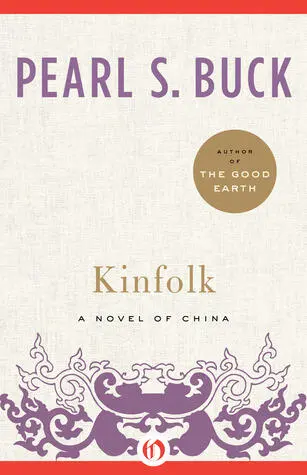
- Название:Kinfolk
- Автор:
- Издательство:Open Road Media
- Жанр:
- Год:2012
- ISBN:нет данных
- Рейтинг книги:4 / 5. Голосов: 1
-
Избранное:Добавить в избранное
- Отзывы:
-
Ваша оценка:
Kinfolk: краткое содержание, описание и аннотация
Предлагаем к чтению аннотацию, описание, краткое содержание или предисловие (зависит от того, что написал сам автор книги «Kinfolk»). Если вы не нашли необходимую информацию о книге — напишите в комментариях, мы постараемся отыскать её.
, a sharp dissection of the expatriate experience, Pearl S. Buck unfurls the story of a Chinese family living in New York. Dr. Liang is a comfortably well-off professor of Confucian philosophy, who spreads the notion of a pure and unchanging homeland. Under his influence, his four grown children decide to move to China, despite having spent their whole lives in America. As the siblings try in various ways to adjust to a new place and culture, they learn that the definition of home is far different from what they expected.
Kinfolk — читать онлайн бесплатно полную книгу (весь текст) целиком
Ниже представлен текст книги, разбитый по страницам. Система сохранения места последней прочитанной страницы, позволяет с удобством читать онлайн бесплатно книгу «Kinfolk», без необходимости каждый раз заново искать на чём Вы остановились. Поставьте закладку, и сможете в любой момент перейти на страницу, на которой закончили чтение.
Интервал:
Закладка:
3
MARY READ ALOUD A letter from James at the noon meal. The family was still in New York, although summer had deepened and Dr. Liang was beginning to feel the heat. He sat delicately languid and listened to the letter, dated two weeks earlier and from Peking.
“I shall not crystallize my impressions of our country,” James wrote. “They are too mixed. But I have found this old city reassuring. Even the Japanese respected its ancient beauty. This is not to say that I have seen much of it. I took up my duties at the hospital the day after I arrived, and when night comes I am too weary to sight-see. My view is also somewhat biased by the fact that I see only sick people. Trachoma is frightful. So is tuberculosis. I operate on the eyes but can do nothing for the lungs. Ulcers, gangrene—”
“Spare us, Mary,” Dr. Liang said gently. “We are trying to eat — and it is very hot.”
Mary folded the letter and put it in her pocket.
“You can read it to me when we are alone,” Mrs. Liang said briskly. “Liang, eat some of the beef and peppers! You know you like this dish.”
She dipped her chopsticks into the bowl and picked out a bit of meat and laid it on his plate. He ignored it and ate some rice from his bowl, a mouthful or two. Then he began to talk gently and slowly, each word made clear, as he did when he lectured. “I am happy to hear that Peking is untouched. I hope to spend my old age there, in a quiet lane, in an old house with a garden. I shall be paterfamilias — let us say, grand-paterfamilias. I seem to see myself at the head of our family table and about me are my children, married and living with me under one great roof in the old style, my grandchildren running about my courts. Ah, happy old age!”
He smiled, and Mrs. Liang, who had been listening with lively interest, broke in, “Liang, I tell you, don’t count on it! Children nowadays are unreliable. Suppose they don’t want to live under one roof with us?”
Dr. Liang shook his head gently. “I am a reasonably pleasant person, I believe?” He looked at his children’s faces with a touching trust. “I am not obnoxious, am I? Not repulsive?”
“Of course not, Pa,” Louise exclaimed. She was looking very pretty today. Heat flushed her usually pale face and her eyes, set shallowly under flying brows, were dark and humid. She had a secretive reserve except toward her father. The whole family knew that Dr. Liang loved Louise better than any of the other children, and they accepted it as natural, since she was the youngest.
“You will come and live with me, Little Lou?” Dr. Liang went on, half playfully, half pathetically. “Ma, we will have at least one child with us. We must find a very nice husband for her, some nice young professor, a scholar with whom I can discuss the dreams of Chuangtse and the poetry of Li Po, the charming drunkard.”
Dr. Liang liked to tease his children affectionately with threats of finding husbands and wives for them in the old fashion of Chinese parents. Actually he had declared that while he would introduce suitable young persons to his sons and daughters he would not force his choice upon any of them. He was too modern and he loved them too well.
The mention of marriage roused Mrs. Liang’s curiosity. “Does James say anything about Lili?” she asked Mary. “Nothing,” Mary replied.
“Then he must have heard,” Mrs. Liang exclaimed. “I told him,” Mary said.
Dr. Liang was vexed at this. He spoke with sharpness. “Now, Mary, that was very premature. I was talking with Mr. Li only yesterday and he said that Lili has not made up her mind. Besides Charles Ting there are three other young men who have approached her. It is quite possible that in the midst of so much rivalry she will turn from them all and still choose James.”
Mrs. Liang sniffed. “Liang, I must tell you — at first I thought it would be very nice to enjoy some money from the Li family. Your salary as a professor is not large, and at present your writing is not very useful to us. With conditions bad in our country, the Americans are naturally not interested in us. So I thought it might be necessary some day to have a rich daughter-in-law. But now I don’t like this Lili. I think she would divorce James quickly when she likes. I suggest rather a better type of girl, who is more faithful, someone like Sonia Pan.”
Peter groaned loudly. “Sonia Pan! She’s ugly.” Mrs. Liang would not yield. “Ugly girls can be fixed now. It is not like before. And she is very good. She does not waste money.”
“It would be no use for her to waste money on herself,” Louise murmured.
Dr. Liang coughed. “I am sure Ma is right. Sonia is a very good girl. But the Pan family is not quite — after all, Ma — a Chinatown family, you know—”
“Billy Pan is a good businessman,” Mrs. Liang argued. “That is not everything,” Dr. Liang said gently.
“Sonia would be good for a daughter-in-law,” Mrs. Liang persisted. “She would live in Peking very well with us and she would not be too modern. Lili would not like old-fashioned ways. She would want to live in her own house. Sonia would listen to me.”
Mary interposed. “Father, I think it is no use to talk of Sonia when James has never thought of her.”
“Quite right, my dear,” Dr. Liang said gratefully. “Let us also think of something else. What do you say to a little vacation for all of us? I am feeling the heat. I long for mountains. My spirit always soars when I am in the mountains. Sometimes I wish we could move to the country to live.”
“It would be too inconvenient,” Mrs. Liang said. “You would be lonely, Liang. Who would be there to listen to you talk? And it is too hard to buy the food for you. When you feel like country you can always go to Central Park.”
She rose and began to collect the dishes. Yet as always her heart relented toward her husband. It was true that New York was hot. Certainly it was not so hot as Shanghai was in the summer, but he forgot that. He had forgotten so much about China. It would be no great expense to go to some small place in the mountains to the north. She pattered back into the living room to tell him so. But he was asleep, stretched out on the long sofa, breathing deeply and calmly.
She gazed at him for a moment and wondered if he looked thinner and decided he did not. When they were first married he had been very thin and tall and to her surprise he wept when anything was hard. His mother said he had always wept easily and therefore he must be shielded from distress. It was, she had said, his scholarly temperament. Mrs. Liang, then a ruddy strong young woman, had listened and she did not understand her young husband, but evidently he was some sort of treasure. She still did not understand him, but he was still her treasure. She would not wake him.
So turning away she mounted the stairs slowly to find Mary and then she felt sleepy also and yawned. After all, she was not so young as she had been. The house was very quiet. The children must have gone outside, perhaps to the park. The letter from James could wait. She opened the door of her bedroom softly and then closed it. The room looked cool and pleasant and she took off her silk robe and folded it carefully across a chair. Then she lay down on the bed; her jaw fell, and she was instantly asleep.
On a bench by the river, Mary, Peter, and Louise discussed this first long letter from James. He had sent a cable announcing his arrival in Peking, and they had awaited the letter with impatience. By it they would judge whether China was what they hoped it was or feared it was not. On the whole, the letter was favorable. The journey northward, James wrote, was something to experience rather than talk about. He was inclined sometimes to think that the worst they had heard from Chinese who had fled to New York was not bad enough. Filth and poverty were everywhere. The train was something that could not be imagined and the callousness to death had frightened him. It was not only that an old man had been swept from the ferry, or that the dead lay in the streets of Shanghai. There was some sort of cruelty here, toward the helpless — he was not ready yet to define it. The animals were wretched, even the donkeys and mules carried loads far too heavy and these loads were laid on raw sores on the beasts’ backs. Yet he supposed that animals must share the miseries of men, and men staggered under dreadful burdens.
Читать дальшеИнтервал:
Закладка:
Похожие книги на «Kinfolk»
Представляем Вашему вниманию похожие книги на «Kinfolk» списком для выбора. Мы отобрали схожую по названию и смыслу литературу в надежде предоставить читателям больше вариантов отыскать новые, интересные, ещё непрочитанные произведения.




Обсуждение, отзывы о книге «Kinfolk» и просто собственные мнения читателей. Оставьте ваши комментарии, напишите, что Вы думаете о произведении, его смысле или главных героях. Укажите что конкретно понравилось, а что нет, и почему Вы так считаете.