Pearl Buck - Kinfolk
Здесь есть возможность читать онлайн «Pearl Buck - Kinfolk» весь текст электронной книги совершенно бесплатно (целиком полную версию без сокращений). В некоторых случаях можно слушать аудио, скачать через торрент в формате fb2 и присутствует краткое содержание. Год выпуска: 2012, Издательство: Open Road Media, Жанр: Классическая проза, на английском языке. Описание произведения, (предисловие) а так же отзывы посетителей доступны на портале библиотеки ЛибКат.
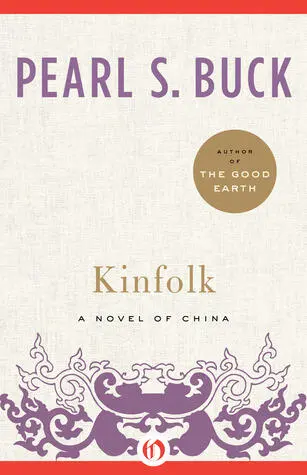
- Название:Kinfolk
- Автор:
- Издательство:Open Road Media
- Жанр:
- Год:2012
- ISBN:нет данных
- Рейтинг книги:4 / 5. Голосов: 1
-
Избранное:Добавить в избранное
- Отзывы:
-
Ваша оценка:
Kinfolk: краткое содержание, описание и аннотация
Предлагаем к чтению аннотацию, описание, краткое содержание или предисловие (зависит от того, что написал сам автор книги «Kinfolk»). Если вы не нашли необходимую информацию о книге — напишите в комментариях, мы постараемся отыскать её.
, a sharp dissection of the expatriate experience, Pearl S. Buck unfurls the story of a Chinese family living in New York. Dr. Liang is a comfortably well-off professor of Confucian philosophy, who spreads the notion of a pure and unchanging homeland. Under his influence, his four grown children decide to move to China, despite having spent their whole lives in America. As the siblings try in various ways to adjust to a new place and culture, they learn that the definition of home is far different from what they expected.
Kinfolk — читать онлайн бесплатно полную книгу (весь текст) целиком
Ниже представлен текст книги, разбитый по страницам. Система сохранения места последней прочитанной страницы, позволяет с удобством читать онлайн бесплатно книгу «Kinfolk», без необходимости каждый раз заново искать на чём Вы остановились. Поставьте закладку, и сможете в любой момент перейти на страницу, на которой закончили чтение.
Интервал:
Закладка:
“Pa,” Mary said gently. “I have thought of something. Let me take her back to China.”
“Two girls!” Mrs. Liang exclaimed.
Mary still spoke to her father. “Pa, James is your oldest son. Let him help you. I was about to ask you anyway if you would let me go and keep his house for him until he marries. Let me go and let me take Louise with me.”
Louise turned her face. “I don’t want to go!” she muttered.
“Be silent!” Dr. Liang cried. All his rage choked him again. “You! Do you dare to speak?”
“I won’t go — I won’t go!” Louise wailed.
Dr. Liang’s jaw tightened and two small muscles stood out on his cheeks. Had he not loved his younger daughter with so much pride he would not have been so bitterly angry now. He wanted to beat her again, but he dared not before Mary. Yet the wound of his proud heart was too severe. He could not restrain himself and he cried out, “If you do not want to go, then I say you shall go! We will have no peace until you are gone!”
“Liang!” his wife cried. “You cannot send two girls alone across the ocean! How will it be when they get to Shanghai? Since the war everything is bad there.”
“Peter shall go with them,” Dr. Liang cried. “Let them all go!” He slapped his outspread hands upon the desk, and then to the horror of his family he began to weep silently, without covering his face. They could not bear it. Mary stooped to her sister. “Come — get up,” she said. “We must leave Pa alone.”
Louise, seeing her father’s face, obeyed and the two girls went out. When the door closed behind them Mrs. Liang rose and went to her husband. She stood behind him where she could not see his face and she put out her two hands and with the tips of her fingers she began to rub his temples rhythmically. He sighed and leaned his head back against her breast.
After a while she spoke. “You must not blame them too much,” she said. “They are like plants growing in a foreign soil. If they bear strange flowers, it is the soil that is evil.”
“You know that I cannot — go back,” he said listlessly.
“I know that,” she said patiently.
“I cannot do my work there,” he went on. “What place is there for a scholar — for any civilized being — in the midst of chaos and war?”
“None,” she agreed. This they had talked about often.
“While chaos has raged in my own country, I have kept its spirit alive here in a foreign land,” he said in a heartbroken voice.
“Everyone knows you are a great man,” she said sadly.
He pulled away from her suddenly. “I suppose you wish you could go with the children,” he said. “You will be lonely here only with me.”
She stood motionless while she spoke, her hands at her bosom. “Liang — would you not go just for a little while?”
He pushed aside the sheaf of manuscript on his desk. “How can I? I have classes about to begin. Besides — how can I earn my living in China — unless I become an official?”
“You could become an official,” she said.
“No, I cannot,” he said loudly. “I can do a great many things for the sake of peace and our ancient civilization — but I cannot do that.”
She waited another long moment. She turned her head and looked out the window at all the things she hated. She hated living high in the air like this, as though they were birds nesting in a cliff. As a girl she had lived in houses low and close to the earth, where she could step through the open door and feel earth under her feet. She hated high buildings and tall chimneys and bustling streets. But her love for him was still greater than her hatred of these things, although she did not understand him even in the least part of his being. She had come from a simple, goodhearted merchant family in a small town. His family had been gentry for ten generations. She had been chosen for him because her health and vigor, his mother had said, would strengthen his overdelicate youth and renew the family’s vitality. She had loved him from their wedding night.
“If you cannot go, I will stay with you,” she said, “and I will not be lonely.”
Upstairs in her room Mary faced Louise. She tried not to be excitable or angry, but she found it difficult to be calm. Her father’s Confucian teaching of calm under all circumstances had become her conscience. Now, feeling her cheeks hot and her eyes burning, she nevertheless tried to keep her voice gentle.
“Louise, what have you done?” she demanded.
Louise sat down on the edge of the bed. She twisted a curl of her hair around her forefinger and pouted her red lips. She feared Mary more than any member of the family, not because this elder sister was harsh, but because she had an honesty which was not to be corrupted. Did Mary believe that something should be told she would tell it, at whatever cost to anyone, and Louise was not prepared to put herself into such danger.
“You had better tell me so that I can help you,” Mary said.
“I don’t want your help,” Louise pouted.
“Nevertheless I must help you,” Mary said in the same steadfast voice. “What did you tell Pa that made him so angry?”
Tears came into Louise’s eyes. Her courage was not deeply rooted and now it began to fade. What had seemed only a sweet exciting secret when she was with Estelle had become a frightful thing when she was besieged by her family. Chastity for a woman, seemingly so lightly considered by her schoolmates, returned to what she had been taught by her Chinese family — the test of all that woman was.
“What did you tell Pa?” Mary insisted. Her voice, in spite of herself, became stern.
“I told him — I told him—” Thus truth began to trickle from her with her tears.
“Go on,” Mary commanded.
“When he said — when he said — he would never consent to — to an American son-in-law—” she began now to cry in good earnest.
“You said—” Mary prompted her relentlessly.
“I said it was too late!” The words came out of Louise in one burst.
“You haven’t married Philip secretly!” Mary cried.
Louise shook her head, and then she said in a very small voice, “No. But I can never marry anybody else — because — because—”
She could not finish but now Mary knew. She sat quite still, gazing at Louise, who turned and flung herself face down on the bed and sobbed aloud. There had been many times when Louise had lain there sobbing for some small trouble and always Mary had gone to her to soothe and comfort her, as the elder sister. But now she did not move. She felt sick and she did not want to touch Louise. It had never occurred to her to imagine that Louise would have let Philip — she could not put the thought into words, even in her own mind. That Louise could be silly, could allow Philip perhaps to kiss her and fondle her, that she could dream of his marriage to her, all was believable. But not this—
She rose, not able to endure her own sickness, and she went to the closet and took out a dress for the street. Without speaking, while Louise sobbed on, Mary changed into this blue dress and brushed her hair and touched her lips with red. It was not often she painted her lips, but now they felt pale and dry. Her face in the mirror was pale and her eyes looked strange. Louise looked sidewise at her in the midst of her weeping. “Where are you going?” she asked.
“Outdoors,” Mary said. “I want to be alone.”
Louise broke into a fresh wail. “Aren’t you going to help me?”
Mary’s hand was on the door, but she paused. “Yes, I will help you, but just now I don’t know how. I shall have to think.”
She went out and closed the door softly, and softly she crept down the stairs. In her father’s study she heard her parents’ voices murmuring and she tiptoed past the door and out into the hall. The elevator man was talkative and she could scarcely force herself to answer his questions. “Yes, thank you,” she said, “my brother in China is quite well. Yes, he likes it there. Of course, after all it is our home. Yes, some day doubtless we will all return to China. Yes, of course we do like it here — but it is not our country.”
Читать дальшеИнтервал:
Закладка:
Похожие книги на «Kinfolk»
Представляем Вашему вниманию похожие книги на «Kinfolk» списком для выбора. Мы отобрали схожую по названию и смыслу литературу в надежде предоставить читателям больше вариантов отыскать новые, интересные, ещё непрочитанные произведения.








Обсуждение, отзывы о книге «Kinfolk» и просто собственные мнения читателей. Оставьте ваши комментарии, напишите, что Вы думаете о произведении, его смысле или главных героях. Укажите что конкретно понравилось, а что нет, и почему Вы так считаете.