Саймон Моуэр - Prague Spring
Здесь есть возможность читать онлайн «Саймон Моуэр - Prague Spring» весь текст электронной книги совершенно бесплатно (целиком полную версию без сокращений). В некоторых случаях можно слушать аудио, скачать через торрент в формате fb2 и присутствует краткое содержание. Город: London, Год выпуска: 2018, ISBN: 2018, Издательство: Little, Brown Book Group, Жанр: Историческая проза, на английском языке. Описание произведения, (предисловие) а так же отзывы посетителей доступны на портале библиотеки ЛибКат.
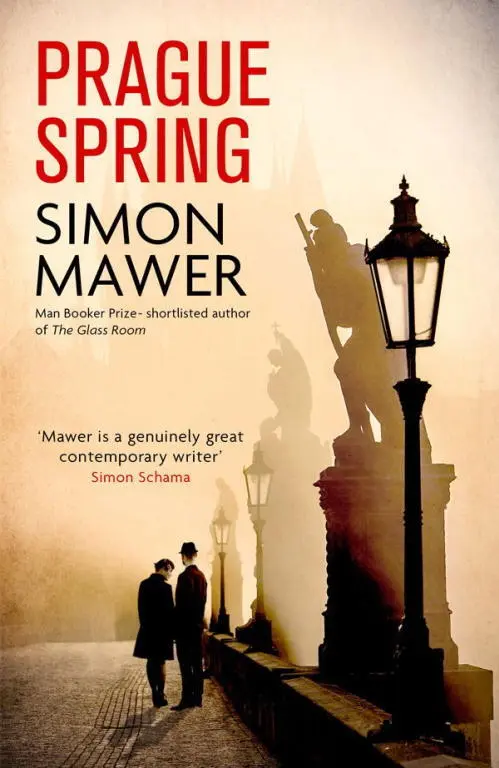
- Название:Prague Spring
- Автор:
- Издательство:Little, Brown Book Group
- Жанр:
- Год:2018
- Город:London
- ISBN:978-1-4087-1113-2
- Рейтинг книги:3 / 5. Голосов: 1
-
Избранное:Добавить в избранное
- Отзывы:
-
Ваша оценка:
Prague Spring: краткое содержание, описание и аннотация
Предлагаем к чтению аннотацию, описание, краткое содержание или предисловие (зависит от того, что написал сам автор книги «Prague Spring»). Если вы не нашли необходимую информацию о книге — напишите в комментариях, мы постараемся отыскать её.
In the summer of 1968, the year of Prague Spring with a Cold War winter, Oxford students James Borthwick and Eleanor Pike set out to hitchhike across Europe, complicating a budding friendship that could be something more. Having reached southern Germany, they decide on a whim to visit Czechoslovakia, where Alexander Dubček’s “socialism with a human face” is smiling on the world.
Meanwhile, Sam Wareham, First Secretary at the British embassy in Prague, observes developments in the country with a diplomat’s cynicism and a young man’s passion. In the company of Czech student Lenka Konečková, he finds a way into the world of Czechoslovak youth, with all its hopes and new ideas; now, nothing seems off-limits behind the Iron Curtain. But the great wheels of politics are grinding in the background; Soviet leader Leonid Brezhnev is making demands of Dubček, and the Red Army is massing on the borders.
This shrewd, engrossing, and sensual novel once again proves Simon Mawer is one of today’s most talented writers of historical spy fiction.
Prague Spring — читать онлайн бесплатно полную книгу (весь текст) целиком
Ниже представлен текст книги, разбитый по страницам. Система сохранения места последней прочитанной страницы, позволяет с удобством читать онлайн бесплатно книгу «Prague Spring», без необходимости каждый раз заново искать на чём Вы остановились. Поставьте закладку, и сможете в любой момент перейти на страницу, на которой закончили чтение.
Интервал:
Закладка:
Sam smiled, grateful that Eric had his back to him because he would only have interpreted the expression as mocking or smug or something, whereas really it was relief. ‘My annual report against two artists desperate for freedom? It doesn’t really balance, does it, Eric?’
Whittaker turned. ‘Do you know how pompous that sounds, Sam?’
‘You know Gennady Egorkin, Eric. You’ve been to one of his concerts—’
‘Two, actually. Heard him playing Beethoven at the Royal Festival Hall a couple of years ago.’
‘So you understand his importance. And Pankova. We’re talking about artists here. I know it doesn’t fit in with politics or economics or whatever it is that occupies the Foreign Office mind at the moment, but it’s every bit as important. I mean, look at Ashkenazy, for example. Or Nureyev. Not only a triumph for art but also—’
‘A triumph for politics.’
‘I wasn’t going to say that. I was going to say, a humanitarian act.’
‘But it’s the political side of things that London appreciates. And anyway, the wretched man is here, not in London.’
‘So we get him out.’
‘That, my dear Sam, is easier said than done.’ Whittaker shook his head despairingly. ‘Look, I’ll have a word with him if you like, but I don’t want to give him the impression that this is official, is that clear? Not until we’ve got some kind of clearance from head office. Or at least from H.E. So the story is, Egorkin appealed to you and you took him and his girlfriend back to your flat as nothing more than an act of kindness. A private decision. Is that clear?’
It was clear. It was precisely what Sam had told them. ‘I’m not a bloody idiot, Eric.’
‘That, dear fellow, remains to be seen.’
Egorkin was duly summoned to the sitting room to meet with the Head of Chancery and be told the hard truth, that his appeal would be considered but that it put Her Majesty’s government in a very difficult position at this crucial time in relations with Czechoslovakia and the Soviet Union. For the moment he and his companion could only consider themselves private guests of Mr Wareham – after all there was nothing wrong with that – but they could not themselves rely on any official diplomatic protection from the British embassy.
‘Perhaps,’ Egorkin said, with solemn pride, ‘you can contact Mr André Previn of the London Symphony Orchestra.’
Whittaker smiled. ‘Mr Previn could not tell me anything I do not already know, Mr Egorkin. No one doubts your standing in the world of music, but it is the broader political picture that we have to consider in a case like this. I’m afraid it will take some time and I can by no means guarantee the outcome.’
‘We don’t have no time,’ Egorkin replied. It wasn’t quite English but the sense was plain enough. The violinist had appeared behind him, watching the discussion with blank incomprehension. ‘Now we have gone and they will be looking for us. We have made our move, Mr Whatever-your-name-is, and it is your duty to protect us.’
Eric inclined his head, as though acknowledging applause. ‘So what I suggest is that you remain here – if that is all right with Mr Wareham – and keep strictly out of sight. And in the meanwhile, I will expedite my enquiries on your behalf.’ He had the unnerving ability to talk in the language of official memos and draft accords. ‘For the moment you are on embassy property, which gives you a degree of security, exactly as though you were in the embassy itself. The local authorities may not enter the embassy or any of its official properties such as Mr Wareham’s apartment under any circumstances without the express permission of the ambassador. However, given the circumstances, and should they demand it, we might find it necessary to hand you over to representatives of the host country.’
Egorkin shook his head. ‘It is not the Czechs I have to worry about. It is my own countrymen. Let me assure you that if the KGB discover we are here, they will take no notice of diplomatic property or the status of this apartment. They will break in, take us both and that will be the end of it.’ He seemed about to add something, then thought better of it and remained silent.
‘In that case, I am afraid there would be little we could do beyond express our outrage through the official channels. But let’s hope that you remain hidden and nothing untoward occurs.’
With that Whittaker excused himself, leaving nothing behind him but the vague words expressed and equally vague hopes invoked. Sam ushered the guests back into their room, trying to reassure them. ‘We’ll sort things out,’ he insisted. ‘In the worst case, I’ll drive you to the border myself.’
Back in the bedroom Lenka was getting dressed – shorts, a battered old shirt, walking boots. There was some plan to meet up with Jitka and her husband, to get out of the city to go hiking. Very Czech. An overnight stay at some place that she wanted to show him, an old castle or something. And those two English kids they seemed to have adopted, they’d be coming along. But now he’d have to remain behind, to keep watch over the Russians.
Couldn’t they go somewhere else? Lenka suggested. The embassy? Why here? Why disturb our lives? For the first time she sounded petulant and proprietorial, as though possessing rights of ownership over Sam, his flat and his life.
‘I’m sorry but that’s not possible. I’m afraid you’ll have to go by yourself, Lenička’
‘You never wanted to go anyway, did you?’ she said.
‘Of course I did.’
‘No, you did not.’
‘I did. Really.’ One of those stupid arguments that come out of nowhere, a storm on a summer’s day. And to make matters worse, he had to get her help doing some shopping. Food and cigarettes of course, but Egorkin and Nadezhda Pankova needed other things – clothes, toiletries, even reading material. Could she help him get some items? A couple of pairs of knickers, a bra, a couple of blouses, anything you might need for a weekend away. And some sanitary towels.
They drove round to the nearest Tuzex and shopped bad-temperedly for the various items like a long-married couple.
‘They won’t fit you,’ the saleswoman said, holding a pair of knickers and looking Lenka up and down.
‘They’re not for me,’ she snapped back, as though she were being forced to shop for her husband’s mistress.
Sam drove her round to the railway station and left her with all the usual admonishments: ‘Give Jitka and, what’s his name – Zdeněk? Give them my regards. And tell them next time for sure. And Lenička—’
‘Yes?’
‘Not a word to anyone about our guests. Please remember. No one must know. For their own sakes.’
‘So what do I say?’
‘Something came up, that’s all you have to say. The embassy, work. They’ll understand. But nothing more. Absolutely nothing more.’
She walked away towards the station entrance. As he watched her go, he felt the anxiety of separation like something tearing deep inside. Never with Stephanie, never that deep, organic pain. For a moment he contemplated the possibility of getting out of the car and running after her, but then he dismissed the idea, shoved the car into gear and drove away.
VIII
36
The main Prague railway station, echoing to the sound of trains and people. They push and shove to get onto the train and keep up with the others. The entire youth of the city seems to be here, crowding onto these carriages at this moment, although Jitka says that they are already late, that they should have been on one of the earliest out of the station – that way you can get into the countryside when it is still fresh from the overnight cool. But Lenka has only just joined them, apologising for being late. She had some shopping to do. ‘Samuel cannot make it’, is all she says by way of explanation for his absence.
Читать дальшеИнтервал:
Закладка:
Похожие книги на «Prague Spring»
Представляем Вашему вниманию похожие книги на «Prague Spring» списком для выбора. Мы отобрали схожую по названию и смыслу литературу в надежде предоставить читателям больше вариантов отыскать новые, интересные, ещё непрочитанные произведения.




Обсуждение, отзывы о книге «Prague Spring» и просто собственные мнения читателей. Оставьте ваши комментарии, напишите, что Вы думаете о произведении, его смысле или главных героях. Укажите что конкретно понравилось, а что нет, и почему Вы так считаете.