David Oldman - Dusk at Dawn
Здесь есть возможность читать онлайн «David Oldman - Dusk at Dawn» весь текст электронной книги совершенно бесплатно (целиком полную версию без сокращений). В некоторых случаях можно слушать аудио, скачать через торрент в формате fb2 и присутствует краткое содержание. Год выпуска: 2018, Издательство: Endeavour Media, Жанр: Историческая проза, на английском языке. Описание произведения, (предисловие) а так же отзывы посетителей доступны на портале библиотеки ЛибКат.
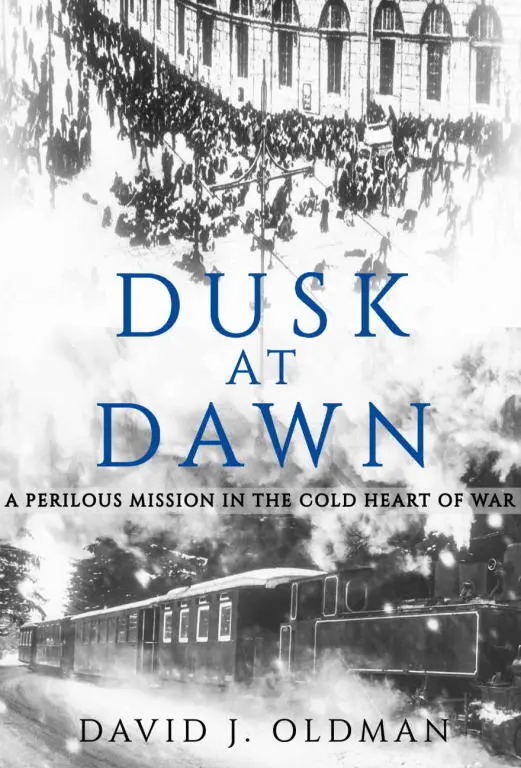
- Название:Dusk at Dawn
- Автор:
- Издательство:Endeavour Media
- Жанр:
- Год:2018
- ISBN:нет данных
- Рейтинг книги:5 / 5. Голосов: 1
-
Избранное:Добавить в избранное
- Отзывы:
-
Ваша оценка:
Dusk at Dawn: краткое содержание, описание и аннотация
Предлагаем к чтению аннотацию, описание, краткое содержание или предисловие (зависит от того, что написал сам автор книги «Dusk at Dawn»). Если вы не нашли необходимую информацию о книге — напишите в комментариях, мы постараемся отыскать её.
Dusk at Dawn — читать онлайн бесплатно полную книгу (весь текст) целиком
Ниже представлен текст книги, разбитый по страницам. Система сохранения места последней прочитанной страницы, позволяет с удобством читать онлайн бесплатно книгу «Dusk at Dawn», без необходимости каждый раз заново искать на чём Вы остановились. Поставьте закладку, и сможете в любой момент перейти на страницу, на которой закончили чтение.
Интервал:
Закладка:
‘And what’s wrong with that, Pasha?’ She put down her cup.
He smiled at her. ‘Have you forgotten so soon?’
She returned the smile indulgently. ‘Perhaps you’ve been too long with these Czechs, Pasha. Mikhail says—’
‘It seems to me,’ he suggested, ‘that Mikhail says an awful lot.’
‘What is that supposed to mean?’
‘That he spends too much of his time with Stavka, perhaps. If he spoke to the ordinary people he would understand that they won’t tolerate a return to the old ways.’ He reached for a piece of cold toast. ‘Too much has happened to go back now.’
‘ Ordinary people? What ordinary people? Who are you talking about?’
‘The peasants, Sofya. They’re the ones who have to do the fighting.’
‘The peasants ?’ She gave him an odd look. ‘Honestly, Pasha, sometimes you can be so obtuse. It is men like Avksentiev and the other SRs who have ruined the peasants. As for doing the fighting… look what happened in Petersburg after the so-called Soviets destroyed the army. I’m afraid the officers in Omsk won’t allow that to happen a second time.’
‘The officers in Omsk aren’t the army, Sofya,’ he explained patiently. ‘The peasants are the soldiery, not a few staff officers in fancy uniforms. They may look good strutting around Omsk like peacocks, with braid and polished boots, but they aren’t an army . You’re talking like a schoolgirl, Sofya, impressed by appearances. I didn’t see many staff officers at the front. It’s the peasants who do the fighting. Always has been and always will, and they won’t stand for a return to the old ways.’
‘I am no foolish schoolgirl,’ Sofya snapped back at him. ‘And I will thank you, Pavel, not to talk to me as if I were.’
‘I’m sorry but—’
‘The peasants will have to do as they are told,’ she went on. ‘It’s for their own good, after all. Where has all this political intrigue got them? You don’t understand, Pasha. You’ve been away from Russia too long.’
‘Sofya…’
He examined her across the remains of her breakfast, well-fed and well-dressed once more, sliding back into the same complacency that had brought Russia to the brink of disaster. He could hardly believe how much she had changed.
She held his gaze.
‘You haven’t seen them at the front,’ he said, dropping the toast. ‘They’ll desert like they did on the eastern front. They’ve got no uniforms, no guns, no boots… little to eat…’
‘Nonsense,’ she said. ‘The warehouses here are full of weapons and uniforms. They arrive by the trainload every day from Vladivostok.’
‘Oh? Then why haven’t the troops got the equipment they need?’
‘I’ve told you. It’s the government. The SRs in the Directory won’t allow distribution. Mikhail says Kolchak will change that.’
‘Why do they need Kolchak? If the supplies are here as you say, surely General Boldyrev would have sent them to the front.’
‘ Boldyrev !’ she cried. ‘He is as bad as the rest. He’s one of the Directory, of course. Mikhail says what the army needs are good Russian officers to put some backbone in them. Just like your Czechoslovaks.’
‘It has only been the Legion ,’ Paul said through his teeth, ‘that has stood between you and the Bolsheviks.’
‘According to Mikhail—’
‘Mikhail doesn’t know what he’s talking about,’ Paul retorted. ‘The closest he’s ever got to any guns are the ones the Legion was using to keep the Red Army out of Kazan. And what did he do? He scurried off to Samara.’
‘Pavel! That’s a hateful thing to say. How can you speak of my brother like that?’ She stood up and flung her napkin onto the plate in front of her, scattering pieces of boiled eggshell across the table. ‘I suppose you think I “scurried off to Samara” too. As I remember, you decided it was your duty to stay behind… to play the hero. And what about your friend, Valentine? Do you accuse him of “scurrying off”?’ She turned to the window, looking down into the bleak street below. ‘You told me in Petersburg you came back to Russia to find Mikhail. But as soon as we did, you wouldn’t even come with me to Samara to see him.’
‘There was no point,’ Paul explained. ‘And since he was already acquainted with Kolchak, I was hardly needed to broker introductions. As for Valentine…’
‘You’ve seen him, I suppose?’ she said, turning.
‘No. Is he in Omsk?’
‘When I last saw him.’
‘Where is he staying?’
‘I’ve no idea.’
A silence fell between them. After a moment, Paul rose from the table.
‘Perhaps I should leave.’
‘Perhaps you should,’ she said.
‘Sofya…’
She turned to the window again. He pictured her as he had seen her in the room in Petersburg, her back turned as she slipped her old sarafan over her naked body.
He picked up his coat and left the apartment.
Lyúbinski Prospékt rose gently to the Bazaar Square and Paul walked up the rise, past the museum of the Imperial Russian Geographical Society where, behind it, the gates of an old fortress stood guarding nothing but rubble and ruined walls. He sat and smoked a cigarette, exhaling clouds of breath and tobacco smoke into the frozen air.
The words he and Sofya had exchanged still burned in his head and he tried not to think of them. He thought about Valentine instead. Sofya had told him she didn’t know where he was living and, having reacted the way she had to what he had said about her brother, Paul thought the chances were she wouldn’t have told him where Valentine was if she had known. So where might he be? Paul crushed the stub of the cigarette out beneath his boot. To keep warm, he started moving again, giving the problem some thought.
Valentine would have rooms if he had been able to find any, but the problem was where? Not an hotel — too public for Valentine who always preferred his comings and goings to be clandestine. In Petersburg, Paul had found him buried in an old slum to the south-east of the city, but there he had been posing as a worker in the Putilov factory and the lodgings had not been out of character. What would he be posing as in Omsk? The answer to that was anything . Applying logic and consistency to Valentine was like trying to predict the weather. He assumed Valentine would try to keep in touch with London if at all possible and recalled, in Petersburg, Valentine had told him he had been at the British embassy shortly before the naval attaché Cromie had been shot. If Valentine was still trying to keep in touch with London then perhaps the British Consulate in Omsk might know where to find him. There would be one, Paul was sure; or at least a vice-consulate in a town the size of Omsk.
He retraced his steps to Nikólskaya Square. It was busy now Ward’s Middlesex had brought up their carriages and were marking out a cantonment. Russian officers were coming and going around the Stavka building and groups of well-dressed civilians were entering adjacent offices, studiously avoiding the appeals of the refugees milling around the square like distracted sheep.
Preferring not to involve Ward and the Middlesex detachment, Paul began making enquiries as to the whereabouts of the British Consulate, only to be met for the most part by blank and uncomprehending stares. Changing tack, he asked a passing officer where he might find the Post Office and, being told it was on Potchóvaya Street, made his way there. Despite some procrastination on the part of an officious clerk who insisted the Consulate was closed and that Paul would be wasting his time, Paul was finally given an address.
It was early afternoon before he found the rather unremarkable house. For such it was, Paul thought, in that it displayed no grand edifice glorying in the sun that was the British Empire. It was an ordinary Omsk townhouse — stone, admittedly — but one that certainly looked closed. A brass nameplate by the door bore the inscription, S . R . Randrup , British vice - consul ; but the door itself was locked and the windows, beside it, shuttered. He rang the bell a few times and, when no-one answered, pounded on the door with his fist. Getting no reply at all, he was looking for some sort of access to the rear of the building when he thought he saw a curtain twitch at one of the first floor windows. Resuming alternate pounding and bell-ringing, he was rewarded a minute or two later by the sound of a bolt being shot and a key turning in the lock.
Читать дальшеИнтервал:
Закладка:
Похожие книги на «Dusk at Dawn»
Представляем Вашему вниманию похожие книги на «Dusk at Dawn» списком для выбора. Мы отобрали схожую по названию и смыслу литературу в надежде предоставить читателям больше вариантов отыскать новые, интересные, ещё непрочитанные произведения.








Обсуждение, отзывы о книге «Dusk at Dawn» и просто собственные мнения читателей. Оставьте ваши комментарии, напишите, что Вы думаете о произведении, его смысле или главных героях. Укажите что конкретно понравилось, а что нет, и почему Вы так считаете.