Джанет Фитч - Chimes of a Lost Cathedral
Здесь есть возможность читать онлайн «Джанет Фитч - Chimes of a Lost Cathedral» весь текст электронной книги совершенно бесплатно (целиком полную версию без сокращений). В некоторых случаях можно слушать аудио, скачать через торрент в формате fb2 и присутствует краткое содержание. Город: New York, Год выпуска: 2019, ISBN: 2019, Издательство: Little, Brown and Company, Жанр: Историческая проза, на английском языке. Описание произведения, (предисловие) а так же отзывы посетителей доступны на портале библиотеки ЛибКат.

- Название:Chimes of a Lost Cathedral
- Автор:
- Издательство:Little, Brown and Company
- Жанр:
- Год:2019
- Город:New York
- ISBN:978-0-316-51006-6
- Рейтинг книги:5 / 5. Голосов: 1
-
Избранное:Добавить в избранное
- Отзывы:
-
Ваша оценка:
Chimes of a Lost Cathedral: краткое содержание, описание и аннотация
Предлагаем к чтению аннотацию, описание, краткое содержание или предисловие (зависит от того, что написал сам автор книги «Chimes of a Lost Cathedral»). Если вы не нашли необходимую информацию о книге — напишите в комментариях, мы постараемся отыскать её.
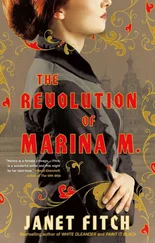
After the events of The Revolution of Marina M., the young Marina Makarova finds herself on her own amid the devastation of the Russian Civil War—pregnant and adrift in the Russian countryside, forced onto her own resourcefulness to find a place to wait out the birth of her child. She finds new strength and self-reliance to fortify her in her sojourn, and to prepare her for the hardships and dilemmas still to come.
When she finally returns to Petrograd, the city almost unrecognizable after two years of revolution, the haunted, half-emptied, starving Capital of Once Had Been, she finds the streets teeming with homeless children, victims of war. Now fully a woman, she takes on the challenge of caring for these civil war orphans, until they become the tool of tragedy from an unexpected direction.
But despite the ordeal of war and revolution, betrayal and privation and unimaginable loss, Marina at last emerges as the poet she was always meant to be.
Chimes of a Lost Cathedral finishes the epic story of Marina’s journey through some of the most dramatic events of the last century—as a woman and an artist, entering her full power, passion, and creativity just as her revolution reveals its true direction for the future.
Chimes of a Lost Cathedral — читать онлайн бесплатно полную книгу (весь текст) целиком
Ниже представлен текст книги, разбитый по страницам. Система сохранения места последней прочитанной страницы, позволяет с удобством читать онлайн бесплатно книгу «Chimes of a Lost Cathedral», без необходимости каждый раз заново искать на чём Вы остановились. Поставьте закладку, и сможете в любой момент перейти на страницу, на которой закончили чтение.
Интервал:
Закладка:
He returned that evening, arms full of packages. He dropped a book on the table, and a wrapper of sweet peas, fish in newspaper, a loaf of good bread. He kissed me on the head as if I were a child. “What a day! Let me put these away.” He bustled into the kitchen. I didn’t follow him. Didn’t wrap myself around his ankles like a cat. He returned in a moment, a bottle of vodka pressed to his chest, two pink glasses pinched between forefinger and thumb. He set them on the table, filled them, collapsed into the other chair. His long hard day, poor dear. He lifted his glass. “To the Bolsheviks. Long may they rule.” Those dear happy eyes, turned up at the corners, though hers had been green, and his were lying blue. He nudged my vodka toward me. “They just gave us the all clear to bring the Haarlem into Petrograd. Grain for the Volga, Marina.”
Grain for the Volga. I examined my glass, its narrow facets. How many facets did he have? Sparkling, and each a little different. “When were you going to tell me about her?”
He cocked his head to one side, as if puzzled. Whatever could I mean? The Haarlem ? His face registered not the slightest shock. What a gambler. When he hadn’t a card worth a tinker’s damn. If only his father had been so good, he wouldn’t have lost their fortune.
“I know, Kolya. She called. Adela.”
He went white, then red, respecting all factions. “What did you tell her?”
Now I wished I’d told her everything, instead of taking the coward’s way out, hanging up. “I told her that her husband was a liar and a thief. That he was already married and that she should jump in some English lake.”
He drank down his vodka, traced his brow with the glass. “I was going to tell you, I swear. That very first day. But I couldn’t. Then you told me about Antonina—”
“Iskra.”
“How could I tell you? When? Standing by her grave?” An automobile sputtered along outside the open window. “I just want you to be happy, Marina. I didn’t want to complicate it.” He always wanted to make everyone happy, that was his weakness. Truth was an unfortunate orphan tugging at his coat, trying to get his attention as he pushed it away with his foot.
“But you did—complicate it.”
He stretched out his hand to me, but I wouldn’t take it. “Be reasonable. I didn’t know I’d be coming back. I had to start over, and England isn’t so easy for foreigners. Even with my sterling references.” He smiled, weakly. “Sir Graham invited me to a holiday weekend at his estate. There were three daughters, the younger two married, but this one was left over.” He shrugged, sticking out his lower lip, as if it was nothing. “People get married, why not this girl? Good as anyone. Important family, sweet temper. No beauty but that was fine.”
“How are her teeth?” I drank down my vodka and poured myself another. The curtains sighed in the mellow light of early autumn.
“Not bad,” he said with a wry smile. “Then this trade agreement changed everything. I saw a chance to come back. It’s what I’d been waiting for, a triumphal return. The lion rampant. Rawr.” He was trying to make me laugh, unsuccessfully. Dragging his chair closer, our knees touching under the table, he threw his arm over the back of my chair, leaning in, knowing that just the smell of him disarmed me. “You’re still married, aren’t you?” he said. “Does it make any difference to me? Did it ever?”
Of course it didn’t.
“So why should this be a big deal? Have you suddenly become a moralist?” His eyes glinted, knowing he’d made a good point. “It was necessary, to become part of Sir Graham’s world. It was my ticket home.”
It was insane, pretending he’d done it all for me. “Tell me one thing. Do you love her?”
“Don’t be absurd. Don’t even think about her,” he said, even softer. “There’s you and me, and that’s it. Always.”
I wasn’t going to listen. “So you thought I’d just sit here waiting while you went down to Moscow and greeted your English wife? Wait for you to drop by when you want a good fuck or some nostalgic chitchat?”
“Oh, and you are such a good fuck,” he said, pushing up my skirt.
“Don’t touch me.”
His hand dropped. He pushed himself away. His face grew hard, something I’d seen before, when he dropped the charm. It was always shocking to see it, the coldness below the warmth. “Well, that’s how it is. Without this situation, I wouldn’t be here. We’d never have seen each other again this side of the grave.” But now he remembered who he was talking to. This wasn’t a business negotiation. He softened, leaned forward, took my hand. “Don’t get off the train, Marina.” As I had in Tikhvin, which I’d regretted for so long. “Let it be what it is, imperfect but—my God, who gets to have what we have?”
There was no doubt about that. I could have lived my whole life with Anton and never seen a half second of the passion I felt every time this man and I were together.
“Have I ever cared who else stumbles into the picture? That oaf Genya, whoever else you’re fucking these days. Poets, sailors. It doesn’t matter to me. You’re mine, I’m yours. Please, for God’s sake, don’t get off the train again. It’s taken so long to get here.”
I had to put some distance between us. He was making too much sense. I got up, marched unhappily behind him, like some prosecutor. “Tell me the truth, Kolya. No more lies. You haven’t applied for my papers, have you?”
He gazed up at me with his sheepish guilty-boy face, that winning pout, eyes lit with hope for forgiveness. He wanted us all, me and her, and Sir Graham’s millions, and copper and marble and for everyone to love him. I’d never known a greedier man. He reached back, trying to catch my dress, but I moved away. He stroked the edge of the tabletop as he would stroke my leg. “I’m not returning to London,” he said. “We’re opening offices in Moscow. You want to come to Moscow? There’s a housing shortage, but I can find you something…”
“What would you do with your precious Adela?”
“Sir Graham goes back to Nottingham soon. I can’t see her staying alone in Moscow, when I’ll be traveling so much. Overseeing the concessions.” His smile, as if we were both in on the joke.
“Still wanting it all.” I poured a last vodka and drank it off, hoping it might soften the fist between my ribs.
“Who doesn’t?” Now he was looking at me directly, hands on the table. “Don’t you? What do you want most of all? Tell me, if you even know.”
Once, the answer would have been so simple. I would have said: You. To be together under any circumstances.
Once, I might have said: Just to be known . Accepted as a poet. By a Blok, a Gorky. And now I was. Part of the House of Arts, not just the building at 59 Moika. The secret society of artists that knows no walls.
Once, I might have said: Revolution. Freedom and justice, all the promises the Bolsheviks had made come true. I might even have said: For Kronstadt to hold, for the people of Russia to have risen up in the sailors’ defense.
I might have just said: I want the impossible. Iskra back, and Seryozha, my father, Volodya home from the war. Maryino and fireflies, summer rain. To start over.
But now I just wanted to walk across the Troitsky Bridge without screaming. Never to be cornered again. Really, just to be completely forgotten. To go about my business without looking over my shoulder.
He was waiting for an answer—tapping one of his Egyptian cigarettes on its pretty box, putting it between his lips, lighting it with his battered lighter made from a shell cartridge. I was sure she’d given him a gold one for a wedding gift. All my love, Adela. But he didn’t want to show it to me. What did I want? He wasn’t talking about impossible things. He wanted it to be something he could give me. Besides fidelity, a life together, a real life of washing out clothes in a basin and hanging them by the fire, making dinner over a Primus stove, getting under the thick covers on winter evenings. Kolya Shurov didn’t want a life with me. He just wanted moments, like candies stuffed with brandy, like Roman candles, like arias. Exquisite moments of passion, of playfulness, of beauty. But life was all the rest.
Читать дальшеИнтервал:
Закладка:
Похожие книги на «Chimes of a Lost Cathedral»
Представляем Вашему вниманию похожие книги на «Chimes of a Lost Cathedral» списком для выбора. Мы отобрали схожую по названию и смыслу литературу в надежде предоставить читателям больше вариантов отыскать новые, интересные, ещё непрочитанные произведения.











Обсуждение, отзывы о книге «Chimes of a Lost Cathedral» и просто собственные мнения читателей. Оставьте ваши комментарии, напишите, что Вы думаете о произведении, его смысле или главных героях. Укажите что конкретно понравилось, а что нет, и почему Вы так считаете.