Джанет Фитч - Chimes of a Lost Cathedral
Здесь есть возможность читать онлайн «Джанет Фитч - Chimes of a Lost Cathedral» весь текст электронной книги совершенно бесплатно (целиком полную версию без сокращений). В некоторых случаях можно слушать аудио, скачать через торрент в формате fb2 и присутствует краткое содержание. Город: New York, Год выпуска: 2019, ISBN: 2019, Издательство: Little, Brown and Company, Жанр: Историческая проза, на английском языке. Описание произведения, (предисловие) а так же отзывы посетителей доступны на портале библиотеки ЛибКат.

- Название:Chimes of a Lost Cathedral
- Автор:
- Издательство:Little, Brown and Company
- Жанр:
- Год:2019
- Город:New York
- ISBN:978-0-316-51006-6
- Рейтинг книги:5 / 5. Голосов: 1
-
Избранное:Добавить в избранное
- Отзывы:
-
Ваша оценка:
Chimes of a Lost Cathedral: краткое содержание, описание и аннотация
Предлагаем к чтению аннотацию, описание, краткое содержание или предисловие (зависит от того, что написал сам автор книги «Chimes of a Lost Cathedral»). Если вы не нашли необходимую информацию о книге — напишите в комментариях, мы постараемся отыскать её.
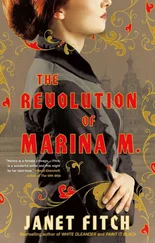
After the events of The Revolution of Marina M., the young Marina Makarova finds herself on her own amid the devastation of the Russian Civil War—pregnant and adrift in the Russian countryside, forced onto her own resourcefulness to find a place to wait out the birth of her child. She finds new strength and self-reliance to fortify her in her sojourn, and to prepare her for the hardships and dilemmas still to come.
When she finally returns to Petrograd, the city almost unrecognizable after two years of revolution, the haunted, half-emptied, starving Capital of Once Had Been, she finds the streets teeming with homeless children, victims of war. Now fully a woman, she takes on the challenge of caring for these civil war orphans, until they become the tool of tragedy from an unexpected direction.
But despite the ordeal of war and revolution, betrayal and privation and unimaginable loss, Marina at last emerges as the poet she was always meant to be.
Chimes of a Lost Cathedral finishes the epic story of Marina’s journey through some of the most dramatic events of the last century—as a woman and an artist, entering her full power, passion, and creativity just as her revolution reveals its true direction for the future.
Chimes of a Lost Cathedral — читать онлайн бесплатно полную книгу (весь текст) целиком
Ниже представлен текст книги, разбитый по страницам. Система сохранения места последней прочитанной страницы, позволяет с удобством читать онлайн бесплатно книгу «Chimes of a Lost Cathedral», без необходимости каждый раз заново искать на чём Вы остановились. Поставьте закладку, и сможете в любой момент перейти на страницу, на которой закончили чтение.
Интервал:
Закладка:
We gazed at each other, like two old warriors sitting on shaggy horses at a crossroads filled with skulls.
“Your problem is, you don’t know what you want.” He pushed the box of cigarettes and the lighter away from himself, rose and stood next to me, smoke trailing up from his hand on the chair back. “I know who I am, what I want. I want that tightrope walker. I knew that girl. But who are you now? The revolutionary? The adventurer? The poet? Or this”—he gestured to me with his cigarette—“sanctimonious little wife? I don’t know who I’m talking to anymore.”
Adventurer, that’s what Arkady had called me. But I’d lost my taste for adventure. At one time, I’d have been dazzled to be a man’s mistress. How romantic it would have sounded! Now it seemed like the hard heel of a stale loaf of bread. Politics was a failure, idealism had drowned itself and lay like Ophelia in the water weeds, the surface floating with pages from my Cheka file.
What did I want? A new baby? If I asked in my truest heart, what I wanted was—sails. Open water. The freshness of the wind. That formless airy unwritten thing—the future.
Freedom. More than courage, more than poetry. More than fame, or love. To love Kolya would always mean this: a storm, followed by wreckage, then a few days of startling blue sky while you hammered the roof back on the house, just in time for the next storm.
I could smell salt in the air.
She will never be with anyone. My mother’s curse.
Perhaps it was true. And if it was, there was nothing to be done about it. I was not afraid of being alone. I would take—white sails.
I gazed at my great, my one true faithless love, whom I’d wanted since he was a boy of twelve and I a freckled six-year-old. I hadn’t even started school yet when I’d set my heart on him. Now he was mired in a loveless marriage and hopes of gain, Sir Graham this and Chicherin that, immaculate pale suits and two-toned shoes… My dear, my dear, he thought he had it all, and me as well, his dog on a little leash. NEPman with Lapdog. I wondered what Chekhov would make of this.
I lit one of his Egyptian cigarettes, and considered what he was offering.
If I had a certain strength of mind, I could do as he proposed. Live in his flat, write my verses, I could hold poetry evenings here as Galina Krestovskaya had once done. And have my love whenever he came through town. We would dance on tables and smash our plates, set fire to the bedroom.
But I was not so strong. The heartache would break me. If only I didn’t love him the way I did, like a forest fire, I might hold on to myself, live with it. But I could smell the coming dampness. I felt the dark gathering in the corners of the bright and pretty room. I had waited so long for this—just to taste that sweet mouth, feel his body in my arms, urgent, irrepressible. To sleep with him at night and wake with him in the morning. Kolya wanted everyone to be happy, but he made everybody miserable in the end. “Get me out of here, Kolya. On your Dutch ship. I want to be on it when it leaves.”
“What happened to your glorious future?” he asked, letting the smoke wreathe his hair. “You used to argue with me, heaping abuse on my capitalistic endeavors. Where’s your revolutionary spirit?”
What irony—Kolya Shurov, proponent of Communism? There’s a role reversal. But I could not stomach a future built on mines in the Urals and the graves of Kronstadt. Without Blok, without Gumilev, without Gorky. The only sound would be the trumpeting of the triumphant rabble. There might be money, copper, and railroads, but where would our voices come from? No sounds could escape the collapsing star. That’s what Blok meant when he said there were no more sounds.
I turned away from him, moving to the window, gazing at the sunset blush outside the thin curtains. Down in the square, one or another of our watchers would be waiting for us to leave for dinner. I would remain a person of interest. I would not avoid a prison camp, an ugly death. The airlessness closed in on me even before the breathing curtain. Unless I was prepared to do more or less what Genya was doing, my cries would never be heard. I remembered the day I sat on the embankment watching The Mystery of Liberated Labor. I understood even then that the revolution had passed into the realm of myth, had become a religion, codified, with hierophants and heretics.
“You ask me what I really want,” I said, watching the man in the straw hat in the shadow of a linden tree. “I want a passport, a visa. And a berth on the Haarlem when it leaves. That’s what I want. You can do this for me, Kolya.”
He came to me then, pulled me to him, that intoxicating smell, the slight give of his flesh, his breath against my neck. “Give me some time. A few weeks. We’ve waited our whole lives for this.”
And then I knew he wasn’t going to help me. A few weeks meant never. The Haarlem would be gone. Winter would come, and then spring. The air turned to chlorine gas, it made my eyes smart. He loved me, he wanted me, and he wasn’t going to let me get away. He could, but he wouldn’t.
This sweet failed life. Soon the birds would be flying south, the winds turning cold. And I was trapped, trapped by my love. This was why Akhmatova had not left. It wasn’t her nobility at all. It was that life caught you. You lived one day after the next, and fought the rupture.
66 Hey, Little Apple
Makar was there, right where he said he’d be, outside the Little Brick, in the old neighborhood near the Poverty Artel. Such a long time ago. Music spilled out onto the street, a neurasthenic band braying a version of “Yablochko.” “Hey, Little Apple, where are you rolling? Not to Lenin, not to Trotsky, but to my sailor of the Red Fleet.” I leaned against the building, had to catch my breath. “Hey, Little Apple…” Had it become just a tune? Didn’t people remember the words anymore? Or perhaps there were new ones now.
The boy was selling something to a worker and his flushed girlfriend on their way home for a late-night tryst. I waited until they were done before I approached him. “Hey, Makar,” I said. “How’s business?”
“Ne plokho.” He shrugged. But he touched a bulging pocket. He must be cleaning up.
“Listen, I need you.” I pulled him to one side, out of the light from the streetlamp, and spoke into his dirty ear. “I need to talk to your Finn.”
The orphan frowned, folding his heavy brows until they formed an unbroken line. “What Finn?”
“Your friend. The fisherman. Who brings the necessary, to capture the white sea.”
The boy laughed, startled that one of his old orphanage matrons would make a dirty joke. “What do you want with him?”
“That’s between me and him,” I said.
He shook his head, lipped his faint moustache. “That’s not how it goes. I set something up for you, I get a piece. You can’t cut me out.”
“I want him to take me to Finland.”
Makar’s eyes opened wide, gave me a look of admiration that I would venture such a bold move. And perhaps pride that I trusted him with such an illegal activity. Well, who else did I have these days? My rich boyfriend had gone down to Moscow to show his wife around. There would be no visa, no first-class ticket or even a berth on a cargo ship bound for Amsterdam. I would have to take it into my own hands.
“Maybe I’ll go with you,” he said. “I was never on a boat before. I’ve just been here.”
“Let him know. I’ll be back tomorrow night.” I turned my face from the streetlight so I wouldn’t be seen.
“Wait, just a minute. Wait there.” The orphan disappeared through the curtain of the Little Brick, into the din.
Читать дальшеИнтервал:
Закладка:
Похожие книги на «Chimes of a Lost Cathedral»
Представляем Вашему вниманию похожие книги на «Chimes of a Lost Cathedral» списком для выбора. Мы отобрали схожую по названию и смыслу литературу в надежде предоставить читателям больше вариантов отыскать новые, интересные, ещё непрочитанные произведения.











Обсуждение, отзывы о книге «Chimes of a Lost Cathedral» и просто собственные мнения читателей. Оставьте ваши комментарии, напишите, что Вы думаете о произведении, его смысле или главных героях. Укажите что конкретно понравилось, а что нет, и почему Вы так считаете.