Stephen Wright - Meditations in Green
Здесь есть возможность читать онлайн «Stephen Wright - Meditations in Green» весь текст электронной книги совершенно бесплатно (целиком полную версию без сокращений). В некоторых случаях можно слушать аудио, скачать через торрент в формате fb2 и присутствует краткое содержание. Город: New York, Год выпуска: 2020, ISBN: 2020, Издательство: Little, Brown and Company, Жанр: Историческая проза, prose_military, на английском языке. Описание произведения, (предисловие) а так же отзывы посетителей доступны на портале библиотеки ЛибКат.
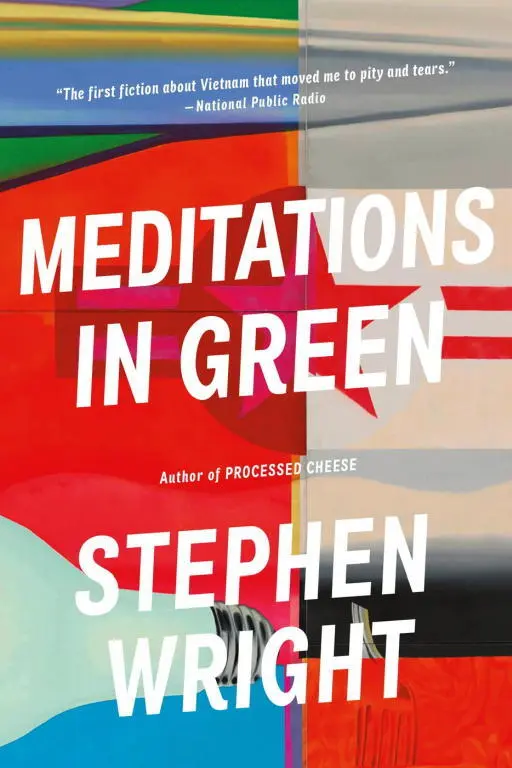
- Название:Meditations in Green
- Автор:
- Издательство:Little, Brown and Company
- Жанр:
- Год:2020
- Город:New York
- ISBN:978-0-316-42736-4
- Рейтинг книги:5 / 5. Голосов: 1
-
Избранное:Добавить в избранное
- Отзывы:
-
Ваша оценка:
Meditations in Green: краткое содержание, описание и аннотация
Предлагаем к чтению аннотацию, описание, краткое содержание или предисловие (зависит от того, что написал сам автор книги «Meditations in Green»). Если вы не нашли необходимую информацию о книге — напишите в комментариях, мы постараемся отыскать её.
Deployed to Vietnam with the U.S. Army’s 1069 Intelligence Group, Spec. 4 James Griffin starts out clear-eyed and hardworking, believing he can glide through the war unharmed. But the kaleidoscope of horrors he experiences gets inside him relentlessly. He gradually collapses and ends up unstrung, in step with the exploding hell around him and waiting for the cataclysm that will bring him home, dead or not.
Griffin survives, but back in the U.S. his battles intensify. Beset by addiction, he takes up meditating on household plants and attempts to adjust to civilian life and beat back the insanity that threatens to overwhelm him.
Meditations in Green is a haunting exploration of the harrowing costs of war and yet-unhealed wounds, “the impact of an experience so devastating that words can hardly contain it” (Walter Kendrick, the New York Times Book Review). Through passages gorgeous, agonizing, and surreal, Stephen Wright paints a searing portrait of a nation driven to the brink by violence and deceit.
Meditations in Green — читать онлайн бесплатно полную книгу (весь текст) целиком
Ниже представлен текст книги, разбитый по страницам. Система сохранения места последней прочитанной страницы, позволяет с удобством читать онлайн бесплатно книгу «Meditations in Green», без необходимости каждый раз заново искать на чём Вы остановились. Поставьте закладку, и сможете в любой момент перейти на страницу, на которой закончили чтение.
Интервал:
Закладка:
Once he recognized a face, the Flight Surgeon’s, Major Beams, demented butcher of doomed youth in a movie someone he once knew had made.
There was a bed he came to periodically, a rectangle of starched white inserted between great blocks of shiny darkness where you were suspended in timelessness like an insect in plastic, a paperweight. This darkness, illuminated by its own private light, was certainly preferable to the white world of tubes and bottles, draped bodies, moans, cries, a piercing brilliance at whose unavoidable center rested what remained of his legs encased in sleeves of stiff white armor. Even his hand was empty, the stone stolen by these cardboard people who could never comprehend the customs and values of the land beneath the bandages. He slipped back into the blocks. Then came a major disturbance, clumsy alien hands lifting him onto wobbly wheels and rough passage in a green ambulance to a glossy aluminum plane and the high whine of a vacuum cleaner sucking him up and away and, struggling sideways, straining against the straps toward the tiny oval window recessed behind his head and one last unrepeatable look back at the surprise of monsoon waters flooding the fields almost to the end of the slick black runway and the shadow of the plane streaking over the paddies, a dark fleet shape diminishing in size as it gained in speed until a speck in the corner of the eye it rose up lost in silver clouds and Griffin’s body began to quiver in a fever of sweat and cold anxiety that was either a side effect of medical treatment or a delayed emotional response to his wounds or merely the onset of an unpleasant bout of withdrawal symptoms.
MEDITATION IN GREEN: 15
1. Remove the latex from the capsules with a flat blunt metallic blade, taking care not to scrape the epicarp.
2. Place coagulated gum in bowl, cover with rice paper.
3. Set bowl in sun for period of two weeks.
4. Roll into balls.
5. Insert ball into pipe.
6 Ignite.
7 Who has a question for Mr. Memory?
My first glimpse of home: the big, brilliant, clean, inconceivable mountains of Washington, cones of powdery white sparkling in the cold winter sun—a vision of space and light, then narrow dim months of pastel walls and dusty television screens. I was a slow healer.
Once I sent a piece of my leg to the President of the United States. I had an amber vial then (50 DIAZEPAM Take As Required) in which I kept my fragments, my therapy. Some played card games, some collected coins, I gathered lost cinders of shrapnel that rose surfacing in the milky pool of my thigh like broken bits of sea coral. I fished them out on the tip of a knife.
The disinfected light, the beds teeming with cripples.
Problem of the age: how to occupy the diminishing intervals between fire and wind and flags.
There’s the room and there’s the street. Where do you want to hide?
Here I am somewhere behind this forest of leaves. A hardy annual with demonstrable versatility, our plant can be baked into cookies for a friend in the hospital, arranged in bouquets for the woman who comes and goes, dried into rattles for the neighborhood children.
I think my thumb has always been green.
In the spring I’ll wander national highways, leather breeches around my legs, pot on my head, sowing seeds from the burlap bag across my shoulder, resting in the afternoon shade of a laurel tree.
At night I carve peace pipes from old cypress branches.
Everywhere the green fuses are burning and look now, snipping rapidly ahead of your leaping eye, the forged blades cutting through the page, the transformation of this printed sheet twisted about a metal stem for your lapel your hat your antenna, a paper emblem of the widow’s hope, the doctor’s apothecary, the veteran’s friend: a modest flower.
About the Author
Stephen Wright is a Vietnam veteran, an MFA graduate of the Iowa Writers’ Workshop, and the author of five novels. He has received a Whiting Award in fiction, a Guggenheim Fellowship, and a Lannan Literary Fellowship and has taught writing and literature at Goucher, Princeton, Brown, and the New School. He was born in Warren, Pennsylvania, and lives in New York City.
Praise for Stephen Wright’s Meditations in Green
“Brilliant, scarifying… extravagant, rhapsodic and horrific… It has an overwhelming impact.”
—New York Times Book Review“Takes one’s breath away.”
—Wall Street Journal“The work of a ferociously talented new American novelist. Stephen Wright is a tough, intelligent, and eloquent man who makes the pain of Vietnam so real that the reader hurts too.”
—Vance Bourjaily“Unholy brilliance and pain and Catch-22 lunacy.”
—Gloria Emerson, author of Winners & Losers: Battles, Retreats, Gains, Losses and Ruins from the Vietnam War“Profoundly moving… This book lingers, hauntingly, in the memory.”
—Newsday“Superb… Beautifully crafted… One doesn’t know whether to die of laughter or despair.”
— Virginia Quarterly Review“An arresting novel… A work of unusual depth and intensity.”
— Tampa Tribune–Times“A writer of supreme talent and skill.”
— Roanoke Times & World-News“Brilliant, corrosive, and thoroughly—totally—unsettling.”
— Cincinnati Enquirer“Important and disturbing.”
— Christian Science Monitor“With a surreal time frame and the laconic sense of the absurd that informed Catch-22, Wright’s novel reaches beyond Vietnam.”
— New Age Journal“Shockingly vivid… The raw power of one man’s remembered experiences can still put you away.”
— PenthouseAlso by Stephen Wright
M31: A Family Romance
Going Native
The Amalgamation Polka
Processed Cheese
Discover Your Next Great Read

Copyright
The characters and events in this book are fictitious. Any similarity to real persons, living or dead, is coincidental and not intended by the author.
Copyright © 1983 by Stephen Wright
Cover design by Lauren Harms
Cover art depicts detail of F-111 (1964–65) by James Rosenquist
Oil on canvas and aluminum (multipanel room installation); 10’ x 86’ (304.8 cm x 2621.3 cm)
The Museum of Modern Art, New York, purchase gift of Mr. and Mrs. Alex L. Hillman and Lillie P. Bliss Bequest (both by exchange), 1996
Artwork copyright © 2020 Estate of James Rosenquist / Licensed by VAGA at Artists Rights Society (ARS), NY. Used by permission. All rights reserved.
Digital image copyright © The Museum of Modern Art / Licensed by SCALA / Art Resource, NY
Cover copyright © 2020 Hachette Book Group, Inc.
Hachette Book Group supports the right to free expression and the value of copyright. The purpose of copyright is to encourage writers and artists to produce the creative works that enrich our culture.
The scanning, uploading, and distribution of this book without permission is a theft of the author’s intellectual property. If you would like permission to use material from the book (other than for review purposes), please contact permissions@hbgusa.com. Thank you for your support of the author’s rights.
Читать дальшеИнтервал:
Закладка:
Похожие книги на «Meditations in Green»
Представляем Вашему вниманию похожие книги на «Meditations in Green» списком для выбора. Мы отобрали схожую по названию и смыслу литературу в надежде предоставить читателям больше вариантов отыскать новые, интересные, ещё непрочитанные произведения.








Обсуждение, отзывы о книге «Meditations in Green» и просто собственные мнения читателей. Оставьте ваши комментарии, напишите, что Вы думаете о произведении, его смысле или главных героях. Укажите что конкретно понравилось, а что нет, и почему Вы так считаете.