Charles Dickens - Barnaby Rudge
Здесь есть возможность читать онлайн «Charles Dickens - Barnaby Rudge» весь текст электронной книги совершенно бесплатно (целиком полную версию без сокращений). В некоторых случаях можно слушать аудио, скачать через торрент в формате fb2 и присутствует краткое содержание. Год выпуска: 2014, Издательство: epubBooks Classics, Жанр: Историческая проза, на английском языке. Описание произведения, (предисловие) а так же отзывы посетителей доступны на портале библиотеки ЛибКат.
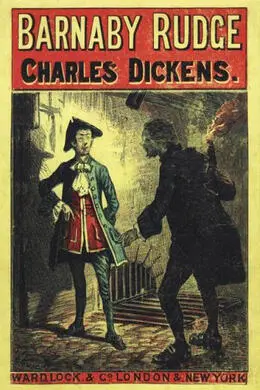
- Название:Barnaby Rudge
- Автор:
- Издательство:epubBooks Classics
- Жанр:
- Год:2014
- ISBN:нет данных
- Рейтинг книги:4 / 5. Голосов: 1
-
Избранное:Добавить в избранное
- Отзывы:
-
Ваша оценка:
Barnaby Rudge: краткое содержание, описание и аннотация
Предлагаем к чтению аннотацию, описание, краткое содержание или предисловие (зависит от того, что написал сам автор книги «Barnaby Rudge»). Если вы не нашли необходимую информацию о книге — напишите в комментариях, мы постараемся отыскать её.
Barnaby Rudge — читать онлайн бесплатно полную книгу (весь текст) целиком
Ниже представлен текст книги, разбитый по страницам. Система сохранения места последней прочитанной страницы, позволяет с удобством читать онлайн бесплатно книгу «Barnaby Rudge», без необходимости каждый раз заново искать на чём Вы остановились. Поставьте закладку, и сможете в любой момент перейти на страницу, на которой закончили чтение.
Интервал:
Закладка:
As soon as they had made a breach at the window, large enough for the admission of a man's head, one of them thrust in a torch and looked all round the room. He followed this man's gaze until it rested on himself, and heard him demand why he had not answered, but made him no reply.
In the general surprise and wonder, they were used to this; without saying anything more, they enlarged the breach until it was large enough to admit the body of a man, and then came dropping down upon the floor, one after another, until the cell was full. They caught him up among them, handed him to the window, and those who stood upon the ladders passed him down upon the pavement of the yard. Then the rest came out, one after another, and, bidding him fly, and lose no time, or the way would be choked up, hurried away to rescue others.
It seemed not a minute's work from first to last. He staggered to his feet, incredulous of what had happened, when the yard was filled again, and a crowd rushed on, hurrying Barnaby among them. In another minute—not so much: another minute! the same instant, with no lapse or interval between!—he and his son were being passed from hand to hand, through the dense crowd in the street, and were glancing backward at a burning pile which some one said was Newgate.
From the moment of their first entrance into the prison, the crowd dispersed themselves about it, and swarmed into every chink and crevice, as if they had a perfect acquaintance with its innermost parts, and bore in their minds an exact plan of the whole. For this immediate knowledge of the place, they were, no doubt, in a great degree, indebted to the hangman, who stood in the lobby, directing some to go this way, some that, and some the other; and who materially assisted in bringing about the wonderful rapidity with which the release of the prisoners was effected.
But this functionary of the law reserved one important piece of intelligence, and kept it snugly to himself. When he had issued his instructions relative to every other part of the building, and the mob were dispersed from end to end, and busy at their work, he took a bundle of keys from a kind of cupboard in the wall, and going by a kind of passage near the chapel (it joined the governors house, and was then on fire), betook himself to the condemned cells, which were a series of small, strong, dismal rooms, opening on a low gallery, guarded, at the end at which he entered, by a strong iron wicket, and at its opposite extremity by two doors and a thick grate. Having double locked the wicket, and assured himself that the other entrances were well secured, he sat down on a bench in the gallery, and sucked the head of his stick with the utmost complacency, tranquillity, and contentment.
It would have been strange enough, a man's enjoying himself in this quiet manner, while the prison was burning, and such a tumult was cleaving the air, though he had been outside the walls. But here, in the very heart of the building, and moreover with the prayers and cries of the four men under sentence sounding in his ears, and their hands, stretched our through the gratings in their cell–doors, clasped in frantic entreaty before his very eyes, it was particularly remarkable. Indeed, Mr Dennis appeared to think it an uncommon circumstance, and to banter himself upon it; for he thrust his hat on one side as some men do when they are in a waggish humour, sucked the head of his stick with a higher relish, and smiled as though he would say, 'Dennis, you're a rum dog; you're a queer fellow; you're capital company, Dennis, and quite a character!'
He sat in this way for some minutes, while the four men in the cells, who were certain that somebody had entered the gallery, but could not see who, gave vent to such piteous entreaties as wretches in their miserable condition may be supposed to have been inspired with: urging, whoever it was, to set them at liberty, for the love of Heaven; and protesting, with great fervour, and truly enough, perhaps, for the time, that if they escaped, they would amend their ways, and would never, never, never again do wrong before God or man, but would lead penitent and sober lives, and sorrowfully repent the crimes they had committed. The terrible energy with which they spoke, would have moved any person, no matter how good or just (if any good or just person could have strayed into that sad place that night), to have set them at liberty: and, while he would have left any other punishment to its free course, to have saved them from this last dreadful and repulsive penalty; which never turned a man inclined to evil, and has hardened thousands who were half inclined to good.
Mr Dennis, who had been bred and nurtured in the good old school, and had administered the good old laws on the good old plan, always once and sometimes twice every six weeks, for a long time, bore these appeals with a deal of philosophy. Being at last, however, rather disturbed in his pleasant reflection by their repetition, he rapped at one of the doors with his stick, and cried:
'Hold your noise there, will you?'
At this they all cried together that they were to be hanged on the next day but one; and again implored his aid.
'Aid! For what!' said Mr Dennis, playfully rapping the knuckles of the hand nearest him.
'To save us!' they cried.
'Oh, certainly,' said Mr Dennis, winking at the wall in the absence of any friend with whom he could humour the joke. 'And so you're to be worked off, are you, brothers?'
'Unless we are released to–night,' one of them cried, 'we are dead men!'
'I tell you what it is,' said the hangman, gravely; 'I'm afraid, my friend, that you're not in that 'ere state of mind that's suitable to your condition, then; you're not a–going to be released: don't think it—Will you leave off that 'ere indecent row? I wonder you an't ashamed of yourselves, I do.'
He followed up this reproof by rapping every set of knuckles one after the other, and having done so, resumed his seat again with a cheerful countenance.
'You've had law,' he said, crossing his legs and elevating his eyebrows: 'laws have been made a' purpose for you; a wery handsome prison's been made a' purpose for you; a parson's kept a purpose for you; a constitootional officer's appointed a' purpose for you; carts is maintained a' purpose for you—and yet you're not contented!—WILL you hold that noise, you sir in the furthest?'
A groan was the only answer.
'So well as I can make out,' said Mr Dennis, in a tone of mingled badinage and remonstrance, 'there's not a man among you. I begin to think I'm on the opposite side, and among the ladies; though for the matter of that, I've seen a many ladies face it out, in a manner that did honour to the sex.—You in number two, don't grind them teeth of yours. Worse manners,' said the hangman, rapping at the door with his stick, 'I never see in this place afore. I'm ashamed of you. You're a disgrace to the Bailey.'
After pausing for a moment to hear if anything could be pleaded in justification, Mr Dennis resumed in a sort of coaxing tone:
'Now look'ee here, you four. I'm come here to take care of you, and see that you an't burnt, instead of the other thing. It's no use your making any noise, for you won't be found out by them as has broken in, and you'll only be hoarse when you come to the speeches,—which is a pity. What I say in respect to the speeches always is, "Give it mouth." That's my maxim. Give it mouth. I've heerd,' said the hangman, pulling off his hat to take his handkerchief from the crown and wipe his face, and then putting it on again a little more on one side than before, 'I've heerd a eloquence on them boards—you know what boards I mean—and have heerd a degree of mouth given to them speeches, that they was as clear as a bell, and as good as a play. There's a pattern! And always, when a thing of this natur's to come off, what I stand up for, is, a proper frame of mind. Let's have a proper frame of mind, and we can go through with it, creditable—pleasant—sociable. Whatever you do (and I address myself in particular, to you in the furthest), never snivel. I'd sooner by half, though I lose by it, see a man tear his clothes a' purpose to spile 'em before they come to me, than find him snivelling. It's ten to one a better frame of mind, every way!'
Читать дальшеИнтервал:
Закладка:
Похожие книги на «Barnaby Rudge»
Представляем Вашему вниманию похожие книги на «Barnaby Rudge» списком для выбора. Мы отобрали схожую по названию и смыслу литературу в надежде предоставить читателям больше вариантов отыскать новые, интересные, ещё непрочитанные произведения.











Обсуждение, отзывы о книге «Barnaby Rudge» и просто собственные мнения читателей. Оставьте ваши комментарии, напишите, что Вы думаете о произведении, его смысле или главных героях. Укажите что конкретно понравилось, а что нет, и почему Вы так считаете.