Charles Dickens - Barnaby Rudge
Здесь есть возможность читать онлайн «Charles Dickens - Barnaby Rudge» весь текст электронной книги совершенно бесплатно (целиком полную версию без сокращений). В некоторых случаях можно слушать аудио, скачать через торрент в формате fb2 и присутствует краткое содержание. Год выпуска: 2014, Издательство: epubBooks Classics, Жанр: Историческая проза, на английском языке. Описание произведения, (предисловие) а так же отзывы посетителей доступны на портале библиотеки ЛибКат.
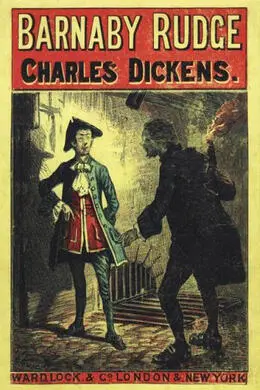
- Название:Barnaby Rudge
- Автор:
- Издательство:epubBooks Classics
- Жанр:
- Год:2014
- ISBN:нет данных
- Рейтинг книги:4 / 5. Голосов: 1
-
Избранное:Добавить в избранное
- Отзывы:
-
Ваша оценка:
Barnaby Rudge: краткое содержание, описание и аннотация
Предлагаем к чтению аннотацию, описание, краткое содержание или предисловие (зависит от того, что написал сам автор книги «Barnaby Rudge»). Если вы не нашли необходимую информацию о книге — напишите в комментариях, мы постараемся отыскать её.
Barnaby Rudge — читать онлайн бесплатно полную книгу (весь текст) целиком
Ниже представлен текст книги, разбитый по страницам. Система сохранения места последней прочитанной страницы, позволяет с удобством читать онлайн бесплатно книгу «Barnaby Rudge», без необходимости каждый раз заново искать на чём Вы остановились. Поставьте закладку, и сможете в любой момент перейти на страницу, на которой закончили чтение.
Интервал:
Закладка:
Gashford walked stealthily about, listening to all he heard, and diffusing or confirming, whenever he had an opportunity, such false intelligence as suited his own purpose; and, busily occupied in this way, turned into Holborn for the twentieth time, when a great many women and children came flying along the street—often panting and looking back—and the confused murmur of numerous voices struck upon his ear. Assured by these tokens, and by the red light which began to flash upon the houses on either side, that some of his friends were indeed approaching, he begged a moment's shelter at a door which opened as he passed, and running with some other persons to an upper window, looked out upon the crowd.
They had torches among them, and the chief faces were distinctly visible. That they had been engaged in the destruction of some building was sufficiently apparent, and that it was a Catholic place of worship was evident from the spoils they bore as trophies, which were easily recognisable for the vestments of priests, and rich fragments of altar furniture. Covered with soot, and dirt, and dust, and lime; their garments torn to rags; their hair hanging wildly about them; their hands and faces jagged and bleeding with the wounds of rusty nails; Barnaby, Hugh, and Dennis hurried on before them all, like hideous madmen. After them, the dense throng came fighting on: some singing; some shouting in triumph; some quarrelling among themselves; some menacing the spectators as they passed; some with great wooden fragments, on which they spent their rage as if they had been alive, rending them limb from limb, and hurling the scattered morsels high into the air; some in a drunken state, unconscious of the hurts they had received from falling bricks, and stones, and beams; one borne upon a shutter, in the very midst, covered with a dingy cloth, a senseless, ghastly heap. Thus—a vision of coarse faces, with here and there a blot of flaring, smoky light; a dream of demon heads and savage eyes, and sticks and iron bars uplifted in the air, and whirled about; a bewildering horror, in which so much was seen, and yet so little, which seemed so long, and yet so short, in which there were so many phantoms, not to be forgotten all through life, and yet so many things that could not be observed in one distracting glimpse—it flitted onward, and was gone.
As it passed away upon its work of wrath and ruin, a piercing scream was heard. A knot of persons ran towards the spot; Gashford, who just then emerged into the street, among them. He was on the outskirts of the little concourse, and could not see or hear what passed within; but one who had a better place, informed him that a widow woman had descried her son among the rioters.
'Is that all?' said the secretary, turning his face homewards. 'Well! I think this looks a little more like business!'
Chapter 51
Promising as these outrages were to Gashford's view, and much like business as they looked, they extended that night no farther. The soldiers were again called out, again they took half–a–dozen prisoners, and again the crowd dispersed after a short and bloodless scuffle. Hot and drunken though they were, they had not yet broken all bounds and set all law and government at defiance. Something of their habitual deference to the authority erected by society for its own preservation yet remained among them, and had its majesty been vindicated in time, the secretary would have had to digest a bitter disappointment.
By midnight, the streets were clear and quiet, and, save that there stood in two parts of the town a heap of nodding walls and pile of rubbish, where there had been at sunset a rich and handsome building, everything wore its usual aspect. Even the Catholic gentry and tradesmen, of whom there were many resident in different parts of the City and its suburbs, had no fear for their lives or property, and but little indignation for the wrong they had already sustained in the plunder and destruction of their temples of worship. An honest confidence in the government under whose protection they had lived for many years, and a well–founded reliance on the good feeling and right thinking of the great mass of the community, with whom, notwithstanding their religious differences, they were every day in habits of confidential, affectionate, and friendly intercourse, reassured them, even under the excesses that had been committed; and convinced them that they who were Protestants in anything but the name, were no more to be considered as abettors of these disgraceful occurrences, than they themselves were chargeable with the uses of the block, the rack, the gibbet, and the stake in cruel Mary's reign.
The clock was on the stroke of one, when Gabriel Varden, with his lady and Miss Miggs, sat waiting in the little parlour. This fact; the toppling wicks of the dull, wasted candles; the silence that prevailed; and, above all, the nightcaps of both maid and matron, were sufficient evidence that they had been prepared for bed some time ago, and had some reason for sitting up so far beyond their usual hour.
If any other corroborative testimony had been required, it would have been abundantly furnished in the actions of Miss Miggs, who, having arrived at that restless state and sensitive condition of the nervous system which are the result of long watching, did, by a constant rubbing and tweaking of her nose, a perpetual change of position (arising from the sudden growth of imaginary knots and knobs in her chair), a frequent friction of her eyebrows, the incessant recurrence of a small cough, a small groan, a gasp, a sigh, a sniff, a spasmodic start, and by other demonstrations of that nature, so file down and rasp, as it were, the patience of the locksmith, that after looking at her in silence for some time, he at last broke out into this apostrophe:—
'Miggs, my good girl, go to bed—do go to bed. You're really worse than the dripping of a hundred water–butts outside the window, or the scratching of as many mice behind the wainscot. I can't bear it. Do go to bed, Miggs. To oblige me—do.'
'You haven't got nothing to untie, sir,' returned Miss Miggs, 'and therefore your requests does not surprise me. But missis has—and while you sit up, mim'—she added, turning to the locksmith's wife, 'I couldn't, no, not if twenty times the quantity of cold water was aperiently running down my back at this moment, go to bed with a quiet spirit.'
Having spoken these words, Miss Miggs made divers efforts to rub her shoulders in an impossible place, and shivered from head to foot; thereby giving the beholders to understand that the imaginary cascade was still in full flow, but that a sense of duty upheld her under that and all other sufferings, and nerved her to endurance.
Mrs Varden being too sleepy to speak, and Miss Miggs having, as the phrase is, said her say, the locksmith had nothing for it but to sigh and be as quiet as he could.
But to be quiet with such a basilisk before him was impossible. If he looked another way, it was worse to feel that she was rubbing her cheek, or twitching her ear, or winking her eye, or making all kinds of extraordinary shapes with her nose, than to see her do it. If she was for a moment free from any of these complaints, it was only because of her foot being asleep, or of her arm having got the fidgets, or of her leg being doubled up with the cramp, or of some other horrible disorder which racked her whole frame. If she did enjoy a moment's ease, then with her eyes shut and her mouth wide open, she would be seen to sit very stiff and upright in her chair; then to nod a little way forward, and stop with a jerk; then to nod a little farther forward, and stop with another jerk; then to recover herself; then to come forward again—lower—lower—lower—by very slow degrees, until, just as it seemed impossible that she could preserve her balance for another instant, and the locksmith was about to call out in an agony, to save her from dashing down upon her forehead and fracturing her skull, then all of a sudden and without the smallest notice, she would come upright and rigid again with her eyes open, and in her countenance an expression of defiance, sleepy but yet most obstinate, which plainly said, 'I've never once closed 'em since I looked at you last, and I'll take my oath of it!'
Читать дальшеИнтервал:
Закладка:
Похожие книги на «Barnaby Rudge»
Представляем Вашему вниманию похожие книги на «Barnaby Rudge» списком для выбора. Мы отобрали схожую по названию и смыслу литературу в надежде предоставить читателям больше вариантов отыскать новые, интересные, ещё непрочитанные произведения.











Обсуждение, отзывы о книге «Barnaby Rudge» и просто собственные мнения читателей. Оставьте ваши комментарии, напишите, что Вы думаете о произведении, его смысле или главных героях. Укажите что конкретно понравилось, а что нет, и почему Вы так считаете.