Elodie Harper - The Wolf Den
Здесь есть возможность читать онлайн «Elodie Harper - The Wolf Den» весь текст электронной книги совершенно бесплатно (целиком полную версию без сокращений). В некоторых случаях можно слушать аудио, скачать через торрент в формате fb2 и присутствует краткое содержание. Город: London, Год выпуска: 2021, ISBN: 2021, Издательство: Head of Zeus, Жанр: Историческая проза, на английском языке. Описание произведения, (предисловие) а так же отзывы посетителей доступны на портале библиотеки ЛибКат.
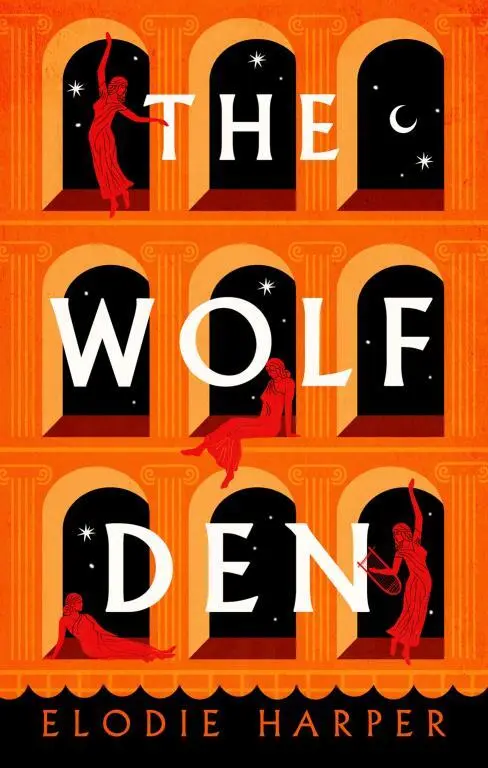
- Название:The Wolf Den
- Автор:
- Издательство:Head of Zeus
- Жанр:
- Год:2021
- Город:London
- ISBN:978-1-83893-353-1
- Рейтинг книги:3 / 5. Голосов: 1
-
Избранное:Добавить в избранное
- Отзывы:
-
Ваша оценка:
The Wolf Den: краткое содержание, описание и аннотация
Предлагаем к чтению аннотацию, описание, краткое содержание или предисловие (зависит от того, что написал сам автор книги «The Wolf Den»). Если вы не нашли необходимую информацию о книге — напишите в комментариях, мы постараемся отыскать её.
The Wolf Den — читать онлайн бесплатно полную книгу (весь текст) целиком
Ниже представлен текст книги, разбитый по страницам. Система сохранения места последней прочитанной страницы, позволяет с удобством читать онлайн бесплатно книгу «The Wolf Den», без необходимости каждый раз заново искать на чём Вы остановились. Поставьте закладку, и сможете в любой момент перейти на страницу, на которой закончили чтение.
Интервал:
Закладка:
Amara is Smilax, her voice deliberately shrill in rejection. Nobody is meant to have sympathy for the nymph, after all. She exaggerates the comedy, at times pausing her playing and holding up the lyre between them as a physical barrier. The guests laugh as Dido chases her, the song becoming more and more ridiculous, until they shift into another tune, allowing Flora to transform Crocus into a beautiful flower and Smilax into ugly bindweed. Dido sings the last notes, lifting her arms up like petals to the sun, until she stops, as still as the statues behind them.
The guests cheer, and Amara feels a flood of relief. She looks round at the unfamiliar faces, shining with wine and enjoyment. She smiles, bowing low. Egnatius is beside her when she straightens up, whispering that they must join the diners for a while. He leads them both, leaving Amara at one couch and taking Dido on to another.
“I always say Greek girls are the best,” declares one of the two men she is now sitting between. He reminds her of an overfilled wineskin, not quite contained in the tight folds of his clothes.
“I like a bit of Gallic passion myself,” replies the other, sipping his drink. His thick beard is curled, the black shot through with grey and ginger. “Though that was a lovely little number you sang just now. Not heard those words before.”
“It’s from a Greek poem,” Amara replies. “The tune is local to Campania.”
“Fuscus will like that,” the first man says, nodding at his companion. “Always interested in poetry. More time to enjoy it now his stint as duumvir is finished.” Amara turns to Fuscus and smiles, trying not to make her sudden interest in an influential man too obvious. The duoviri are the town’s most powerful elected officials. Fuscus has a mildness to his face, she thinks. Perhaps he will be kind. Surely that’s more important than the fact his hair is thinning? “Can’t say I know so much poetry myself,” the larger man continues. “I’m Umbricius,” he adds, as if expecting her to be able to identify him by name alone.
“Forgive me,” Amara replies in her thickest Greek accent. “I only just arrived in Pompeii.”
“Oldest fish sauce business in town,” Umbricius says. “And the best.” He picks up a small jug from the side table and pours it liberally onto the plate of meat in front of them. Then he tears a strip off and holds it out for her on his knife. “Tell me what you think.”
Amara takes it, eating the unknown food smothered in fish sauce as daintily as she can. It tastes like fermented anchovies left out too long in the sun. “Delicious!” she exclaims.
“What other Greek poems will you be singing?” Fuscus asks.
He is watching her lick the last of the sauce from her fingers. “Sappho,” she says, leaning closer.
“Not very original.” Fuscus stares through the transparent fabric of her dress. “But still a goddess among poets.”
“What about some Latin?” Umbricius sniffs, clearly irritated at being overlooked.
“We will be performing a few lines by our host.”
The two men laugh. “Oh, you poor girls,” Fuscus says. “Do you have to?”
Amara knows it is one thing for Cornelius’s friends to mock him, quite something else for her to join them. “It is always a pleasure to honour our host.”
“Yes, yes, of course, of course ,” Fuscus says, rolling his eyes. “Well, I shall look forward to Sappho, at any rate.” He takes her hand, rubbing his thumb over her fingers in an insistent, circular motion. “And perhaps you will join me again, afterwards.”
The atmosphere of the evening shifts as the hours pass and the wine flows. After every song, the guests become freer with her and Dido, their comments lewder. Fuscus exchanges words – or perhaps money – with Egnatius, who makes it clear that she is now the duumvir’s special ‘guest’. As the men become louder, the small group of wives play less and less of a role, retreating into their own self-contained gathering across two couches. Not that this assuages Cornelius’s bitterness towards his wife. He contradicts everything she says – if she enjoys the honey-glazed dormouse, he finds it too sweet, her hopes of sunshine tomorrow are scorned. Even when she is silent, he cannot leave her alone, finding reason to mock her posture, her spinning, the way she holds her glass.
Already small, she seems to shrink further with every comment. Amara notices that her hand, when she raises the wine to her lips, is shaking. “I find I am exhausted,” Calpurnia says at last. “I am sorry to leave you all.”
Cornelius says nothing, as if she hasn’t spoken. Thin and pale, his wife slips from her own dining room, looking more like a servant than the hostess.
“I don’t know why he doesn’t just divorce the poor girl,” Fuscus says to Umbricius. “Put her out of her misery.”
“Severus would ask for the whole dowry back if he had to take his daughter home. He’s told me so himself.” Changing his focus, Umbricius nods towards the older scowling woman who was sharing Calpurnia’s couch and is now stabbing at the fruit on her plate with vicious determination. “My wife dotes on Calpurnia. I’ll be getting a fucking earful after this, I can tell you. She’ll be nagging me all night to talk to Cornelius. I’ve told her it makes him worse. But women never listen.”
“That’s why I left mine at home,” Fuscus replies, his arm draped round Amara.
“You’ll be staying then?” There’s more than a hint of envy in Umbricius’s voice.
“Oh, I think so, don’t you?” Fuscus replies, drawing Amara a little closer. “I think so.”
She smiles at him, hoping to convey how irresistible she finds the idea. Behind his head, she can see Dido sitting with Quintus and Marcus. The three of them are laughing together, like a pastoral scene of young lovers. She feels a pang of envy then reminds herself what a powerful friend Fuscus may prove to be. Neither of the Vinalia boys have shown much promise as regular patrons.
“Time for the mime, don’t you think?” Cornelius’s voice is loud over the hubbub. He is slurring badly.
“Not yet, not yet,” Fuscus, shouts back. “I think the two little sparrows have a final present for you.” He squeezes Amara’s arm. “Sorry, darling,” he whispers. “I couldn’t resist.”
“It’s the parting I cannot forgive you for,” Amara says as she gets up from the couch, letting go of his hand with a show of reluctance. She joins Dido back by the fountain, the blood beating loud in her ears. Neither of them have drunk much wine, but the same cannot be said for anyone else. Which is just as well. Cornelius’s verses would be impossible to sit through sober.
“In honour of our gracious host,” Amara says. “We have been bold enough to set your own hymn to music.” She does not wait to hear the room’s reaction but loudly strikes up on the lyre, at a much faster pace than when she played the same tune earlier. She and Dido sing in unison, as quickly as they can without gabbling.
“Oh lovely Flora!
Goddess of flowers and fucking,
With your lovely toes and your dainty nose,
Your fanny like corn ripe for shucking,
Bless the spring with your lovely ring!
Oh lovely Flora!”
Cornelius either does not care that everyone is laughing when they reach the final refrain or is too drunk to realize. He smiles as they all applaud, waving a hand as if to deprecate the admiration. “Just a trifle, a trifle,” he says. “Though the girls sang it very prettily.”
“Mime, mime, mine!” A number of people are stamping their feet, impatient for the final performance.
One of the nearby guests staggers up and takes hold of Dido, almost pulling her over in the effort to get her onto his couch. Amara hurries back to Fuscus.
Читать дальшеИнтервал:
Закладка:
Похожие книги на «The Wolf Den»
Представляем Вашему вниманию похожие книги на «The Wolf Den» списком для выбора. Мы отобрали схожую по названию и смыслу литературу в надежде предоставить читателям больше вариантов отыскать новые, интересные, ещё непрочитанные произведения.











Обсуждение, отзывы о книге «The Wolf Den» и просто собственные мнения читателей. Оставьте ваши комментарии, напишите, что Вы думаете о произведении, его смысле или главных героях. Укажите что конкретно понравилось, а что нет, и почему Вы так считаете.