Ken Follett - World Without End
Здесь есть возможность читать онлайн «Ken Follett - World Without End» весь текст электронной книги совершенно бесплатно (целиком полную версию без сокращений). В некоторых случаях можно слушать аудио, скачать через торрент в формате fb2 и присутствует краткое содержание. Жанр: Историческая проза, на английском языке. Описание произведения, (предисловие) а так же отзывы посетителей доступны на портале библиотеки ЛибКат.
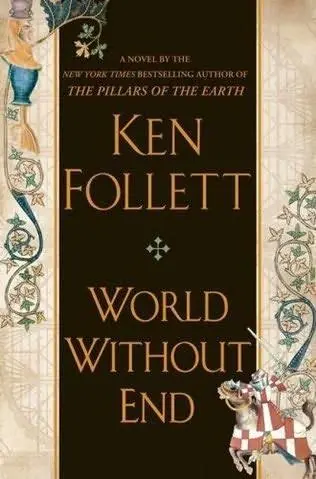
- Название:World Without End
- Автор:
- Жанр:
- Год:неизвестен
- ISBN:нет данных
- Рейтинг книги:5 / 5. Голосов: 1
-
Избранное:Добавить в избранное
- Отзывы:
-
Ваша оценка:
World Without End: краткое содержание, описание и аннотация
Предлагаем к чтению аннотацию, описание, краткое содержание или предисловие (зависит от того, что написал сам автор книги «World Without End»). Если вы не нашли необходимую информацию о книге — напишите в комментариях, мы постараемся отыскать её.
Ken Follett has 90 million readers worldwide. The Pillars of the Earth is his bestselling book of all time. Now, eighteen years after the publication of The Pillars of the Earth, Ken Follett has written the most-anticipated sequel of the year, World Without End.
In 1989 Ken Follett astonished the literary world with The Pillars of the Earth, a sweeping epic novel set in twelfth-century England centered on the building of a cathedral and many of the hundreds of lives it affected. Critics were overwhelmed-"it will hold you, fascinate you, surround you" (Chicago Tribune)-and readers everywhere hoped for a sequel.
World Without End takes place in the same town of Kingsbridge, two centuries after the townspeople finished building the exquisite Gothic cathedral that was at the heart of The Pillars of the Earth. The cathedral and the priory are again at the center of a web of love and hate, greed and pride, ambition and revenge, but this sequel stands on its own. This time the men and women of an extraordinary cast of characters find themselves at a crossroad of new ideas-about medicine, commerce, architecture, and justice. In a world where proponents of the old ways fiercely battle those with progressive minds, the intrigue and tension quickly reach a boiling point against the devastating backdrop of the greatest natural disaster ever to strike the human race-the Black Death.
Three years in the writing, and nearly eighteen years since its predecessor, World Without End breathes new life into the epic historical novel and once again shows that Ken Follett is a masterful author writing at the top of his craft.
World Without End — читать онлайн бесплатно полную книгу (весь текст) целиком
Ниже представлен текст книги, разбитый по страницам. Система сохранения места последней прочитанной страницы, позволяет с удобством читать онлайн бесплатно книгу «World Without End», без необходимости каждый раз заново искать на чём Вы остановились. Поставьте закладку, и сможете в любой момент перейти на страницу, на которой закончили чтение.
Интервал:
Закладка:
Gwenda went to Hundredacre and began weeding one of Wulfric’s strips, pulling up the persistent new growth of dockweed, marigolds and dogfennel from between his stalks of wheat. She was happy working on his land, helping him, whether he knew about it or not. Every time she bent down, she was saving his back the same effort; every time she pulled a weed she made his crop greater. It was like giving him presents. As she worked she thought of him, picturing his face when he laughed, hearing his voice, the deep voice of a man yet with the eagerness of a boy. She touched the green shoots of his wheat and imagined she was stroking his hair.
She weeded until sunrise then moved to the demesne lands – those strips farmed by the lord, or his labourers – and worked for pay. Although Sir Stephen was dead, his crops still had to be reaped, and his successor would demand a strict account of what had been done with the proceeds. At sundown, having earned her daily bread, Gwenda would move to another part of Wulfric’s holding and work there until dark – longer, if there was a moon.
She had said nothing to Wulfric. But, in a village of only two hundred people, few things remained secret for long. Widow Huberts had asked her, with gentle curiosity, what she hoped to achieve. “He’s going to marry Perkin’s girl, you know – you can’t prevent that.”
“I just want him to succeed,” Gwenda had replied. “He deserves it. He’s an honest man with a good heart, and he’s willing to work until he drops. I want him to be happy, even if he does marry that bitch.”
Today the demesne workers were in Brookfield, harvesting the lord’s early peas and beans, and Wulfric was nearby, digging a drainage ditch: the land was swampy after the heavy rain of early June. Gwenda watched him working, wearing only his drawers and boots, his broad back bending over the spade. He moved as tirelessly as a millwheel. Only the sweat glistening on his skin betrayed the effort he was making. At midday Annet came to him, looking pretty with a green ribbon in her hair, carrying a jug of ale and some bread and cheese wrapped in a piece of sacking.
Nate Reeve rang a bell, and everyone stopped work and retreated to the fringe of trees at the north end of the field. Nate gave out cider, bread and onions to the demesne workers: dinner was included in their remuneration. Gwenda sat with her back against a hornbeam tree and studied Wulfric and Annet with the fascination of a condemned man watching the carpenter build the gallows.
At first, Annet was her usual flirtatious self, tilting her head, batting her eyelids, playfully striking Wulfric in mock punishment for something he said. Then she became serious, speaking to him insistently while he seemed to protest innocence. They both looked at Gwenda, and she guessed they were talking about her. She presumed Annet had found out about her working on Wulfric’s strips in the mornings and evenings. Eventually Annet left, looking petulant, and Wulfric finished his dinner in thoughtful solitude.
After eating, everyone rested for the remainder of the dinner hour. The older people lay full length on the ground and dozed while the youngsters chatted. Wulfric came to where Gwenda sat and crouched beside her. “You’ve been weeding my strips,” he said.
Gwenda was not going to apologize. “I suppose Annet scolded you.”
“She doesn’t want you working for me.”
“What would she like me to do, put the weeds back in the earth?”
He glanced around and lowered his voice, not wanting others to hear – although everyone could surely guess what he and Gwenda were saying to one another. “I know you mean well, and I’m grateful, but it’s causing trouble.”
She enjoyed being this close to him. He smelled of earth and sweat. “You need help,” she said. “And Annet isn’t much use.”
“Please don’t criticize her. In fact, don’t speak of her at all.”
“All right, but you can’t get the harvest in alone.”
He sighed. “If only the sun would shine.” Automatically, he looked up at the sky, a peasant reflex. There was thick cloud from horizon to horizon. All the grain crops were struggling in the cool, damp weather.
“Let me work for you,” Gwenda begged. “Tell Annet you need me. A man is supposed to be master of his wife, not the other way around.”
“I’ll think about it,” he said.
But the next day he hired a labourer.
He was a travelling man who showed up at the end of the afternoon. The villagers gathered around him in the twilight to hear his story. His name was Gram and he came from Salisbury. He said his wife and children had been killed when his house burned down. He was on his way to Kingsbridge, where he hoped to get employment, perhaps at the priory. His brother was a monk there.
Gwenda said: “I probably know him. My brother, Philemon, has worked at the priory for years. What’s your brother’s name?”
“John.” There were two monks called John but, before Gwenda could ask which was Gram’s brother, he went on: “When I started out, I had a little money to buy food along the way. Then I was robbed by outlaws, and now I’m penniless.”
There was a lot of sympathy for the man. Wulfric invited him to sleep at his house. The next day, Saturday, he started to work for Wulfric, accepting board and lodging and a share of the harvest as his remuneration.
Gram worked hard all day Saturday. Wulfric was shallow-ploughing his fallow land in Longfield to destroy thistles. It was a two-man job: Gram led the horse, whipping it on when it flagged, while Wulfric guided the plough. On Sunday they rested.
In church on Sunday, Gwenda burst into tears when she saw Cath, Joanie and Eric. She had not realized how badly she missed them. She held Eric through the service. Afterwards, her mother spoke harshly to her. “You’re breaking your heart for that Wulfric. Weeding his strips won’t make him love you. He’s cross-eyed for that worthless Annet.”
“I know,” Gwenda said. “But I want to help him anyway.”
“You should leave the village. There’s nothing for you here.”
She knew her mother was right. “I will,” she said. “I’ll leave the day after their wedding.”
Ma lowered her voice. “If you must stay, watch out for your father. He hasn’t given up hope of another twelve shillings.”
“What do you mean?” Gwenda asked.
Ma just shook her head.
“He can’t sell me now,” Gwenda said. “I’ve left his house. He doesn’t feed or shelter me. I work for the lord of Wigleigh. I’m not Pa’s to dispose of any longer.”
“Just watch out,” said Ma, and she would say no more.
Outside the church the travelling man, Gram, talked to Gwenda, asking her questions about herself, and suggested they take a stroll together after dinner. She guessed what he meant by a ‘stroll’ and turned him down flat, but later she saw him with yellow-haired Joanna, the daughter of David Johns, who was only fifteen and stupid enough to fall for the blandishments of a travelling man.
On Monday, Gwenda was weeding Wulfric’s wheat on Hundredacre in the half-light before sunrise when Wulfric came across the field towards her at a run. His face was grim with fury.
She had continued to defy his wishes, working on his lands every morning and evening, and it looked as if she had driven him too far. What would he do – beat her up? After the way she had provoked him, he could probably do violence to her with impunity – people would say she had asked for it, and she had no one to stick up for her now that she had left her parents’ home. She felt scared. She had seen Wulfric break Ralph Fitzgerald’s nose.
Then she told herself not to be foolish. Although he had been in many fights, she had never known him to strike a woman or a child. All the same, his anger made her tremble.
Читать дальшеИнтервал:
Закладка:
Похожие книги на «World Without End»
Представляем Вашему вниманию похожие книги на «World Without End» списком для выбора. Мы отобрали схожую по названию и смыслу литературу в надежде предоставить читателям больше вариантов отыскать новые, интересные, ещё непрочитанные произведения.




Обсуждение, отзывы о книге «World Without End» и просто собственные мнения читателей. Оставьте ваши комментарии, напишите, что Вы думаете о произведении, его смысле или главных героях. Укажите что конкретно понравилось, а что нет, и почему Вы так считаете.