Ken Follett - World Without End
Здесь есть возможность читать онлайн «Ken Follett - World Without End» весь текст электронной книги совершенно бесплатно (целиком полную версию без сокращений). В некоторых случаях можно слушать аудио, скачать через торрент в формате fb2 и присутствует краткое содержание. Жанр: Историческая проза, на английском языке. Описание произведения, (предисловие) а так же отзывы посетителей доступны на портале библиотеки ЛибКат.
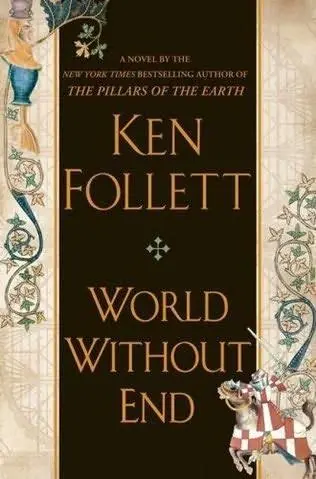
- Название:World Without End
- Автор:
- Жанр:
- Год:неизвестен
- ISBN:нет данных
- Рейтинг книги:5 / 5. Голосов: 1
-
Избранное:Добавить в избранное
- Отзывы:
-
Ваша оценка:
World Without End: краткое содержание, описание и аннотация
Предлагаем к чтению аннотацию, описание, краткое содержание или предисловие (зависит от того, что написал сам автор книги «World Without End»). Если вы не нашли необходимую информацию о книге — напишите в комментариях, мы постараемся отыскать её.
Ken Follett has 90 million readers worldwide. The Pillars of the Earth is his bestselling book of all time. Now, eighteen years after the publication of The Pillars of the Earth, Ken Follett has written the most-anticipated sequel of the year, World Without End.
In 1989 Ken Follett astonished the literary world with The Pillars of the Earth, a sweeping epic novel set in twelfth-century England centered on the building of a cathedral and many of the hundreds of lives it affected. Critics were overwhelmed-"it will hold you, fascinate you, surround you" (Chicago Tribune)-and readers everywhere hoped for a sequel.
World Without End takes place in the same town of Kingsbridge, two centuries after the townspeople finished building the exquisite Gothic cathedral that was at the heart of The Pillars of the Earth. The cathedral and the priory are again at the center of a web of love and hate, greed and pride, ambition and revenge, but this sequel stands on its own. This time the men and women of an extraordinary cast of characters find themselves at a crossroad of new ideas-about medicine, commerce, architecture, and justice. In a world where proponents of the old ways fiercely battle those with progressive minds, the intrigue and tension quickly reach a boiling point against the devastating backdrop of the greatest natural disaster ever to strike the human race-the Black Death.
Three years in the writing, and nearly eighteen years since its predecessor, World Without End breathes new life into the epic historical novel and once again shows that Ken Follett is a masterful author writing at the top of his craft.
World Without End — читать онлайн бесплатно полную книгу (весь текст) целиком
Ниже представлен текст книги, разбитый по страницам. Система сохранения места последней прочитанной страницы, позволяет с удобством читать онлайн бесплатно книгу «World Without End», без необходимости каждый раз заново искать на чём Вы остановились. Поставьте закладку, и сможете в любой момент перейти на страницу, на которой закончили чтение.
Интервал:
Закладка:
The crowd surged forward. “I see it!” someone shouted, and others repeated the cry. Caris could see nothing other than normal armpit hair, and she was unwilling to commit the indignity of peering. She had no doubt that Nell had some kind of blemish or growth there. Lots of people had marks on their skin, especially the elderly.
Archdeacon Lloyd called for order, and John Constable beat the crowd back with a stick. When at last the church was quiet, Richard stood up. “Crazy Nell of Kingsbridge, I find you guilty of heresy,” he said. “You shall now be tied to the back of a cart and whipped through the town, then taken to the place known as Gallows Cross, where you shall be hanged by the neck until you die.”
The crowd cheered. Caris turned away in disgust. With justice like this, no woman was safe. Her eye lit on Merthin, waiting patiently for her. “All right,” she said bad-temperedly. “What is it?”
“It’s stopped raining,” he said. “Come down to the river.”
The priory had a string of ponies for the senior monks and nuns to use when travelling, plus some carthorses for transporting goods. These were kept, along with the mounts of prosperous visitors, in a run of stone stables at the south end of the cathedral close. The nearby kitchen garden was manured with the straw from the stalls.
Ralph was in the stable yard, with the rest of Earl Roland’s entourage. Their horses were saddled ready to begin the two-day journey back to Roland’s residence at Earlscastle, near Shiring. They were waiting only for the earl.
Ralph was holding his horse, a bay called Griff, and talking to his parents. “I don’t know why Stephen was made lord of Wigleigh while I got nothing,” he said. “We’re the same age, and he’s no better than I am at riding or jousting or fencing.”
Every time they met, Sir Gerald asked the same hopeful questions, and Ralph had to give him the same inadequate answers. Ralph could have borne his disappointment more easily had it not been for his father’s pathetic eagerness to see him elevated.
Griff was a young horse. He was a hunter: a mere squire did not merit a costly warhorse. But Ralph liked him. He responded gratifyingly well when Ralph urged him on in the hunt. Griff was excited by all the activity in the yard, and impatient to get going. Ralph murmured in his ear: “Quiet, my lovely lad, you shall stretch your legs later.” The horse calmed down at the sound of his voice.
“Be constantly on the alert for ways to please the earl,” Sir Gerald said. “Then he will remember you when there is a post to be filled.”
That was all very well, Ralph thought, but the real opportunities came only in battle. However, war might be a little nearer today than it had been a week ago. Ralph had not been in on the meetings between the earl and the wool merchants, but he gathered that the merchants were willing to lend money to King Edward. They wanted the king to take some decisive action against France, in retaliation for French attacks on the south coast ports.
Meanwhile, Ralph longed for some way to distinguish himself and begin to win back the honour the family had lost ten years ago – not just for his father, but for his own pride.
Griff stamped and tossed his head. To calm him, Ralph began to walk him up and down, and his father walked with him. His mother stood apart. She was upset about his broken nose.
With Father he walked past Lady Philippa, who was holding the bridle of a spirited courser with a firm hand while she talked to her husband, Lord William. She wore close-fitting clothes, which were suitable for a long ride but also emphasized her full bosom and long legs. Ralph was always on the lookout for excuses to talk to her, but it did him no good: he was just one of her father-in-law’s followers, and she never spoke to him unless she had to.
As Ralph watched, she smiled at her husband and tapped him on the chest with the back of her hand in a gesture of mock reprimand. Ralph was filled with resentment. Why should it not be him with whom she was sharing such a moment of private amusement? No doubt she would if he were lord of forty villages, as William was.
Ralph felt that his life was all aspiration. When would he actually achieve something? He and his father walked the length of the yard then turned and came back.
He saw a one-armed monk come out of the kitchen and cross the yard, and was struck by how familiar the man looked. A moment later, he remembered how he knew the face. This was Thomas Langley, the knight who had killed one of the men-at-arms in the forest ten years ago. Ralph had not seen the man since that day, but his brother Merthin had, for the knight-become-monk was now responsible for supervising repairs to the priory buildings. Thomas wore a drab robe instead of the fine clothes of a knight, and had his head shaved in the monkish tonsure. He was heavier around the waist, but still carried himself like a fighting man.
As Thomas walked past, Ralph said casually to Lord William: “There he goes – the mystery monk.”
William said sharply: “What do you mean?”
“Brother Thomas. He used to be a knight, and no one knows why he joined the monastery.”
“What the devil do you know of him?” William’s tone showed anger, although Ralph had said nothing offensive. Perhaps he was in a bad mood, despite the affectionate smiles of his beautiful wife.
Ralph wished he had not begun the conversation. “I was here the day he came to Kingsbridge,” he said. He hesitated, recalling the oath the children had sworn that afternoon. Because of that, and because of William’s inexplicable annoyance, Ralph did not tell the whole story. “He staggered into town bleeding from a sword wound,” he went on. “A boy remembers such things.”
Philippa said: “How curious.” She looked at her husband. “Do you know what Brother Thomas’s story is?”
“Certainly not,” William snapped. “How would I know a thing like that?”
She shrugged and turned away.
Ralph walked on, glad to get away. “Lord William was lying,” he said to his father in a low voice. “I wonder why?”
“Don’t ask any more questions about that monk,” Father said anxiously. “It’s obviously a touchy subject.”
At last Earl Roland appeared. Prior Anthony was with him. The knights and squires mounted up. Ralph kissed his parents and swung himself into the saddle. Griff danced sideways, eager to be off. The motion made Ralph’s broken nose hurt like fire. He gritted his teeth: there was nothing he could do but endure it.
Roland went up to his horse, Victory, a black stallion with a white patch over one eye. He did not mount, but took the bridle and began to walk, still in conversation with the prior. William called out: “Sir Stephen Wigleigh and Ralph Fitzgerald, ride ahead and clear the bridge.”
Ralph and Stephen rode across the cathedral green. The grass was trampled and the ground muddy from the Fleece Fair. A few stalls were still doing business, but most were closing, and many had already gone. They passed out through the priory gates.
On the main street, Ralph saw the boy who had given him a broken nose. Wulfric, his name was, and he came from Stephen’s village of Wigleigh. The left side of his face was bruised and swollen where Ralph had repeatedly punched him. Wulfric was outside the Bell inn with his father, mother and brother. They appeared to be about to leave.
You’d better hope you never meet me again, Ralph thought.
He tried to think of some insult to shout, but he was distracted by the sound of a crowd.
As he and Stephen rode down the main street, their horses stepping adroitly through the mud, they saw ahead of them a mob of people. Half way down the hill, they were forced to stop.
Читать дальшеИнтервал:
Закладка:
Похожие книги на «World Without End»
Представляем Вашему вниманию похожие книги на «World Without End» списком для выбора. Мы отобрали схожую по названию и смыслу литературу в надежде предоставить читателям больше вариантов отыскать новые, интересные, ещё непрочитанные произведения.
Обсуждение, отзывы о книге «World Without End» и просто собственные мнения читателей. Оставьте ваши комментарии, напишите, что Вы думаете о произведении, его смысле или главных героях. Укажите что конкретно понравилось, а что нет, и почему Вы так считаете.