Ever Dundas - Goblin
Здесь есть возможность читать онлайн «Ever Dundas - Goblin» весь текст электронной книги совершенно бесплатно (целиком полную версию без сокращений). В некоторых случаях можно слушать аудио, скачать через торрент в формате fb2 и присутствует краткое содержание. Город: Glasgow, Год выпуска: 2017, ISBN: 2017, Издательство: Freight Books, Жанр: Историческая проза, на английском языке. Описание произведения, (предисловие) а так же отзывы посетителей доступны на портале библиотеки ЛибКат.
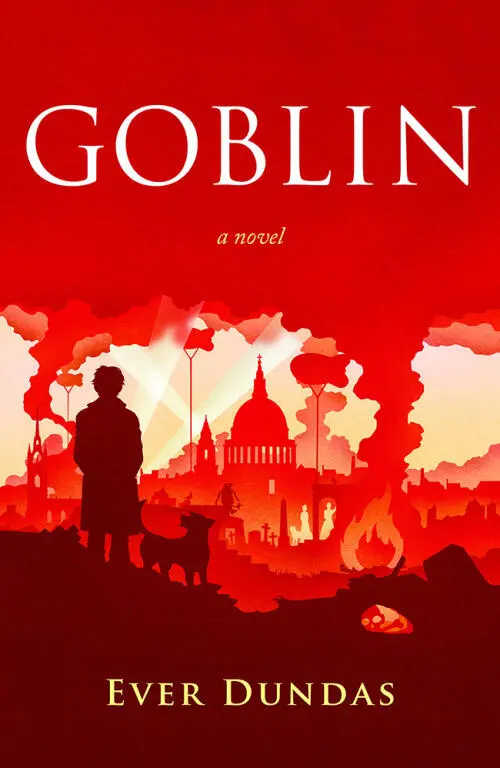
- Название:Goblin
- Автор:
- Издательство:Freight Books
- Жанр:
- Год:2017
- Город:Glasgow
- ISBN:978-1-911332-29-9
- Рейтинг книги:5 / 5. Голосов: 1
-
Избранное:Добавить в избранное
- Отзывы:
-
Ваша оценка:
Goblin: краткое содержание, описание и аннотация
Предлагаем к чтению аннотацию, описание, краткое содержание или предисловие (зависит от того, что написал сам автор книги «Goblin»). Если вы не нашли необходимую информацию о книге — напишите в комментариях, мы постараемся отыскать её.
A novel set between the past and present with magical realist elements. Goblin is an outcast girl growing up in London during World War 2. After witnessing a shocking event she increasingly takes refuge in a self-constructed but magical imaginary world. Having been rejected by her mother, she leads a feral life amidst the craters of London’s Blitz, and takes comfort in her family of animals, abandoned pets she’s rescued from London’s streets.
In 2011, a chance meeting and an unwanted phone call compels an elderly Goblin to return to London amidst the riots and face the ghosts of her past. Will she discover the truth buried deep in her fractured memory or retreat to the safety of near madness? In Goblin, debut novelist Dundas has constructed an utterly beguiling historical tale with an unforgettable female protagonist at its centre.
Goblin — читать онлайн бесплатно полную книгу (весь текст) целиком
Ниже представлен текст книги, разбитый по страницам. Система сохранения места последней прочитанной страницы, позволяет с удобством читать онлайн бесплатно книгу «Goblin», без необходимости каждый раз заново искать на чём Вы остановились. Поставьте закладку, и сможете в любой момент перейти на страницу, на которой закончили чтение.
Интервал:
Закладка:
‘I know.’
‘Look, Goblin, the animals here are well cared for. You know that. I agree, though, that the travelling can put too much stress on some of them. I don’t think we should have elephants but there’s no way James and Mad are going to lose their star attractions. It’d sink the circus.’
‘Don’t you think an all-human circus would work?’
‘No way, Goblin. We take away the animals and we take away the audience. It’s as simple as that. And I love my job. You want me to lose my job?’
‘No, I just… It’s just a thought.’
‘The animals would be put down or trapped in some zoo. You wouldn’t be doing them any favours. They’re better here with us.’
‘Time,’ I said to mum. ‘More time, for the animals to get out of their cages when we travel. More workers to look after them.’
‘No,’ said mum. ‘We can’t afford to. Things are tight, Goblin. We’re competing with TV and cinema. We can’t afford more time or workers, we’re stretched as it is. The animals are happy, G. It’s in our interest that they’re happy. Don’t worry, they’re well looked after.’
Read all about it – life in the circus. TV and cinema were taking over, but the circus still intrigued people. There’s always an audience who want to know more about the circus life. They want to know what’s behind the fantasy. They want to know about the people who perform such feats, who travel with elephants and tigers, who descend upon towns in a flurry of glitter and music, trumpeting and roars.
I used my initial ‘G’, and ‘Bradfield’, my new surname after Mad and James adopted me, and I pitched to UK newspapers. I had several rejections before a tabloid accepted my pitch, but they wanted sensational stories and more focus on the freaks. I talked to my Freaks and Wonders friends over a drink and they said, ‘Sure, G. If it gets more people in, write whatever you want.’ We sat for hours, laughing as we made up sensational stories of infidelity and freak fetishists. In the cold light of day I had to hold back on the outlandish tales as I didn’t want to get in trouble in my first journalist job for making up articles. I based the columns on real life experiences and framed them with rumour and hearsay: ‘It’s been said that the Lizard King killed the mob who murdered his wife…’
I gave the money from the weekly column to mum and dad for the animals. We hired more workers to help with the animals and we hired a full-time vet. As we travelled, we had an extra few minutes to check on them, to let some of them out of their cages. The circus started to make more money too – there was an increase in audience numbers as we toured, with fans clamouring for autographs from the freaks whose stories I’d told: ‘Is it true that—?’ ‘Did you really—?’
I wrote my columns, I sold my photographs; life in the circus – read all about it.
When my column came to an end I was approached by a broadsheet; they wanted a more serious one-off piece, so I wrote about the animals.
When it was published it was seen as a betrayal. I used a pseudonym and changed all the names of my circus colleagues, but they still saw it as a personal attack. I’d proposed that circuses only use domesticated animals, such as horses and dogs, and I called for stronger regulation on the trade of ‘exotic’ animals. I also wrote with admiration of trainers like Milly, and how they loved the animals and treated them well. I thought it was even-handed. I thought I’d argued my point about animals in the circus without demonising anyone, but mum and dad stopped speaking to me. When I tried to speak to them they’d pretend I wasn’t there until mum turned to me and said, ‘No more articles.’
Colin, Milly and the other animal trainers wouldn’t let me near the animals anymore. Some nights I’d sneak in to sleep with the camels but I slept in one morning and Colin discovered me. He changed the locks on their enclosure.
Angelina still talked to me, but wasn’t happy. ‘People don’t trust you anymore, G. Milly said you were asking awkward questions. There’s rumours you’re pressuring your mum and dad to get rid of the animals. No one wants to lose their job, G.’
Things were already difficult with the clown troupe; when I returned after the months spent with the animals they’d devised a whole new act that didn’t include me, and now they wouldn’t speak to me, except for Horatiu.
He came round to my caravan with a bottle of whisky one evening and we sat outside watching the sunset, drinking and talking like we were old friends.
‘The whole community treats me like a pariah, but not you,’ I said.
He shrugged and said, ‘Personally, I don’t give a shit about the animals. Travelling would be a lot easier without the dumb bastards. They draw all the attention. We’d make a fortune if we got rid of those spotlight whores.’
I laughed. ‘I like your perspective.’
I nursed my whisky for a moment then said, ‘But I wasn’t trying to get rid of them, I was just—’
‘Making a point?’
‘Starting a discussion.’
I drank my whisky and looked at him. He continued staring at the sunset.
‘Why are you being so nice to me?’ I said. ‘After how I treated you?’
‘Tim said what it was about, and I understand your feelings about the past.’ He looked at me and said, ‘You just took it out on me.’
I felt myself blush and looked away, down into my whisky glass.
‘I’m sorry,’ I said, glancing at him, ‘I’m sorry, Horatiu.’
‘It’s all in the past,’ he said.
I looked up at him and smiled, shaking my head.
‘Yeah,’ I said, ‘all in the past.’
‘I’ll drink to that. More?’
When he reached over for the whisky bottle his sleeve rolled up and I saw the small faded tattoo on his forearm. He glanced at me, pulled his sleeve down, and poured me another glass.
‘To the past,’ he said, raising his glass. ‘To leaving it behind.’
I met his glass with mine and we knocked back the whisky, sitting in silence. I recited the numbers on his arm over and over in my head until they became meaningless.
‘Did you travel much, Horatiu? Before the war?’
‘Not before the war.’
He didn’t elaborate and we sat in silence until I said, ‘You think it’s okay not having a home? Do you think we’re missing something?’
‘You carry your home with you, G. Modern living is an illness. Those people, settled, with their comforts – they’re never happy, never truly alive.’
Eventually things returned to normal. Mum and dad talked to me again after a month or so. They never brought it up, just got on with things as if it had never happened. A few of the other circus folk thawed too, but there was still an awkwardness with some of them and Milly wouldn’t speak to me at all. I stopped writing articles on circus life and put more time into fiction and photography, getting several short stories and photographs published. I didn’t go back into clowning or looking after the animals. I spent my time in Freaks and Wonders, taking photographs, and writing. Creating a different future for myself.
Then the dog was found hanging from one of the candy-striped circus poles, neck broken, tongue lolling. I couldn’t look at his eyes. I was a murderer and I was being arrested.
Chapter 11
London, 30 November 2011
Who’s responsible for this, Goblin? Don’t you want them brought to justice?
I’m responsible. I was born blue. I could have died. Could’ve, should’ve.
Just give me their names.
There can never be justice. She was tied up and dragged down until she drowned. There’s red in the river and it’s too late.
Читать дальшеИнтервал:
Закладка:
Похожие книги на «Goblin»
Представляем Вашему вниманию похожие книги на «Goblin» списком для выбора. Мы отобрали схожую по названию и смыслу литературу в надежде предоставить читателям больше вариантов отыскать новые, интересные, ещё непрочитанные произведения.





Обсуждение, отзывы о книге «Goblin» и просто собственные мнения читателей. Оставьте ваши комментарии, напишите, что Вы думаете о произведении, его смысле или главных героях. Укажите что конкретно понравилось, а что нет, и почему Вы так считаете.