Dan Simmons - Black Hills
Здесь есть возможность читать онлайн «Dan Simmons - Black Hills» весь текст электронной книги совершенно бесплатно (целиком полную версию без сокращений). В некоторых случаях можно слушать аудио, скачать через торрент в формате fb2 и присутствует краткое содержание. Год выпуска: 2010, ISBN: 2010, Издательство: Little, Brown & Company, Жанр: Историческая проза, на английском языке. Описание произведения, (предисловие) а так же отзывы посетителей доступны на портале библиотеки ЛибКат.
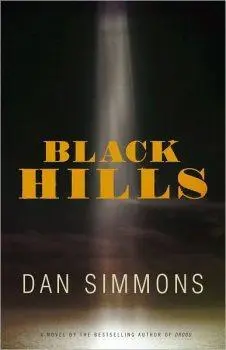
- Название:Black Hills
- Автор:
- Издательство:Little, Brown & Company
- Жанр:
- Год:2010
- ISBN:9780316071963
- Рейтинг книги:5 / 5. Голосов: 1
-
Избранное:Добавить в избранное
- Отзывы:
-
Ваша оценка:
Black Hills: краткое содержание, описание и аннотация
Предлагаем к чтению аннотацию, описание, краткое содержание или предисловие (зависит от того, что написал сам автор книги «Black Hills»). Если вы не нашли необходимую информацию о книге — напишите в комментариях, мы постараемся отыскать её.
In BLACK HILLS, Dan Simmons weaves the stories of Paha Sapa and Custer together seamlessly, depicting a violent and tumultuous time in the history of Native Americans and the United States Army. Haunted by the voice of the general his people called "Long Hair," Paha Sapa lives a long life, driven by a dramatic vision he experiences in the Black Hills that are his tribe's homeland. As an explosives worker on the massive Mount Rushmore project, he may finally be rid of his ghosts?on the very day FDR comes to South Dakota to dedicate the Jefferson face.
Black Hills — читать онлайн бесплатно полную книгу (весь текст) целиком
Ниже представлен текст книги, разбитый по страницам. Система сохранения места последней прочитанной страницы, позволяет с удобством читать онлайн бесплатно книгу «Black Hills», без необходимости каждый раз заново искать на чём Вы остановились. Поставьте закладку, и сможете в любой момент перейти на страницу, на которой закончили чтение.
Интервал:
Закладка:
Paha Sapa and Curly had ridden to the left of the main advance just as there came a wild, brave Lakota charge at the Third Cavalry position there. The Indians—many on foot, those on horseback in clumps and disordered groups—charged forward, firing their own repeater rifles, probing for a weak spot in the Third Cavalry’s dismounted defensive positions. Paha Sapa again was sure that it was Crazy Horse he saw riding back and forth through the thick smoke, urging on the attack, turning back Lakota who had turned to flee, always in the thick of the fiercest action.
Paha Sapa used his bare heels to kick his slow horse into some sort of advance—an awkward, reluctant, clumsy canter—and the boy rode out into the killing zone between the charging Lakota and the firing Third Cavalry. He rode straight toward the half-seen Crazy Horse on the horizon. Paha Sapa dimly remembered the unloaded Colt revolver in his belt and now he drew the useless weapon and waved it in the air, the better to get the attention of the rifle- and pistol-firing Natural Free Human Beings ahead of him.
The air was so thick with bullets that he could hear and feel them buzzing around him. It’s true what the warriors said around the village fire , he thought idiotically. Bullets sound like bees in the middle of a real battle.
Paha Sapa was content. His only regret was that he had never composed his Death Song. But, he realized, he did not deserve a Death Song.
He had lost Limps-a-Lot’s and his people’s Ptehinčala Huhu Canunpa.
A bullet ripped through his sodden blue soldier coat under his arm but did not touch his skin. Another bullet plowed a shallow furrow in his upper thigh. A bullet struck the horn of the saddle, making his slow horse stagger and almost knocking Paha Sapa off the horse. The boy was certain, based on the sudden stab of pain, that a Lakota warrior had shot his balls off, but he stood in the stirrups and looked down, suddenly not so sanguine, and saw no blood. He rode on, waving his pistol and screaming at his fellow Lakota to kill him.
Another bullet creased his skull just above the swollen lump where Curly had clubbed him the previous morning. It did not knock Paha Sapa out this time, and he blinked away the new blood and kicked at the ribs of the slow, lazy, but terrified horse.
A bullet tore away part of his sleeve and the filthy bandage covering his earlier bullet wound from the Crows but did not touch him. Paha Sapa kept hearing buzzing, hissing noises and feeling his oversized blue coat leap up as if there were a strong breeze, but other than the new scratches on his brow and upper leg, nothing touched him.
Paha Sapa would think of this hour fourteen years later when the Paiute prophet Wovoka promised all those who wore the Ghost Dance Shirt that bullets would not and could not touch them. Paha Sapa was wearing a flea-infested, sweat-and-wet-wool-stinking oversized dead wasichu soldier’s blue coat that day, but bullets would not and could not touch him.
Crazy Horse and his surviving warriors were falling back. Crook’s infantry was cheering and charging and firing as they went, and the Third Cavalry was sweeping in from the left, shooting the Lakota wounded and stragglers alike, taking no prisoners.
Paha Sapa’s scabbed, slow horse would move no farther. At first Paha Sapa thought it had been shot—how could anything that large not have been shot in that air so filled with flying lead?—but the nag was simply being stubborn in its terror and had stopped to graze there in the middle of the killing field.
Paha Sapa kicked at the horse’s ribs and sawed and tugged at the reins until the stupid beast turned around and began plodding back toward the line of firing wasichu infantry and dismounted cavalry that had not yet charged. Paha Sapa was still brandishing his unloaded pistol, now hoping and expecting Crook’s soldiers to kill him.
Instead, the wasichu soldiers raised their rifles and cheered. And then they came at Paha Sapa and the retreating Lakota, some running, some of the cavalry trying to mount their panicked horses, with horses and would-be riders whirling in confusion, all their hunger forgotten in their sudden bloodlust to get at the retreating Lakotas.
Paha Sapa slumped in his bullet-shattered saddle and let the slow horse plod him back behind the lines. Finally the nag stopped to graze again, and Paha Sapa slid out of the saddle and landed on his ass, too weak and drained to stand.
Soldiers milled around him. Suddenly Curly was there, face distorted as he jumped off his pony. The old Crow stood over Paha Sapa seated there in the mud, his forearms on his bare knees, and the scout raised and cocked his own Colt revolver.
— Lakota Water Boy , Bilé, Three Weevils and Cuts Noses Off Frequently are dead, killed in this ambush you led us into.
Paha Sapa looked up then. And smiled.
— Good. I hope their corpses are already filled with maggots and that their spirits stay in the mud forever.
Curly grunted and aimed his big pistol at Paha Sapa’s face.
This way, then, O Six Grandfathers? All right. I am sorry I did not compose my Song.
Horses slid to a stop, sending mud flying over Paha Sapa and the old Crow scout. It was General Crook, beaming through his idiot’s whiskers, and a cluster of officers and the guidon carrier. The general was babbling In Glass wasichu talk at Curly before his horse was to a full stop—no one seemed to notice the aimed pistol.
Curly’s round, stupid face gaped up at the wasichu war leader for a full minute before the Crow lowered the pistol and eventually lowered the cocked hammer gently down.
Then Crook and his men were gone.
Curly laughed the laugh of the not quite sane. He spat in the mud and looked at the pistol in his hand.
— Gray Fox says that he knows you, Billy with the Slow Horse, are really Lakota, not Crow, but he welcomes you to be his scout for as long as he, Crook, Gray Fox, commands soldiers and cavalry troopers. He says your courage…
Curly’s face contorted as if the Crow were going to vomit, but he only spat again.
—… he says he will never forget your courage today and only hopes his other scouts learn from it. Oh… and Gray Fox said to me that you are a skeleton and that if Drinks From a Hoofprint and I don’t feed you well and keep you alive, he will hang us both from the first stout tree he finds.
Curly laughed that insane-man’s laugh again. Paha Sapa could only stare at him.

THAT NIGHT Paha Sapa slept, in the rain with no blanket or tarp covering him, for eight hours. Before dawn the bugles blew and Paha Sapa looked forward to another battle.
But no… despite the sound of continued shots between Crazy Horse’s warriors and a rear guard of cavalry and infantry commanded by Bear Coat, Captain Mills… and despite almost six months of searching for the Lakota warriors, two months of that time without any food except horseflesh, and with the two thousand men dedicated to revenge after Custer’s death… Crook was leaving the battlefield.
They’d crossed a wagon trail used by miners headed for the Black Hills, and now Crook put 1,700 of his starving men on that trail. Crazy Horse and his warriors pursued, sniping from the rear and sides day after day, making feints at night, but Crook refused battle.
Except for some two hundred Indian ponies and five thousand pounds of meat they’d stolen in the Indian camps they’d overrun at Slim Buttes, the long-wanted and long-awaited fight with Crazy Horse had shown no victory for Crook and his men. They’d come all the way from the center of Wyoming Territory, having left Fort Fetterman there on March 1 in a heavy snowstorm, and now, after all these months and miles… Crook kept refusing battle with Crazy Horse and the hostiles as the long column of men and horses staggered south into the Black Hills.
Читать дальшеИнтервал:
Закладка:
Похожие книги на «Black Hills»
Представляем Вашему вниманию похожие книги на «Black Hills» списком для выбора. Мы отобрали схожую по названию и смыслу литературу в надежде предоставить читателям больше вариантов отыскать новые, интересные, ещё непрочитанные произведения.

Обсуждение, отзывы о книге «Black Hills» и просто собственные мнения читателей. Оставьте ваши комментарии, напишите, что Вы думаете о произведении, его смысле или главных героях. Укажите что конкретно понравилось, а что нет, и почему Вы так считаете.