Dan Simmons - Black Hills
Здесь есть возможность читать онлайн «Dan Simmons - Black Hills» весь текст электронной книги совершенно бесплатно (целиком полную версию без сокращений). В некоторых случаях можно слушать аудио, скачать через торрент в формате fb2 и присутствует краткое содержание. Год выпуска: 2010, ISBN: 2010, Издательство: Little, Brown & Company, Жанр: Историческая проза, на английском языке. Описание произведения, (предисловие) а так же отзывы посетителей доступны на портале библиотеки ЛибКат.
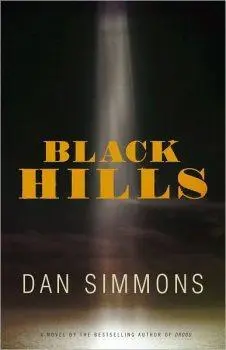
- Название:Black Hills
- Автор:
- Издательство:Little, Brown & Company
- Жанр:
- Год:2010
- ISBN:9780316071963
- Рейтинг книги:5 / 5. Голосов: 1
-
Избранное:Добавить в избранное
- Отзывы:
-
Ваша оценка:
Black Hills: краткое содержание, описание и аннотация
Предлагаем к чтению аннотацию, описание, краткое содержание или предисловие (зависит от того, что написал сам автор книги «Black Hills»). Если вы не нашли необходимую информацию о книге — напишите в комментариях, мы постараемся отыскать её.
In BLACK HILLS, Dan Simmons weaves the stories of Paha Sapa and Custer together seamlessly, depicting a violent and tumultuous time in the history of Native Americans and the United States Army. Haunted by the voice of the general his people called "Long Hair," Paha Sapa lives a long life, driven by a dramatic vision he experiences in the Black Hills that are his tribe's homeland. As an explosives worker on the massive Mount Rushmore project, he may finally be rid of his ghosts?on the very day FDR comes to South Dakota to dedicate the Jefferson face.
Black Hills — читать онлайн бесплатно полную книгу (весь текст) целиком
Ниже представлен текст книги, разбитый по страницам. Система сохранения места последней прочитанной страницы, позволяет с удобством читать онлайн бесплатно книгу «Black Hills», без необходимости каждый раз заново искать на чём Вы остановились. Поставьте закладку, и сможете в любой момент перейти на страницу, на которой закончили чтение.
Интервал:
Закладка:
That last name triggers other names associated with loss in Crazy Horse’s jumbled memory—Rattle Blanket Woman and Lone Bear and Young Little Hawk and, above all others, They Are Afraid of Her.
Paha Sapa weeps silently, his tears mixing with and being swept away by the rain, but the weeping is not for his own loss, not for the terrible Vision or for the certain death of Three Buffalo Woman and Raven and Loud Voice Hawk and Angry Badger and the other corpses he has identified this day, or for the almost-certain loss of his beloved tunkašila , Limps-a-Lot, but for all those like They Are Afraid of Her whom Crazy Horse has lost to death.
Paha Sapa sees, not for the first time, that it is hard being a man.
Paha Sapa shakes his head to rid his mind of memories of rape and lust, of grown-man fury and of knife blades opening up bellies and cutting throats. He does not linger on Crazy Horse’s smug memories of himself counting coup or riding, arms out, across firing lines of wasichu cavalry and infantry.
But it is in the battles that Paha Sapa now searches Tashunke-Witke’s great grab heap of emotion-charged memories.
Paha Sapa searches for his own death in the coming hours and days, for Crazy Horse’s memory of killing the boy who angered him so back in the village just weeks before. Not finding that, he searches Crazy Horse’s memory of fighting the Fat Takers—so many fights, so much screaming of Hokahey! and of leading other warriors toward firing rifles and bluecoats—until he finally finds some memories of Crazy Horse and his men ambushing cavalry in the hills that must be east and a little north of here, of blue-coated wasichus falling that may well be Crook’s cavalry…. One of the dead and falling bluecoats in Crazy Horse’s memory may well be Paha Sapa himself.
In the morning, they rise before the gray dawn—everyone coughing and cold and cursing and shaking soaked blankets or ponchos and tarps—and while some brew up coffee and some troopers still have a few biscuits, Curly and the three Crow scouts merely chew on more cold hardtack. They offer none to Paha Sapa, and the boy realizes that they are going to starve him to death.
He feels the clumsy weight of the Colt revolver in his belt and prays to the Six Grandfathers for cartridges… but he knows in his heart that the Grandfathers are no longer listening to him. Perhaps they have deafened themselves to the prayers of all the Natural Free Human Beings.
— Curly, I know exactly where Crazy Horse and his men are.
The ugly old Crow repeats this to the other three scouts in his ugly Crow language, and all four men laugh. Curly spits into the mud. He is drying off his rifle with a long red cloth he has somehow managed to keep dry through the liquid night.
— You talk shit at us, Bilé … O boy made of mud and water.
— I don’t. I know just where Crazy Horse is hiding with his four hundred men. It is less than three hours’ ride on horseback from here.
The old Crow does not translate this to his fellows but just stares at Paha Sapa with those black, bulging dead-man’s eyes of his.
— How could you know?
— I’ve seen him there. I’ve been with him there. Everyone in our band knows that this is the-place-where-Tashunke-Witke - kills-his-enemies-from-ambush. Crow, Pawnee, Shoshoni, Paiute, Cheyenne, Blackfoot… even wasichu when they are stupid enough to follow him there. And you… General Crook… almost has followed him that far.
— Tell me, Bilé, and I’ll have Three Weevils or Cuts Noses Off Frequently give you one of the biscuits they’ve been hoarding.
Paha Sapa shakes his head. The motion almost makes him vomit or swoon. His skull still aches and his stomach is too empty. But he can speak.
— No. I know exactly where Crazy Horse is this morning. Exactly where he waits for Crook and the rest of you. Crazy Horse and his most important warrior-leaders—He Dog, Brave Wolf, Wears the Deer Bonnet, even Kicking Bear. But I will not tell you. I will tell Crook , through you.
Curly squints at him for a long, long moment. It is still raining. The old Crow’s long braided hair is so soaked through that globs of bear grease stand out like yellow curds in it.
Finally Curly throws himself up onto his horse, pulls the reins of Paha Sapa’s slow old horse from Drinks from a Hoofprint, and growls in his girly-language:
— Get on the horse. Follow me. If you say the wrong thing to the general or if you are wrong about where Crazy Horse is hiding, I’ll cut your throat, scalp you, and cut your balls off myself. All while you watch, Water Boy.

PAHA SAPA has never paid much attention to individual wasichus ; except for the black ones, they all sort of blur together in his vision and memory. In truth, the majority of Wasicun he has seen have been dead.
But General George Crook—he learns the full name only much later, as well as the nickname the Apaches had for him, Gray Fox—is somewhat more memorable than the corpses. The wasichu war chief has taken off his broad-brimmed hat to wring it out as lesser men prepare his mount for the day’s riding, and Paha Sapa sees a tall man with short hair that’s grown erratically into clumps on the narrow head. His face has been deeply tanned in his months in the sun pursuing Paha Sapa’s people, but the forehead is startlingly white. Beneath the jug ears begin side-whiskers that soon leap off the man’s face and down onto his shoulders, crawling almost to his chest. The general doesn’t have a real beard, just those wild side-whiskers that have spilled down onto his neck and crept back to meet under that weak excuse for a chin. Crook’s mustache is just an afterthought, a meek little bridge between two great statements of untended hair.
Crook’s tiny eyes squint at his Crow scout as Curly, shuffling in abasement and apparent embarrassment, conveys Paha Sapa’s statement that he knows where Crazy Horse is hiding this very minute.
The watery little eyes fix on Paha Sapa for a moment, and the Wasicun says something to Curly.
The Crow’s Lakota is worse than ever as he mumbles to Paha Sapa.
— The general wants to know what you want. Why you would tell him this. What do you want in exchange?
Paha Sapa is so exhausted and starved that he looks at the Wasicun without fear. Just a few days ago—an eternity ago—he, Paha Sapa, stood in the hands of one of the Six Grandfathers and spoke to them . How can he fear a mere Wasicun general?
He tells the truth.
— I don’t want anything. I just want to let you know where Crazy Horse is waiting for you.
Well, it is almost the truth. Paha Sapa does want something for himself—he wants to die.
He’s thought about the ways. Limps-a-Lot instilled a great revulsion in the boy for the very idea of taking one’s own life. Of course, Paha Sapa could just try to flee on his slow horse and Curly or one of the other Crows or perhaps a wasichu trooper would do him the service of shooting him dead. But this does not appeal to Paha Sapa. Not after the Vision of the Great Stone Heads.
Paha Sapa knows that he will die if he can escape and present himself to Crazy Horse somewhere about ten miles to the northeast—from the fragments of Tashunke-Witke’s future memories, Paha Sapa is almost certain where the heyoka war chief and his warriors are waiting—but Paha Sapa does not want to die alone that way either.
But, if he tells this Crook the truth about where Crazy Horse is waiting, just beyond the citadel place where Lakota war parties looking for Crows so often camp, ten miles or so from here, Paha Sapa has no doubt that this General Crook and his two thousand men will attack Crazy Horse and his four hundred warriors. After all, isn’t this the reason Crook and all these men have marched and ridden more than four hundred miles through summer heat and this odd, endless summer rain—to find and punish and kill Crazy Horse and the Sioux and Cheyenne who killed Custer?
Читать дальшеИнтервал:
Закладка:
Похожие книги на «Black Hills»
Представляем Вашему вниманию похожие книги на «Black Hills» списком для выбора. Мы отобрали схожую по названию и смыслу литературу в надежде предоставить читателям больше вариантов отыскать новые, интересные, ещё непрочитанные произведения.


Обсуждение, отзывы о книге «Black Hills» и просто собственные мнения читателей. Оставьте ваши комментарии, напишите, что Вы думаете о произведении, его смысле или главных героях. Укажите что конкретно понравилось, а что нет, и почему Вы так считаете.