Dan Simmons - Black Hills
Здесь есть возможность читать онлайн «Dan Simmons - Black Hills» весь текст электронной книги совершенно бесплатно (целиком полную версию без сокращений). В некоторых случаях можно слушать аудио, скачать через торрент в формате fb2 и присутствует краткое содержание. Год выпуска: 2010, ISBN: 2010, Издательство: Little, Brown & Company, Жанр: Историческая проза, на английском языке. Описание произведения, (предисловие) а так же отзывы посетителей доступны на портале библиотеки ЛибКат.
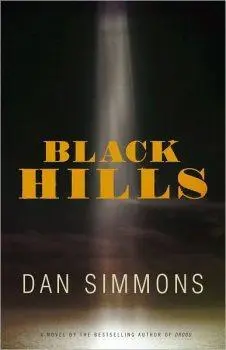
- Название:Black Hills
- Автор:
- Издательство:Little, Brown & Company
- Жанр:
- Год:2010
- ISBN:9780316071963
- Рейтинг книги:5 / 5. Голосов: 1
-
Избранное:Добавить в избранное
- Отзывы:
-
Ваша оценка:
Black Hills: краткое содержание, описание и аннотация
Предлагаем к чтению аннотацию, описание, краткое содержание или предисловие (зависит от того, что написал сам автор книги «Black Hills»). Если вы не нашли необходимую информацию о книге — напишите в комментариях, мы постараемся отыскать её.
In BLACK HILLS, Dan Simmons weaves the stories of Paha Sapa and Custer together seamlessly, depicting a violent and tumultuous time in the history of Native Americans and the United States Army. Haunted by the voice of the general his people called "Long Hair," Paha Sapa lives a long life, driven by a dramatic vision he experiences in the Black Hills that are his tribe's homeland. As an explosives worker on the massive Mount Rushmore project, he may finally be rid of his ghosts?on the very day FDR comes to South Dakota to dedicate the Jefferson face.
Black Hills — читать онлайн бесплатно полную книгу (весь текст) целиком
Ниже представлен текст книги, разбитый по страницам. Система сохранения места последней прочитанной страницы, позволяет с удобством читать онлайн бесплатно книгу «Black Hills», без необходимости каждый раз заново искать на чём Вы остановились. Поставьте закладку, и сможете в любой момент перейти на страницу, на которой закончили чтение.
Интервал:
Закладка:
And then, in that attack, Paha Sapa will ride near the front of the attack, with no weapons, slow horse and all. And then he will be cut down by Crazy Horse’s men’s bullets, even as Crook cuts down Crazy Horse and his followers.
It is a good day to die.
The general is speaking. Curly has said something. Paha Sapa looks at the old man inquisitively.
— Gray Fox says—Where? Tell us!
Paha Sapa tells them exactly where his memories of Crazy Horse’s memories from what is still Paha Sapa’s future tell him the warrior and his men are waiting. Just beyond the good camping place, less than ten miles to the northeast. Where the wooded hills begin, not far from the citadel camping place. Right where the rippled valleys begin running nothwest toward the Little Missouri River and northeast toward the Grand River.
Curly translates all this. General Crook does not call for a map or talk to any of his aides. The tall man continues squinting down at Paha Sapa.
Finally, as if making a decision, the wasichu warrior chief shouts two words in the In Glass language—
— Mount up!

YEARS AND DECADES LATER, Paha Sapa will consider telling the story of these days and hours to his wife, Rain, or to his son, Robert. He never does, of course. He never mentions a word of any of it.
But he will compose some of the chaos of those days into a sort of sequence, and had he spoken of such personal things that he never would have spoken of, putting himself into the third person as was his mental habit, the explanation would have gone something like this:
Paha Sapa’s eagerness to die that day actually did not have enough energy in it to be called “eagerness.” He was so tired, so hollow, so beaten, so lost, that he wanted others to take care of it for him.
Decades later, he would hear others—whites and even many Indians from different tribes—say that Crazy Horse on his deathbed (and before that on the battlefield at Greasy Grass, where he had ridden against Custer) had shouted “Hokahey!” which, they said, meant “It is a good day to die!”
Bullshit, thought Paha Sapa when he finally heard this (showing off some of his new In Glass wasichu vocabulary). Hokahey! in a battle meant “Follow me!” and could also mean “Line up!” as in a Sun Dance Ceremony, or, with someone dying, could mean “Stand solid, stand fast—there is more to follow.”
It did not mean “It is a good day to die,” although this was said often enough by Lakota warriors. Having opened his mind to Crazy Horse’s memories, he had far too many incidents of the warrior saying that to his men or hearing someone else say it. But in Lakota that phrase would have been something like Anpetu waste’ kile mi! —and Paha Sapa did not have the energy to cry such a thing that day anyway.
He had failed at his hanblečeya , receiving the worst Vision imaginable and not even succeeding in taking it to his tunkašila and the other holy men and warriors of his village before they were killed. He had lost his people’s Ptehinčala Huhu Canunpa.
He had lost his people’s Ptehinčala Huhu Canunpa.
He wanted to die that day and if he could trick this strange-whiskered General Crook and all his starving washichus and Shoshoni and Crow scouts into dying with him by leading them into an ambush of Crazy Horse’s, so much the better.
Could the future be changed? Could Paha Sapa’s visions-forward be false… or at least be changed by someone, by him, who saw them ahead of time?
If so, he hoped that Crazy Horse would also die this day, in battle, shot down by one of Crook’s two thousand soldiers or cavalry rather than by being bayoneted or shot twelve months hence—Crazy Horse’s future memories were confused—while in the disgraceful process of surrendering to this same small-eyed, large-whiskered wasichu general at the Red Cloud Agency.
But the day dragged on much longer and more slowly than Paha Sapa could have imagined.
Two hours’ or three hours’ ride meant eight hours and more marching for these starved, exhausted foot soldiers. Crook sent cavalry ahead, of course, including two of the Crow scouts—Curly and Drinks from a Hoofprint stayed behind to guard him —but even though they marched at the rainy September dawn, the main body didn’t come up to the natural citadel and amphitheater that Paha Sapa had in mind until midafternoon. Once there, Crook ordered a camp to be set up on the citadel—a natural outcropping with steeper, pine-topped crags on three sides. They started up cooking fires and buried one of the wounded who’d died in the jolting ambulance wagon that day.
Paha Sapa was half sleeping in the saddle, too exhausted even to climb down from his slow horse, when there came the rifle crack of Winchesters.
Crazy Horse had arrived.
Later, Paha Sapa understood that the war chief had mustered about five hundred of the Cheyenne and Lakota who’d been camping nearby and who had been roused by word of Crook’s cavalry’s attacks on the Minneconjou, Sans Arcs, and Hunkpapa villages—mostly against Iron Plume’s tiyospaye —near Slim Buttes. Crazy Horse had waited in ambush right where Paha Sapa had “remembered” him being—just a mile or two beyond this citadel crag—but upon hearing that all of Crook’s army had been brought up, delivered to him, Crazy Horse attacked, even with the odds more than four to one against him.
When he’d assembled his men, Paha Sapa realized, Crazy Horse had thought he’d be going into battle against only the 155 or so men under Captain Mills’s detachment—the wasichu cavalry who’d attacked and burned the Slim Buttes villages, including Angry Badger’s and Limps-a-Lot’s tiyospaye. But now Tashunke-Witke found himself confronted by Crook’s entire pursuing army. The heyoka attacked anyway.
Crazy Horse had beaten and humiliated General Crook on the Rosebud and he tried the same strategy again here—a general charge to release Crook’s Indian captives and to stampede the horses and captured ponies.
This time it did not work.
Crook committed his whole force. With the cavalry protecting his exposed eastern flank, the general sent his infantry and hundreds of dismounted cavalry directly at the wooded hills from where Crazy Horse’s men were laying down a steady volley of fire.
Paha Sapa and Curly rode forward into the smoke and confusion. This was worse than Greasy Grass, Paha Sapa thought as he watched wasichus and Indians running and falling and writhing and screaming. It was certainly worse for Crazy Horse.
The range and accuracy of the infantry’s long rifles was what made the difference—what made this outcome so very different from Custer’s fate at Greasy Grass. The far right of Crazy Horse’s line was the first to give way. Paha Sapa and Curly rode with the few cavalry and scouts advancing with the wasichu as they took the string of hilltops, wreathed as they were with clouds of acrid-smelling gunsmoke. The rain had relented for a few hours, but the air was so hot and humid and thick that Paha Sapa’s new blue coat was plastered to his bare skin. The gunsmoke stung his one working eye.
He actually saw Crazy Horse then—riding his white horse, naked except for his breechclout and single white feather, waving his rifle in the air and commanding his warriors to fall back in order.
But as they fell back, Crook’s infantry continued advancing, the wasichu cavalry lunging and harassing Crazy Horse’s depleted band of warriors from both sides and the rear. For what seemed a long time that afternoon, the battle turned into a protracted, running duel with a no-man’s-land of bullets and arrows filling a five-hundred-yard gap between the lunging, firing, swearing mobs of red man and white.
Читать дальшеИнтервал:
Закладка:
Похожие книги на «Black Hills»
Представляем Вашему вниманию похожие книги на «Black Hills» списком для выбора. Мы отобрали схожую по названию и смыслу литературу в надежде предоставить читателям больше вариантов отыскать новые, интересные, ещё непрочитанные произведения.







Обсуждение, отзывы о книге «Black Hills» и просто собственные мнения читателей. Оставьте ваши комментарии, напишите, что Вы думаете о произведении, его смысле или главных героях. Укажите что конкретно понравилось, а что нет, и почему Вы так считаете.