Dan Simmons - Black Hills
Здесь есть возможность читать онлайн «Dan Simmons - Black Hills» весь текст электронной книги совершенно бесплатно (целиком полную версию без сокращений). В некоторых случаях можно слушать аудио, скачать через торрент в формате fb2 и присутствует краткое содержание. Год выпуска: 2010, ISBN: 2010, Издательство: Little, Brown & Company, Жанр: Историческая проза, на английском языке. Описание произведения, (предисловие) а так же отзывы посетителей доступны на портале библиотеки ЛибКат.
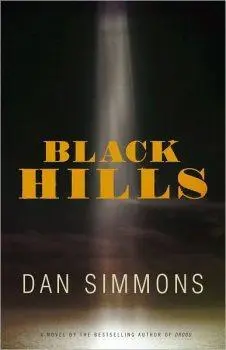
- Название:Black Hills
- Автор:
- Издательство:Little, Brown & Company
- Жанр:
- Год:2010
- ISBN:9780316071963
- Рейтинг книги:5 / 5. Голосов: 1
-
Избранное:Добавить в избранное
- Отзывы:
-
Ваша оценка:
Black Hills: краткое содержание, описание и аннотация
Предлагаем к чтению аннотацию, описание, краткое содержание или предисловие (зависит от того, что написал сам автор книги «Black Hills»). Если вы не нашли необходимую информацию о книге — напишите в комментариях, мы постараемся отыскать её.
In BLACK HILLS, Dan Simmons weaves the stories of Paha Sapa and Custer together seamlessly, depicting a violent and tumultuous time in the history of Native Americans and the United States Army. Haunted by the voice of the general his people called "Long Hair," Paha Sapa lives a long life, driven by a dramatic vision he experiences in the Black Hills that are his tribe's homeland. As an explosives worker on the massive Mount Rushmore project, he may finally be rid of his ghosts?on the very day FDR comes to South Dakota to dedicate the Jefferson face.
Black Hills — читать онлайн бесплатно полную книгу (весь текст) целиком
Ниже представлен текст книги, разбитый по страницам. Система сохранения места последней прочитанной страницы, позволяет с удобством читать онлайн бесплатно книгу «Black Hills», без необходимости каждый раз заново искать на чём Вы остановились. Поставьте закладку, и сможете в любой момент перейти на страницу, на которой закончили чтение.
Интервал:
Закладка:
The hard rain keeps wiping the blood off his face, but the blood keeps returning. He does not even bother to blink it out of his eyes.
His eye. One eye is swollen shut or destroyed forever. He does not care which. The other eye sees only the blur of the fifty or sixty other men ahead of him and around him. He does not care that they are there. They are wasichu cavalry. He is dimly aware that he is their prisoner, to do with as they wish: torture, slow murder, whatever they want. He does not care.
Paha Sapa has been slipping in and out of consciousness for most of this long, wet day. He knows that he’s riding with these dark forms and he knows that his head hurts more than any pain he has ever imagined. But he also knows that the Crow—the old man named Curly—did not strike him with the rifle butt in anything meant as a killing blow. After hours of half listening to Curly, who rides nearby and continues talking in his terrible, patchy language of the Lakota—the old man uses many words from the women’s language, which makes him sound like a boy-who-decides-to-dress-and-act-like-a-woman winkte . Normally this would be terrifically amusing to Paha Sapa, but today nothing amuses him.
He wishes he were dead. He plans to be dead. In a real sense, he is dead.
He has lost Limps-a-Lot’s and his band’s Ptehinčala Huhu Canunpa , the most sacred Buffalo Calf Bone Pipe that was the most important and wakan object the band ever had. Oh, why had Limps-a-Lot entrusted the pipe to him, to Paha Sapa, to a miserable boy with no more sense or brains than not to look over his shoulder when traveling alone on the plains with the greatest treasure it was possible to carry?
Two great treasures, he realizes through the pain and rain. The Ptehinčala Huhu Canunpa , lost forever now to the swollen river, and the details of his Vision, granted by the Six Grandfathers. Limps-a-Lot and the other elders and chiefs and holy men will never listen to his Vision now, even if he were somehow to escape the wasichu cavalry. By losing the pipe, Paha Sapa has lost all credibility forever. He is sure of that. Wakan Tanka and the Six Grandfathers and all the spirits and Thunder Beings would never grant a man or boy such a Vision and then steal the Ptehinčala Huhu Canunpa from him. Such a loss is a statement by all the gods and powers and the All himself that Paha Sapa is not to be trusted as their servant and messenger.
His head hurts in unimaginable ways. He wishes he were dead. He plans to be dead soon. He welcomes it.
Each time Paha Sapa blurs out of his semiconscious, unhearing state, wobbling in the accursed leather wedge of a saddle, the old Crow, Curly, is talking at him. This old man keeps telling him how he, Curly, saved Paha Sapa’s life by knocking him down before the Fat Takers’ bluecoats shot him just out of meanness and misery—they have been lost and separated from their main detachment for four days now, terrified because Crazy Horse is said to be on the warpath nearby—and how he, Curly, the scout, told the wasichus that the almost-naked boy who had startled all of them by crawling up out of the mud and river was a Crow boy, probably a good scout but a little stupid, a little deaf and dumb and retarded, but it was worth keeping him alive anyway and giving the slowest horse, the one that had belonged to Corporal Dunbar before he was killed, to little Billy.
Billy?
Curly… When did he tell Paha Sapa his name? He cannot remember. Curly told the wasichu bluecoats that the near-naked and mud-covered boy’s name was Bilé , which evidently is Crow for “water.” The soldiers laughed, called Paha Sapa Billy, and gave him the dead corporal’s old, scabbed, slow horse.
Paha Sapa, when he is conscious enough to form a thought, just wishes the stupid old man psaloka kagi wicasa Absaroka sonofabitch would just shut the fuck up. The words hurt Paha Sapa’s head, which already feels as if he is spilling out his brains. Sometime later in that rainy, gray, miserable day, he realizes that he has been shot by the other Crows, the wild Crows, and there is a filthy bandage wrapped around his upper arm. The bullet wound throbs. His head is going to kill him.
He has lost the Ptehinčala Huhu Canunpa.
Curly. Paha Sapa remembers through his gloom and pain and blurred one-eyed vision and through memories not his own that Tashunke-Witke , Crazy Horse, had been called Curly Hair and then just Curly when he was young, before his father, Crazy Horse, gave his own name to his son.
But this garrulous old psaloka Crow looks nothing like the Crazy Horse Paha Sapa has seen several times this summer. The Lakota Crazy Horse–Curly is blade-nosed, scarred, thin-faced…. This old Crow’s face is pocked with smallpox scars but otherwise unscarred by battle and is as round as the moon.
But he won’t shut up with his continuous babble of bad Lakota mixed with lisping girl-man vocabulary. Maybe, Paha Sapa thinks through his pain, this old Crow is the kind of winkte who likes to fuck boys. Instinctively, reflexively, Paha Sapa gropes for the long knife at his belt.
It is gone. As is his belt. His breechclout is now held up by a piece of rope given to Curly by one of the soldiers. Paha Sapa’s feet are bare in the idiot stirrups.
If this Curly tries to fuck him, Paha Sapa decides, he will gouge out the old army scout’s eyes with his thumbs and chew off his ears. But , his bruised and mourning mind insists, somehow speaking in the wasichu babble voice of the ghost he swallowed less than two months earlier, what if all the wasichu cavalry try to fuck him at once?
Paha Sapa once heard from Limps-a-Lot that Tatonka Iyotake Sitting Bull had said that it is possible for a real wičasa wakan to will himself to die… to will his own heart to stop.
Paha Sapa concentrates on that now, through his pain and absurd saddle-bouncing, but fails. Of course he cannot do it. He is not wičasa wakan and now never will be.
He is nothing at all.
Not even a captured warrior. Just a boy who has lost his tribe’s Ptehinčala Huhu Canunpa and who should be dead but has failed even at that simple act.
Curly keeps talking all through the long, raining, bouncing, ass-sore, head-exploding, arm-aching, endless afternoon.
This detachment of wasichu cavalry was part of General Crook’s force of combined infantry and Fifth, Second, and Third Cavalry troopers that had broken off from General Terry’s column to head east to cut off the Sioux and Cheyenne who had scattered after Custer’s death on the Greasy Grass. Crook, champing at the bit (as Curly put it), had left his supply wagons behind weeks ago, taking along a mob of Shoshone scouts and a handful of Crow scouts such as Curly and his friends Three Weevils, Drinks from a Hoofprint, and Cuts Noses Off Frequently. Paha Sapa heard that a famous wasichu , a certain Buffalo Bill Cody, had returned from his Wild West Show back east to lead Crook’s column, but he wasn’t with this bunch.
The column was soon starving, unable to live off the land. They’d eaten all their packhorses, then shot and eaten many of their extra riding horses, and left hundreds of others behind. All a treasure to Crazy Horse and the other “hostiles” who are evidently trailing the cavalry that is supposed to be chasing them. Through his headache, Paha Sapa slowly understands why those Crow were on the warpath after him. The Great Plains north and east of the Black Hills have turned into an everyone-kills-everyone zone.
Five days earlier, when this full force tried to plod across the hills of mud that had been the Badlands, Crook sent this detachment of sixty-some men swinging south and east with the orders to scout for hostile braves and then meet up with Crook’s main column near the headwaters of the south fork of Grand River… near two landmarks called Slim Buttes. This detachment, as hungry as the main column despite their swing south and east to the Black Hills and Bear Butte area where game was always plentiful, is at least three days late for that rendezvous.
Читать дальшеИнтервал:
Закладка:
Похожие книги на «Black Hills»
Представляем Вашему вниманию похожие книги на «Black Hills» списком для выбора. Мы отобрали схожую по названию и смыслу литературу в надежде предоставить читателям больше вариантов отыскать новые, интересные, ещё непрочитанные произведения.


Обсуждение, отзывы о книге «Black Hills» и просто собственные мнения читателей. Оставьте ваши комментарии, напишите, что Вы думаете о произведении, его смысле или главных героях. Укажите что конкретно понравилось, а что нет, и почему Вы так считаете.