Dan Simmons - Black Hills
Здесь есть возможность читать онлайн «Dan Simmons - Black Hills» весь текст электронной книги совершенно бесплатно (целиком полную версию без сокращений). В некоторых случаях можно слушать аудио, скачать через торрент в формате fb2 и присутствует краткое содержание. Год выпуска: 2010, ISBN: 2010, Издательство: Little, Brown & Company, Жанр: Историческая проза, на английском языке. Описание произведения, (предисловие) а так же отзывы посетителей доступны на портале библиотеки ЛибКат.
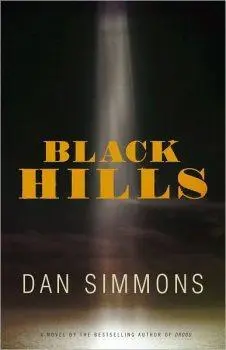
- Название:Black Hills
- Автор:
- Издательство:Little, Brown & Company
- Жанр:
- Год:2010
- ISBN:9780316071963
- Рейтинг книги:5 / 5. Голосов: 1
-
Избранное:Добавить в избранное
- Отзывы:
-
Ваша оценка:
Black Hills: краткое содержание, описание и аннотация
Предлагаем к чтению аннотацию, описание, краткое содержание или предисловие (зависит от того, что написал сам автор книги «Black Hills»). Если вы не нашли необходимую информацию о книге — напишите в комментариях, мы постараемся отыскать её.
In BLACK HILLS, Dan Simmons weaves the stories of Paha Sapa and Custer together seamlessly, depicting a violent and tumultuous time in the history of Native Americans and the United States Army. Haunted by the voice of the general his people called "Long Hair," Paha Sapa lives a long life, driven by a dramatic vision he experiences in the Black Hills that are his tribe's homeland. As an explosives worker on the massive Mount Rushmore project, he may finally be rid of his ghosts?on the very day FDR comes to South Dakota to dedicate the Jefferson face.
Black Hills — читать онлайн бесплатно полную книгу (весь текст) целиком
Ниже представлен текст книги, разбитый по страницам. Система сохранения места последней прочитанной страницы, позволяет с удобством читать онлайн бесплатно книгу «Black Hills», без необходимости каждый раз заново искать на чём Вы остановились. Поставьте закладку, и сможете в любой момент перейти на страницу, на которой закончили чтение.
Интервал:
Закладка:
It is still wrong because… it does not matter. The power of her intimate greeting and the “It’s really good to see you”… she had stressed every syllable exactly as Paha Sapa spoke it earlier, except for that extra emphasis on the really … to hear her say this to him in his language… He will never forget it. He wonders then if it will be the last thing he chooses to think of before his death.
— We’re almost down, Paha Sapa. I’m a greedy woman. I have three more requests for you before we go meet Father at the Grand Basin at six…
She consults the tiny watch on the ribbon pinned to her vest.
— … still ninety minutes away! Three greedy requests, Paha Sapa.
— I will do anything you ask, Miss de Plachette.
— First then, at least until we meet Father and the other gentlemen, please call me Rain, as you promised and did for a short while.
— Yes… Rain.
— Second—and this is just a silly woman’s request, since you seem so… hot… with them on. Please remove those gloves after we get off the Ferris Wheel.
— Yes, Miss… Yes. Yes, of course.
— And finally, tell me what the Lakota word is for my name. For Rain.
—“ Rain” is… magazu.
She tries it out. Says it twice softly as the view of the prairie is reduced, is eliminated, and the Midway Plaisance and loading platforms come up under them. Then she says very softly—
— Mother was right. It is prettier in English.
— Yes, Rain.
Paha Sapa has never more agreed with any statement. The car is slowing to a stop. The other passengers are growing louder in their laughter, exclamations, and praise of the ride.
— This qualifies as an extra request, Paha Sapa, but how do you say in Lakota—“I will see you later”?
Without thinking of gender language or anything else, Paha Sapa looks into her hazel eyes and says—
—Tokša ake wancinyankin ktelo.
— I asked for that phrase, Paha Sapa, because Father has decided that he must return to the missionary fields, and in September we will be moving to the Pine Ridge Agency in Dakota Territory…. I believe that is not too far from where Mr. Cody mentioned that you live.
All Paha Sapa has to say is No, not too far , but this time he can not get the syllables out.
The great wheel stops its turning. The car they’re in rocks, creaks, settles. The conductor—with a tin badge saying something other than Kovacs; Paha Sapa has temporarily forgotten how to read English letters or words—opens the door for them all to depart before the next sixty people squeeze aboard.

THE NEXT NINETY MINUTES are delightful and infinitely rich for Paha Sapa, but they fly by like so many seconds.
On their way back to where they are to meet Rain’s father on the steps outside the domed Administration Building on the west side of the Grand Basin, they take time to poke their heads into the Fine Arts Building, with its many art galleries north of the North Pond, then take an almost running tour of the gigantic Women’s Building—Rain especially wants to stand in front of a huge mural by a woman artist named Mary Cassatt, the allegories of which would have been lost on Paha Sapa if she had not been there to translate them—and then they take their time strolling on the Wooded Island as the July afternoon slowly melts into a golden July evening. Paha Sapa is only sorry that they will not be together when all of the thousands of electric lights come on. What, he wonders again, would a turn in the Ferris Wheel be like at night?
It is on the Wooded Island, where they are sitting for a moment on a comfortable bench in the shade near the Rose Garden and having tall, iced drinks purchased from one of the ubiquitous canvas-covered refreshment stands, that Paha Sapa fulfills his promise by peeling off the too-tight, sweat-lined dress gloves and tossing them into the nearby wire wastebasket.
Rain laughs, sets her drink glass on the bench, and applauds.
Paha Sapa feels no anxiety about an accidental touch turning into an invasive contact-vision with her now. She has kept her own white gloves on and her long-sleeved blouse leaves almost no skin of her wrist exposed. Besides, it is only a few minutes until they are to meet her father.
Then she surprises him again.
— Paha Sapa, Mr. Cody has told Father that you were a friend of Sitting Bull’s.
— Yes. Not a close friend, he was much older than I, but I knew him.
— And you were with him… with Sitting Bull… when he was killed?
Paha Sapa takes a breath. He does not want to talk about this. He feels it will only put distance between the young woman, her father, and himself. But he truly is at the point where he can and will deny her nothing.
— I did happen to be there when he died, Miss… Rain. It was an accident that I was present. None of us had any idea that he might be murder… killed.
— Please tell me. Please tell me everything about it.
Paha Sapa sips his iced drink to gain a few seconds to organize his thoughts. What should he tell this young Wasicun girl? He decides… everything.
— It was three years ago, you know. Winter. December. I’d gone up to the Standing Rock settlement… and agency, really, a reservation… where Sitting Bull was living, because my tunkašila… not my real grandfather, but an honorary name for a man who helped raise me… was living there. He was there because he was an old friend of Sitting Bull’s. Wait, this won’t make any sense unless you’ve heard of a Paiute holy man named Wovoka and his teachings, especially about his advocating a sacred dance called the Ghost Dance. Have you heard these things?
— Fragments about them, Paha Sapa. Father and I were in France when all this happened, and I was only seventeen. I was more interested in grand balls in Paris than in the Ghost Dance that correspondents told Father about in letters. Please do explain.
Paha Sapa sighs. It is not a happy sound. He catches a glint of light in the trees and realizes that it is one of the thousands of little colored “fairy lamps”—tiny lights of wick and oil—that turn the Wooded Island into a magical place after dark. He very much wishes that he and Rain could wander the Wooded Island under such lights, with the White City buildings blazing in light and the Ferris Wheel steel turning, painted white by huge carbide searchlights, in the distance.
— The Paiute Wovoka’s sermons and religious teachings were as confused as your scattered fragments. I heard him talk near the Pine Ridge Agency before I went to visit my tunkašila and Sitting Bull. The Paiute holy man had taken large pieces of the Christian story—he said a messiah had come to earth to save his children from the control and clutches of the wasichus and…
— Please, what are wasichus, Paha Sapa?
He looks at her.
— Fat Takers. White people.
She blinks. Paha Sapa wonders if she feels as if he has slapped her.
— I thought we… that whites… were called Wasicun. I seem to remember Mother using that term.
Paha Sapa nods sadly.
— That term was also used, but later. Wasichus, the Fat Takers, are what we called you… whites. But Wovoka was preaching that if his followers, of any tribes, all tribes, danced this sacred Ghost Dance, there would come a sacred flood that would drown all the wasichus but leave the red man alone. And then, when the whites were all gone, the buffalo would return and our long-departed ancestors would come back and all of us, Natural Free Human Beings and all the other tribes, would live in abundance and peace forevermore.
Читать дальшеИнтервал:
Закладка:
Похожие книги на «Black Hills»
Представляем Вашему вниманию похожие книги на «Black Hills» списком для выбора. Мы отобрали схожую по названию и смыслу литературу в надежде предоставить читателям больше вариантов отыскать новые, интересные, ещё непрочитанные произведения.




Обсуждение, отзывы о книге «Black Hills» и просто собственные мнения читателей. Оставьте ваши комментарии, напишите, что Вы думаете о произведении, его смысле или главных героях. Укажите что конкретно понравилось, а что нет, и почему Вы так считаете.