Dan Simmons - Black Hills
Здесь есть возможность читать онлайн «Dan Simmons - Black Hills» весь текст электронной книги совершенно бесплатно (целиком полную версию без сокращений). В некоторых случаях можно слушать аудио, скачать через торрент в формате fb2 и присутствует краткое содержание. Год выпуска: 2010, ISBN: 2010, Издательство: Little, Brown & Company, Жанр: Историческая проза, на английском языке. Описание произведения, (предисловие) а так же отзывы посетителей доступны на портале библиотеки ЛибКат.
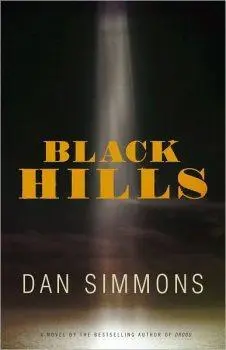
- Название:Black Hills
- Автор:
- Издательство:Little, Brown & Company
- Жанр:
- Год:2010
- ISBN:9780316071963
- Рейтинг книги:5 / 5. Голосов: 1
-
Избранное:Добавить в избранное
- Отзывы:
-
Ваша оценка:
Black Hills: краткое содержание, описание и аннотация
Предлагаем к чтению аннотацию, описание, краткое содержание или предисловие (зависит от того, что написал сам автор книги «Black Hills»). Если вы не нашли необходимую информацию о книге — напишите в комментариях, мы постараемся отыскать её.
In BLACK HILLS, Dan Simmons weaves the stories of Paha Sapa and Custer together seamlessly, depicting a violent and tumultuous time in the history of Native Americans and the United States Army. Haunted by the voice of the general his people called "Long Hair," Paha Sapa lives a long life, driven by a dramatic vision he experiences in the Black Hills that are his tribe's homeland. As an explosives worker on the massive Mount Rushmore project, he may finally be rid of his ghosts?on the very day FDR comes to South Dakota to dedicate the Jefferson face.
Black Hills — читать онлайн бесплатно полную книгу (весь текст) целиком
Ниже представлен текст книги, разбитый по страницам. Система сохранения места последней прочитанной страницы, позволяет с удобством читать онлайн бесплатно книгу «Black Hills», без необходимости каждый раз заново искать на чём Вы остановились. Поставьте закладку, и сможете в любой момент перейти на страницу, на которой закончили чтение.
Интервал:
Закладка:
The wind has a nip to it despite the growing warmth of the day. Usually Paha Sapa ignores high and low temperatures, but this year the cold has bothered him and this New York chill makes him wish again for a topcoat or Robert’s leather motorcycle jacket. The streets are getting too narrow ahead, and he turns right and walks to the southwest along Canal Street back toward Broadway, turning left again onto Centre Street.
He can see City Hall Park ahead and… suddenly… he has arrived.
The Brooklyn Bridge stretches above low buildings and arches out over the East River. The rising sun is still low enough that the two towers and the elevated, arching roadway throw long shadows toward Manhattan, the closer tower—the so-called New York tower—shading the narrow waterfront streets and old warehouses on either side of the broad approach.
“This is what you came for?”
— Yes. You and your wife were in New York the winter before you died. Weren’t the towers finished then?
“The Brooklyn tower was. The New York tower wasn’t quite finished when we left in February. Both of them were a mass of derricks and scaffolds, but grand even so. There were no cables strung yet…. Look at that roadway! Look at those suspension cables! We could never have imagined that the finished bridge would look so grand!”
Paha Sapa says nothing to this. It does look grand. He’s seen photographs of the bridge, but nothing could have quite prepared him for the reality. Even on this island of new architectural giants, the Brooklyn Bridge—even seen from the cluttered approach vistas here on the Manhattan side—has a grandeur and power all its own.
Paha Sapa could—but chooses not to—tell his resident ghost about the endless ten-hour workdays down in the dangerous blackness and dust and smoke of the Holy Terror Mine in Keystone and about his mentor Tarkulich “Big Bill” Slovak’s constant talk, in that booming whatever-it-was Eastern European accent, the giant’s shouts somehow carrying over the rattling of steam drills and the pounding of sledgehammers and the rusty screech and squeal and rumble of the mine carts squeezing past them in the midnight-dark chaos, and about his—Big Bill’s—part in building the Brooklyn Bridge.
Having left the “Old Country” just a few steps ahead of the police after killing another teenager in a fight in some city that sounded to Paha Sapa as if it had no vowels at all in its name, in May of 1870, the 17-year-old Big Bill Slovak had arrived in New York and immediately hired on as a worker for the Bridge Company that had been incorporated to build what was then being called the New York and Brooklyn Bridge.
There were no towers or cables to be seen then. Big Bill admitted that he had lied through his teeth when he applied—saying that he was twenty-one years old, saying that he was a skilled worker (his only job in the Old Country, wherever that was, had been as a herder of goats for a crippled uncle), and—most important—saying that he had advanced skills as a powderman. (In truth, he had never lit a fuse attached to anything more powerful than a Roman candle, but there were other powdermen being hired that hot day in May, and Big Bill knew that he could learn from them if necessary. It turned out that most of them were lying about their skills as much as or more than Big Bill was.)
In 1870, as Big Bill said more than a few times down in the stinking black confines of the Holy Terror more than thirty years later, one had to have some real imagination to see the New York and Brooklyn Bridge. All that existed when Big Bill went to work was a huge caisson that had been launched like a ship, floated down the East River to its position near the Brooklyn shore, and deliberately sunk. That caisson, filled with compressed air to keep the river out and the men working inside alive, was going to be the foundation for the huge Brooklyn-side tower built on it and above it. But first the caisson—and then its near twin for the New York side—had to be sunk down through the river, mud, ooze, sand, gravel, and stone until it was on bedrock.
Big Bill loved numbers. (Paha Sapa had often thought that if the giant blasting expert had stayed in his Old Country and somehow gotten an education, he might have become a mathematician.) Even their first year together, Big Bill never tired of shouting the statistics at his thirty-seven-year-old assistant (the Indian widower working down there to make money to feed his five-year-old son, who was being watched days and night shifts by Crazy Maria, Keystone’s all-purpose Mexican woman).
The caisson young Big Bill had worked in under the East River was a giant rectangular box, 168 feet long and 102 feet wide, divided into six separate chambers each 28 feet long by 102 feet wide. Both caissons, Big Bill said often, “were big enough to hold four tennis courts inside,” which had amused Paha Sapa as he ate his lunch down there in the stinking gloom of the Holy Terror, since he had never seen a tennis court and he was damn sure Big Bill hadn’t either.
There was no bottom to the caisson box, of course. The men walked and worked directly on the mud, silt, sewage, boulders, gravel, and bedrock at the bottom of the river. And it was the presence of these boulders around the descending edges of the caisson—the box was built to descend until it could go no farther and then the building of the towers on it would begin—that brought in Big Bill’s fictional specialty of dynamiting.
The working conditions down in the Brooklyn-side caisson—and later in the New York–side caisson, which went much deeper—were horrific. Stinking mud, constant high temperatures, pressurized air so thick that a man couldn’t whistle, literally couldn’t force the air out of his body against the pressure, while each man’s body and organs were daily assaulted by the constant descent into and climb up out of the high-pressure hole in the river.
Paha Sapa never did quite understand the math and science of the air pressure thing, but he believed Big Bill when the giant talked about the problems the men had with something they all called caisson disease and which others called “the bends.” No one could predict whom it would hit or how hard, only that it would affect everyone sooner or later and that a lot of men would die horribly from it.
Colonel Washington Roebling himself, the chief engineer and son of the bridge’s designer, John Roebling—who died of tetanus after getting his toes crushed on the site in the first days of work on the bridge—came down with caisson disease, and it ruined his health, turning him into an invalid for the rest of his long life. Big Bill said that the pressure-related disease wasn’t so bad during the work in the first caisson, on the Brooklyn side, since that foundation box reached its lowest point at about 44 feet, but the New York caisson had to be sunk to more than 78 feet. The external pressure on the caisson and the corresponding air pressure on the workers inside were incredibly high. Men died of the caisson disease in both boxes, but the New York caisson, Bill said, was the real killer.
Slovak had been struck by the bends scores of times over his years working in the caissons and described the symptoms to Paha Sapa: blinding headaches, constant vomiting, overwhelming weakness, paralysis, tremendous shooting pains in various parts of the body, a feeling like one had been shot in the spine or stabbed in the lungs, and then, in many cases, blindness and death.
The worst cases, including Colonel Roebling when he was struck down after a day and night battling a slow fire in the Brooklyn caisson with all of his many rises and descents during that crisis, were treated with massive amounts of morphine just to relieve the agony until the worker either recovered or died.
Читать дальшеИнтервал:
Закладка:
Похожие книги на «Black Hills»
Представляем Вашему вниманию похожие книги на «Black Hills» списком для выбора. Мы отобрали схожую по названию и смыслу литературу в надежде предоставить читателям больше вариантов отыскать новые, интересные, ещё непрочитанные произведения.




Обсуждение, отзывы о книге «Black Hills» и просто собственные мнения читателей. Оставьте ваши комментарии, напишите, что Вы думаете о произведении, его смысле или главных героях. Укажите что конкретно понравилось, а что нет, и почему Вы так считаете.