Alison Weir - Captive Queen
Здесь есть возможность читать онлайн «Alison Weir - Captive Queen» весь текст электронной книги совершенно бесплатно (целиком полную версию без сокращений). В некоторых случаях можно слушать аудио, скачать через торрент в формате fb2 и присутствует краткое содержание. Год выпуска: 2010, ISBN: 2010, Издательство: BALLANTINE, Жанр: Историческая проза, на английском языке. Описание произведения, (предисловие) а так же отзывы посетителей доступны на портале библиотеки ЛибКат.
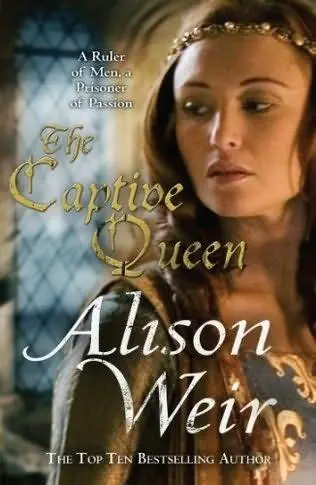
- Название:Captive Queen
- Автор:
- Издательство:BALLANTINE
- Жанр:
- Год:2010
- ISBN:978-0-345-52195-8
- Рейтинг книги:3 / 5. Голосов: 1
-
Избранное:Добавить в избранное
- Отзывы:
-
Ваша оценка:
Captive Queen: краткое содержание, описание и аннотация
Предлагаем к чтению аннотацию, описание, краткое содержание или предисловие (зависит от того, что написал сам автор книги «Captive Queen»). Если вы не нашли необходимую информацию о книге — напишите в комментариях, мы постараемся отыскать её.
Renowned for her highly acclaimed and bestselling British histories, Alison Weir has in recent years made a major impact on the fiction scene with her novels about Queen Elizabeth and Lady Jane Grey. In this latest offering, she imagines the world of Eleanor of Aquitaine, the beautiful twelfth-century woman who was Queen of France until she abandoned her royal husband for the younger man who would become King of England. In a relationship based on lust and a mutual desire for great power, Henry II and Eleanor took over the English throne in 1154, thus beginning one of the most influential reigns and tumultuous royal marriages in all of history. In this novel, Weir uses her extensive knowledge to paint a most vivid portrait of this fascinating woman.
Captive Queen — читать онлайн бесплатно полную книгу (весь текст) целиком
Ниже представлен текст книги, разбитый по страницам. Система сохранения места последней прочитанной страницы, позволяет с удобством читать онлайн бесплатно книгу «Captive Queen», без необходимости каждый раз заново искать на чём Вы остановились. Поставьте закладку, и сможете в любой момент перейти на страницу, на которой закончили чтение.
Интервал:
Закладка:
When the weather was clement, she would climb to her high eyrie and gaze out across the mighty ramparts and the teeming, overpopulated town they protected to the vast sweep of the Avon Valley beyond, with its gentle hills that led to the eastern edge of the New Forest, invisible in the far distance. Then she would turn and look wistfully southward, where—hundreds of miles distant—lay Aquitaine. It pained her to think of the land of her birth, which she feared she might well never see again, yet her heart was drawn toward it inexorably. In her mind, she often traveled the hidden, lushly wooded valleys, the sundrenched hilltops and narrow gorges, and feasted her eyes once more on the mighty castles on their craggy heights, the mellow stone churches and pretty villages, the ranks of vines, and the glittering rivers. Aquitaine was a constant ache in her heart.
Did her people feel grief and anger at the cruel way in which their duchess had been treated? Her imprisonment must have had an unwelcome and brutal impact on their lives, for Henry, in the wake of the war that—she guessed—had almost succeeded in toppling him from his throne, would not scruple to lay his heavy hand of authority on his domains. (No one had thought fit to tell her that Richard now sat in her place in Poitiers, accepted by her subjects and acclaimed as the doughty warrior he had proved himself to be. Richard, who was there at Henry’s command, and subject to his vigilance … )
Perched in her lofty refuge, her useless veil in her hand, ignoring the wind whipping the tendrils that had escaped from her plaits, and with her face pressed forlornly against the rough stone of the crenellations as she stared fixedly into the distance, Eleanor had often reflected that the prophecies had been misleading. The “King of the North Wind”—that was Henry—still wielded his scepter over Aquitaine, but the “Eagle of the Broken Covenant”—that had to be herself; she was beginning to understand its meaning now—had yet to discover why she should especially rejoice in her third nesting. The cubs had awakened, roared loud, as Merlin long ago predicted; but the only person who remained loaded with chains, as the seer had described, was their mother.
Her inner torment was ceaseless. Her harp was turned to mourning, she told herself, reverting in her distress to the language of the troubadours, on which she had been reared. “My flute sounds the note of affliction; my songs are turned to lamentations,” she grieved.
There was only Amaria to whom she could unburden herself, although Amaria was still scared of her superiors, and usually just sat and listened, clucking sympathetically here and there.
“I had a royal liberty!” Eleanor told her, over and over again; she was remorseless with herself. “I lived richly, I took pleasure in the company of my women and delighted in my music. I was a queen with two crowns! I had everything. But now I am consumed with sorrows—my heart is ravaged with tears. I cry out unanswered!”
Then she would grow defiant, her old spirit burgeoning. “Never fear, I will not cease to cry!” she assured Amaria. “I will not weary; I will raise my voice like a trumpet, so that it may reach the ears of my sons. They will deliver me!”
Hearing the bells, her breast was filled with hope surging anew, and she was in a ferment, desperate to know what they betokened. She could not sit, but got up and paced about, up and down, up and down the chamber, hugging herself tightly, as Amaria watched her, dismay all over her face. She had been in the cathedral this morning; she had gone, as she often did, to be shriven, not liking that snooty chaplain charged with the cure of the Queen’s soul. And she had heard of the King’s victory. But, as usual, she forbore to say anything of what she heard beyond these walls.
Eleanor was well on the way to convincing herself that Richard and the Young King—and perhaps even Geoffrey—were coming to free her. “The day of my deliverance is here, I know it!” she breathed. “And then I shall come again to dwell in my native land. Please, O God, let it be so!” Amaria looked away, unable to bear much more of this.
The door to the chamber opened. Ranulf Glanville stood there, his attractively craggy, clever face wearing a look of jubilation. For one blissful moment Eleanor thought he was going to tell her that she was free. She even got as far as thinking that she would be bountiful toward him when she was restored to power, for he had been a considerate gaoler … But with his first words her hopes were savagely dashed.
“My lady, I am commanded by the King to inform you that your sons have submitted to his authority, and that King Louis has conceded defeat. The bells you can hear are being rung in celebration of the peace that has been agreed. They are being sounded everywhere, for the whole of England rejoices!”
Eleanor sank down into a chair, feeling as if she had been winded. She could not speak, so great was her disappointment.
Glanville was looking at her, not unsympathetically. No fool, he would have guessed that she might misunderstand the reason for the rejoicings.
“Are you able to give me news of my sons?” she managed to ask.
“I am at liberty to say that the breach between them and the King has been healed; he has excused their treason on account of their youth. In the circumstances, the King has been very generous, although I am not allowed to discuss the terms of the peace settlement with you, my lady. What I can say is that, out of affection and love for the princes, he has proclaimed a general amnesty.”
Eleanor rose to her feet, hope springing again.
“So I am to be freed after all?” she asked eagerly.
“No, my lady, I am afraid not.” Glanville’s face was pained.
Eleanor almost reeled at his words, as did Amaria, who burst into noisy tears. This was altogether too much to bear.
“Then how can it be a general amnesty, if I am excluded?” Eleanor shrilled.
Glanville looked uncomfortable. Clearly, he was debating with himself how much he dared say to her. “I am probably exceeding my orders,” he said, “but the King made known his belief that his sons had been led astray by troublemakers. He named the King of France … and yourself.”
Of course. Someone had to take the blame and be punished. Henry needed his sons: they were his heirs, although she suspected that he had conceded them even less than before as the price of making peace. It was politic, indeed necessary, to restore good relations with them as soon as possible. But for that to happen, there had to be a scapegoat, someone at whom people could point a finger and think: she was the evil genius behind their rebellion. They were not to blame.
She could never, in her worst nightmares, have envisaged that Henry could be so vengeful.
——
The King had triumphed, and for a time the talk in the marketplace and inns of Sarum was all of that. Good King Henry, the people called him, forgetting their horror at the murder of Becket and how they had vilified him then. All that mattered to them now was that he had been victorious against his enemies, as kings should be. Some could remember the trials of the weak Stephen’s reign, and knew how to appreciate a strong ruler like this one. For weeks the taverns resonated with the sound of ballads bawled tunelessly in honor of the King’s real—and imagined—exploits.
Clearly, Queen Eleanor, the one who was shut up in the castle and had not been freed—heads nodded significantly over that—was much to blame. She had caused the war, beyond any doubt, and that devil, Louis of France. She was an unnatural woman, betraying her lord like that. But no one was really surprised. There had been other rumors over the years, scandalous ones at that, and probably all true, given what they knew now. The people fell to whispering …
Читать дальшеИнтервал:
Закладка:
Похожие книги на «Captive Queen»
Представляем Вашему вниманию похожие книги на «Captive Queen» списком для выбора. Мы отобрали схожую по названию и смыслу литературу в надежде предоставить читателям больше вариантов отыскать новые, интересные, ещё непрочитанные произведения.





Обсуждение, отзывы о книге «Captive Queen» и просто собственные мнения читателей. Оставьте ваши комментарии, напишите, что Вы думаете о произведении, его смысле или главных героях. Укажите что конкретно понравилось, а что нет, и почему Вы так считаете.