Alison Weir - Captive Queen
Здесь есть возможность читать онлайн «Alison Weir - Captive Queen» весь текст электронной книги совершенно бесплатно (целиком полную версию без сокращений). В некоторых случаях можно слушать аудио, скачать через торрент в формате fb2 и присутствует краткое содержание. Год выпуска: 2010, ISBN: 2010, Издательство: BALLANTINE, Жанр: Историческая проза, на английском языке. Описание произведения, (предисловие) а так же отзывы посетителей доступны на портале библиотеки ЛибКат.
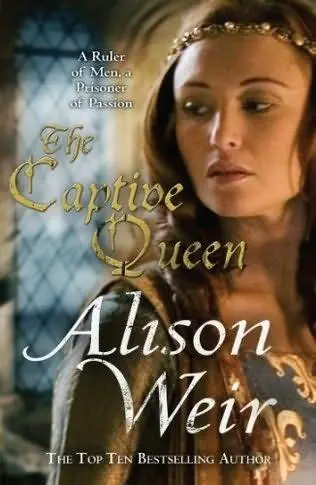
- Название:Captive Queen
- Автор:
- Издательство:BALLANTINE
- Жанр:
- Год:2010
- ISBN:978-0-345-52195-8
- Рейтинг книги:3 / 5. Голосов: 1
-
Избранное:Добавить в избранное
- Отзывы:
-
Ваша оценка:
Captive Queen: краткое содержание, описание и аннотация
Предлагаем к чтению аннотацию, описание, краткое содержание или предисловие (зависит от того, что написал сам автор книги «Captive Queen»). Если вы не нашли необходимую информацию о книге — напишите в комментариях, мы постараемся отыскать её.
Renowned for her highly acclaimed and bestselling British histories, Alison Weir has in recent years made a major impact on the fiction scene with her novels about Queen Elizabeth and Lady Jane Grey. In this latest offering, she imagines the world of Eleanor of Aquitaine, the beautiful twelfth-century woman who was Queen of France until she abandoned her royal husband for the younger man who would become King of England. In a relationship based on lust and a mutual desire for great power, Henry II and Eleanor took over the English throne in 1154, thus beginning one of the most influential reigns and tumultuous royal marriages in all of history. In this novel, Weir uses her extensive knowledge to paint a most vivid portrait of this fascinating woman.
Captive Queen — читать онлайн бесплатно полную книгу (весь текст) целиком
Ниже представлен текст книги, разбитый по страницам. Система сохранения места последней прочитанной страницы, позволяет с удобством читать онлайн бесплатно книгу «Captive Queen», без необходимости каждый раз заново искать на чём Вы остановились. Поставьте закладку, и сможете в любой момент перейти на страницу, на которой закончили чтение.
Интервал:
Закладка:
“His Holiness sent a legate, the Cardinal of Sant’ Angelo,” he told her. “He came on the pretext of resolving a dispute between the sees of Canterbury and York. He met with the King at Winchester, and your husband raised the matter of the annulment. Regrettably, he also tried to bribe the cardinal with a large sum in silver coin, but the cardinal would not take it. Nor would he even listen to the King’s pleas. He merely warned him that divorcing you would involve great risks, and refused to discuss the subject further. He left for Italy soon afterward.”
Eleanor let out a long sigh of relief, but her gratification in the legate’s rejection of Henry’s plea was tempered by the awareness that even though she remained entrenched as his lawful wife, Henry did not want her, and would almost certainly feel even more resentment toward her now, regardless of the fact that she had not actually opposed him—although that was not to say that she would not have done so had she been pushed to it.
“I am content, of course, but I suppose the King is angry,” she said.
The prior gave her another of his sweet smiles. “Need you ask? He does not like to be thwarted.”
“He will not give up,” she observed lightly. “He will find another way to be rid of me.”
“He may appeal to the Pope, but I fear it will be a waste of time.”
“You do not approve of the Pope’s decision, do you, Father Prior?” she challenged.
“Our Lord speaks through His Holiness. Who am I to question that?”
“It’s not easy for you, is it, acting as mediator between Henry and me?” Eleanor smiled at the prior.
“I do not look for ease in worldly affairs,” he told her. “I hope I have dealt with you fairly and with humanity.”
“I wish the King my lord had been as considerate,” Eleanor told him as he rose to take his leave. “No doubt we shall meet again.”
“I would it could be in happier circumstances,” he told her kindly.
50
Sarum, 1175–1176
It was a terrible winter. The crops had failed and famine bestrode the land, resulting in a dearth of good food even on Eleanor’s table, for everyone in the castle was on short rations. The cost of a bushel of wheat had gone through the roof, and bread, that staple of the diets of rich and poor, was scarce. The destitute had been reduced to eating roots, nuts, grasses, and even bark stripped from the trees. There was meat, for most farm animals had been slaughtered and their carcasses salted for winter fare, but the hungry folk in humble cottages saw little of that. People were dying of starvation in the streets, or of plague. It was only the onset of bitterly cold weather that lessened the pestilence.
Eleanor sent what food she could spare from her table to succor the needy.
“I am no longer able to dispense charity as a queen should,” she told Ranulf Glanville, “but this little I can do for them.” And went hungry herself. It was freezing in her chamber, and she and Amaria spent their days huddled in furs, their gloved hands icy at the fingertips, their noses pink with cold. Christmas was a dismal affair, with no festive fare or revelry, and Eleanor spent much of it confined to bed with a cold.
She was surprised, therefore, early in the new year, to hear Glanville announce the arrival of Hugh of Avalon. She guessed, with a sinking feeling, that if the prior had braved the snow and ice to see her, he must bring news of some import, and wondered wearily what it might be. Something to do with the divorce, she wagered to herself.
He greeted her with his gentle smile, giving her his blessing as she went on her knees before him, then came straight to the point.
“My lady, the King has sent me to ask if you would consider retiring from the world and taking the veil at Fontevrault, a house for which he knows you have much love.”
Retire from the world? When her heart cried out for freedom and she was bursting with life, body, and soul?
“He has offered to appoint you Abbess of Fontevrault, which, as you are aware, is a most prestigious and respected office.”
“And what does he ask in return?” Eleanor replied, knowing that this was just another clever ploy on Henry’s part to get rid of her—and retain her lands.
“Nothing, my lady. If you expressed the desire to take the veil, the Pope would assuredly annul your marriage. He would see it as a happy solution.”
She walked to the window and stared out unseeing at the narrow, limited view of snow-covered hills. What prestige was there in being an abbess when one had been a queen? And there was another thing …
“I have no vocation,” she said.
“I had not imagined that you had,” Prior Hugh told her, with wry humor. “In my experience, large numbers of those who enter religion have no vocation. They are dedicated to God by their families. In time, they learn acceptance in the cloister. Some make a great success of their lives and become shining examples of the monastic rule.”
“Can you see me as a shining example of the rule?” Eleanor asked.
The prior had to smile. “No, my lady. But an abbess’s role is not merely spiritual. She is a governor, a leader, an administrator, with her opinion sought by great men. In charge of such a house as Fontevrault, you would have status, autonomy, and the opportunity to use your considerable talents and your experience of statecraft. Think on it. Fontevrault is a peaceful place, a powerful house of prayer, and your family has enjoyed a long association with it.”
Eleanor was silent as she thought. Maybe Hugh was right. It was better to enjoy a degree of power and independence than none at all, certainly. And as Abbess of Fontevrault, she would enjoy many freedoms. She knew she could make a success of it. But there was the longer-term future to consider. Not only were the stakes higher, but she wanted more, far more, than Fontevrault could offer her.
“Do not think I am not tempted,” she told him. “Believe me, I would do much to get out of this prison. But I am certain that I still have much to do in the world. I have no intention of retiring from it, or giving up my crown—or my inheritance. Because, Father Prior, that is what this is all about. It’s the only way Henry can divorce me and retain possession of my lands.”
“Are you sure you wouldn’t like time to think more on this?” Hugh asked.
“No. Please tell the King my lord that I have no vocation for the religious life.”
“Very well, my lady,” the prior said, and made to depart, but Eleanor persuaded him to stay for dinner and overnight before he embarked on his long, cold, and difficult journey.
It was something he said over the rather spartan meal that gave her cause for alarm.
“Henry cannot force me to become a nun?” she had asked.
“I should like to be able to say no, but there have been cases of husbands immuring unwanted wives in convents, and intimidating the communities into keeping them confined. Knowing him, I do not think the King would go as far, but there is much at stake in this case.”
“And just one aging, obstinate woman standing in the way,” she added.
She fretted, she worried. At length, she thought of approaching the Archbishop of Rouen, Rotrou, who, on the brink of the fatal rebellion, had exhorted her to return to Henry. Unlike Hugh of Avalon, he believed that her marriage was valid. A plea to him might help. So she wrote, appealing to him against being forced to enter the cloister against her will, and gave the unsealed parchment to Ranulf Glanville for inspection. He looked a little troubled at its contents, but agreed to dispatch it. She wondered if he would really do so.
But Glanville was as good as his word, and presently, a reply came from the Archbishop assuring her that he would refuse to consent to her becoming a nun at Fontevrault against her wishes. Rotrou added that he had made his position known to the King, and warned her that Henry had said he would appeal again to the Pope to have their marriage dissolved. Ah, she thought, but that way, he won’t get my lands! She might, she dared to think, have her freedom yet.
Читать дальшеИнтервал:
Закладка:
Похожие книги на «Captive Queen»
Представляем Вашему вниманию похожие книги на «Captive Queen» списком для выбора. Мы отобрали схожую по названию и смыслу литературу в надежде предоставить читателям больше вариантов отыскать новые, интересные, ещё непрочитанные произведения.





Обсуждение, отзывы о книге «Captive Queen» и просто собственные мнения читателей. Оставьте ваши комментарии, напишите, что Вы думаете о произведении, его смысле или главных героях. Укажите что конкретно понравилось, а что нет, и почему Вы так считаете.