Alison Weir - Captive Queen
Здесь есть возможность читать онлайн «Alison Weir - Captive Queen» весь текст электронной книги совершенно бесплатно (целиком полную версию без сокращений). В некоторых случаях можно слушать аудио, скачать через торрент в формате fb2 и присутствует краткое содержание. Год выпуска: 2010, ISBN: 2010, Издательство: BALLANTINE, Жанр: Историческая проза, на английском языке. Описание произведения, (предисловие) а так же отзывы посетителей доступны на портале библиотеки ЛибКат.
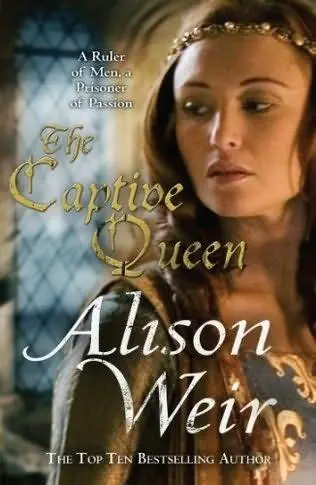
- Название:Captive Queen
- Автор:
- Издательство:BALLANTINE
- Жанр:
- Год:2010
- ISBN:978-0-345-52195-8
- Рейтинг книги:3 / 5. Голосов: 1
-
Избранное:Добавить в избранное
- Отзывы:
-
Ваша оценка:
Captive Queen: краткое содержание, описание и аннотация
Предлагаем к чтению аннотацию, описание, краткое содержание или предисловие (зависит от того, что написал сам автор книги «Captive Queen»). Если вы не нашли необходимую информацию о книге — напишите в комментариях, мы постараемся отыскать её.
Renowned for her highly acclaimed and bestselling British histories, Alison Weir has in recent years made a major impact on the fiction scene with her novels about Queen Elizabeth and Lady Jane Grey. In this latest offering, she imagines the world of Eleanor of Aquitaine, the beautiful twelfth-century woman who was Queen of France until she abandoned her royal husband for the younger man who would become King of England. In a relationship based on lust and a mutual desire for great power, Henry II and Eleanor took over the English throne in 1154, thus beginning one of the most influential reigns and tumultuous royal marriages in all of history. In this novel, Weir uses her extensive knowledge to paint a most vivid portrait of this fascinating woman.
Captive Queen — читать онлайн бесплатно полную книгу (весь текст) целиком
Ниже представлен текст книги, разбитый по страницам. Система сохранения места последней прочитанной страницы, позволяет с удобством читать онлайн бесплатно книгу «Captive Queen», без необходимости каждый раз заново искать на чём Вы остановились. Поставьте закладку, и сможете в любой момент перейти на страницу, на которой закончили чтение.
Интервал:
Закладка:
But now, at long last, Henry had sent for her. Did this mean that he had made peace with his sons, and that they had insisted on her liberation? God, let it be so! she prayed.
Two of the most awful aspects of her captivity had been not receiving any news of or communications from her children, and being cut off from the rest of humanity. She missed her sons dreadfully, more than she could ever have expected; she could not bear even to think of her beloved Richard. It was torture to her, not knowing if he was safe or well. Would Henry even inform her if he had died? She could not quite bring herself to believe that he would not, but the Henry who had shut her up here was a vengeful man; he was no longer the idealistic prince she had married, but a king who cared nothing for the sensibilities and opinions of others. So she agonized over her sons, fearing that their father might have turned them against her, or that they were wounded, even dead in the fighting, and no one had told her. But surely if that had been the case, she would have known it in her bones, or at least picked up some hint of it from Amaria.
She knew virtually nothing of what had been going on in the world beyond her window, just the odd bit of information that she had been able to glean or extract from the waiting woman. Against all her expectations, Amaria and she had become almost friends during the months of living in close proximity to each other; it could not have been otherwise, or they would both have been at each other’s throats. Yet there remained some unbridgeable distance between them, for it soon became clear that Amaria was an uneducated woman of few words and fewer ideas. It was also plain that, however much Amaria might privately sympathize with her mistress, she was in fear of her superiors and the King, and therefore determined to obey her orders to the letter, refusing to discuss with Eleanor anything beyond domestic and mundane subjects. And Eleanor was, of course, the Queen, a fact of which Amaria was still slightly in awe.
Amaria’s initial hostility had quickly evaporated, Eleanor was quick to realize, yet to begin with, she had embarked on her task with the feudal peasant’s resentment toward those of higher rank, and the woman’s inverted snobbery had made her suspicious from the first, especially after she heard gossip about what the Queen was supposed to have done. But Eleanor had subtly won her around, not by overtly protesting her innocence, as many prisoners in her situation might have, but by letting slip the odd, telling remark, or occasionally betraying the depths of her anguish for her sons; and by and by Amaria had come to realize that the situation was far more complex than she had at first surmised.
And Amaria, to her astonishment, soon found herself liking the Queen, very much indeed. So now she was pleased for Eleanor that the King had summoned her, although she felt a touch anxious that her services would no longer be required once the Queen was set free. She had served her mistress well, and with as much kindness as she dared—there were now four books, a chess set, a lyre, and three more dresses in the overflowing chest—but my lady might not wish in the future to be reminded of this dark period in her life, or of the servant who had shared it with her.
“Do not look so worried, Amaria,” Eleanor said, catching her mood. “When I am restored to court, I promise you I will make you one of my waiting women. I shall always be grateful for your kindly treatment of me in this my prison.”
Dared she let her heart sing at the prospect of freedom? She kept looking at the slit of blue sky, thinking that she would soon be out in the world again and able to enjoy the rest of the summer. But what did Henry really intend? After all that had passed between them, he surely could not want her to live with him again as his wife. If he meant to continue as before, with her ruling Aquitaine and him the rest of his empire, then he would not be summoning her to Barfleur. Barfleur was one of the ports from which they had often taken ship for England. It was years since Eleanor had seen England. For her, England was now and forever associated with that terrible visit to Woodstock and the miserable birth of John that followed it.
But if Henry wanted a reconciliation of sorts, and for her to accompany him to England as his queen, then so be it. She would go, and meekly do as she was bid—and make the best of it, avoiding all occasion for conflict. Anything would be preferable to this. Her heart leaped at the possibility that she might see her sons again soon.
Watching the Queen standing at the window, deep in thought, Amaria reflected sadly that these months of confinement had aged her. Eleanor was fifty-two, and looked it. The red in her graying hair had faded to the color of straw and gone thin on the skull; her eyes and the corners of her mouth were circled by fine lines; her skin had paled through lack of exposure to sunlight. Yet she retained—and always would—that exquisite bone structure that lent her her peculiar beauty. The King would find his wife changed, but still, despite everything, attractive.
Eleanor’s spirits sank rapidly when she saw that she was to be accompanied by a heavily armed escort. There could be no doubt that Henry meant for her to travel as a prisoner, under guard. Unless he was bent on making some dramatic gesture such as liberating her before the eyes of their sons, she had to face the fact that her future still looked bleak. She toyed feverishly with the idea of making a dramatic personal appeal to Henry, of debasing herself before him and promising anything —anything —to regain her freedom.
It felt strange to be on horseback again; she was stiff and out of condition, she realized. But expert rider that she had been all her life, she soon became acclimatized to being back in the saddle. Yet her pleasure in once more feeling the heat of the sun and the soft breath of the July breeze was subsumed by her inner dread and bleak disappointment. She could take no pleasure in the flowers that bedecked the hedgerows, the green fields peopled by villeins stripped to the waist and singing as they toiled on their strips, the sparkling rivers and streams, or the rich, golden countryside in all its summer beauty. It was as if her life was being held in suspension until her fate had been revealed to her.
As they rode into Barfleur, Eleanor could see a great fleet of at least forty ships waiting in the harbor. So they were bound for England, as she had anticipated. But why so many ships? Then she saw a great company of soldiers waiting to board some of the vessels anchored at the farther end of the quay. So Henry was taking an army with him. Surely he could not still be at war? She began to feel distinctly uneasy.
Her escort led her past the squat fortified church tower where she had once waited with Henry for a tempest to cease, so that he could cross to England and claim his kingdom. That had been all of twenty years ago. Where had the time gone? And look where it had brought them! But there was no leisure to reflect, as the captain was leading them toward the quayside, where she could see a large gathering of people, many of them well-dressed women, waiting while their baggage was stowed on board the flagship. As she drew nearer, she recognized many familiar faces.
There was Henry, his face weather-beaten and tanned, standing with his hand on the shoulder of a stocky boy with dark, copper-gold curls. It was John, grown up fast, she realized with a jolt, looking around anxiously for his older brothers. But there was no sign of them. In fact, it looked as if Henry had rounded up all the females in his family. She caught her breath as she espied her daughter Joanna, pretty as a partridge, looking apprehensively in her mother’s direction; it was such a joy to see Joanna again; she hoped that her daughter did not think ill of her, that Henry had not poisoned her young mind with calumnies.
Читать дальшеИнтервал:
Закладка:
Похожие книги на «Captive Queen»
Представляем Вашему вниманию похожие книги на «Captive Queen» списком для выбора. Мы отобрали схожую по названию и смыслу литературу в надежде предоставить читателям больше вариантов отыскать новые, интересные, ещё непрочитанные произведения.







Обсуждение, отзывы о книге «Captive Queen» и просто собственные мнения читателей. Оставьте ваши комментарии, напишите, что Вы думаете о произведении, его смысле или главных героях. Укажите что конкретно понравилось, а что нет, и почему Вы так считаете.