Alison Weir - Captive Queen
Здесь есть возможность читать онлайн «Alison Weir - Captive Queen» весь текст электронной книги совершенно бесплатно (целиком полную версию без сокращений). В некоторых случаях можно слушать аудио, скачать через торрент в формате fb2 и присутствует краткое содержание. Год выпуска: 2010, ISBN: 2010, Издательство: BALLANTINE, Жанр: Историческая проза, на английском языке. Описание произведения, (предисловие) а так же отзывы посетителей доступны на портале библиотеки ЛибКат.
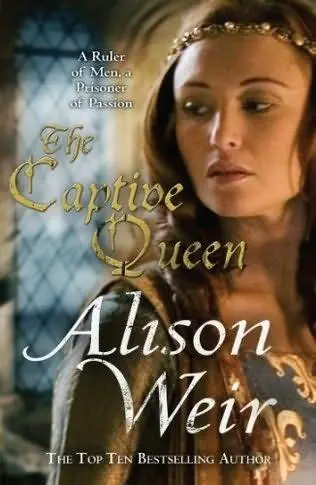
- Название:Captive Queen
- Автор:
- Издательство:BALLANTINE
- Жанр:
- Год:2010
- ISBN:978-0-345-52195-8
- Рейтинг книги:3 / 5. Голосов: 1
-
Избранное:Добавить в избранное
- Отзывы:
-
Ваша оценка:
Captive Queen: краткое содержание, описание и аннотация
Предлагаем к чтению аннотацию, описание, краткое содержание или предисловие (зависит от того, что написал сам автор книги «Captive Queen»). Если вы не нашли необходимую информацию о книге — напишите в комментариях, мы постараемся отыскать её.
Renowned for her highly acclaimed and bestselling British histories, Alison Weir has in recent years made a major impact on the fiction scene with her novels about Queen Elizabeth and Lady Jane Grey. In this latest offering, she imagines the world of Eleanor of Aquitaine, the beautiful twelfth-century woman who was Queen of France until she abandoned her royal husband for the younger man who would become King of England. In a relationship based on lust and a mutual desire for great power, Henry II and Eleanor took over the English throne in 1154, thus beginning one of the most influential reigns and tumultuous royal marriages in all of history. In this novel, Weir uses her extensive knowledge to paint a most vivid portrait of this fascinating woman.
Captive Queen — читать онлайн бесплатно полную книгу (весь текст) целиком
Ниже представлен текст книги, разбитый по страницам. Система сохранения места последней прочитанной страницы, позволяет с удобством читать онлайн бесплатно книгу «Captive Queen», без необходимости каждый раз заново искать на чём Вы остановились. Поставьте закладку, и сможете в любой момент перейти на страницу, на которой закончили чтение.
Интервал:
Закладка:
Where did we go wrong with our children? Henry wondered, sighing to himself, as his gaze lighted on each of his three elder sons in turn. Of course, Eleanor was much to blame, for seducing them into believing they could seize their father’s domains, and then encouraging them in their treasonable rebellion—but Henry believed that the rot had set in well before then. We both spoiled them, he reflected. I was as much to blame as Eleanor in that respect. And now we reap what we have sown.
Richard, seated to his father’s right, was reining in the famous Angevin temper, which he had inherited from his father, and taking pains to avoid his brothers. Only fifteen-year-old John sat stolidly enjoying the rich food and imbibing too much wine, while basking smugly in his father’s love and approval. It was good to be the favorite, adored son! But the atmosphere was tense, and it became tenser still when William Marshal arrived on the Feast of St. Stephen and, ignoring the venomous glares of Young Henry and the embarrassed fluster of Queen Marguerite, presented himself immediately before the King, his fine face flushed with indignation.
“Sire,” he cried, so that all the courtiers could hear, “certain persons are spreading calumnies about me, which touch my honor and that of this blameless lady here!” He bowed to the blushing Young Queen. “These foul lies accuse me of having cast amorous looks on her. In your presence, I challenge all those who have spread these falsehoods to let me prove my innocence and hers by ordeal of combat! If I win, I ask no reward but the vindication of my honor and hers. If I lose, then I will be hanged for my crime.” So saying, he drew off his heavy gauntlet and threw it on the floor before the King’s high seat.
No one spoke. Marshal was staring hard at Young Henry, as if daring him to respond. At length, the younger man had the grace to look away. Beside him, Marguerite was weeping silently.
“Will no one take up this noble knight’s challenge?” Henry asked.
No one did.
“And you, my daughter, what have you to say to these calumnies?” Henry demanded, fixing a stern eye on Marguerite.
“Marshal spoke truth, my lord. They are malicious lies,” she insisted, casting a sideways glance at Bertran de Born. Henry nodded, satisfied, then turned back to Marshal.
“It seems that those who have slandered you are craven, and afraid to defend themselves,” he observed.
Marshal knelt before the King, his face a mirror of distress. “I had hoped that God would make my innocence manifest,” he declared. “Forgive me, sire, but I cannot remain in a place where my enemies hide their faces. I beg leave to depart. I am bound on pilgrimage to the shrine of the Magi at Cologne.”
“In truth, I am sorry to see you depart, old friend,” Henry said, glaring at his eldest son and the smirking Bertran, who had clearly seen off the rival who would have counseled prudence rather than pursue some hot-headed scheme.
But Bertran had not finished stirring up trouble. He played on the Young King’s insecurities and grievances.
“There goes the Prince of Cravens,” he sneered when Richard was within earshot. “Did you know he has built a castle on your land?”
Richard threw him a menacing look, but, respecting the season, walked on without comment. But he was obviously seething inside and determined to settle the score as soon as the opportunity presented itself.
“If Geoffrey had been made Count of Anjou in your place, he would have known how to enforce his rights!” Bertran whispered, his words dripping like poison into Young Henry’s ear until, in the end, he could bear it no more, and seeking out his father in private, exploded in a furious outburst, much to the secret amusement of Richard and Geoffrey, who were looking on.
“Father, I swear I will renounce my titles and take the Cross if you refuse to allow me more power!” he shouted.
“When you have learned discretion and wisdom, I might consider doing that,” Henry said calmly, leaning back in his chair.
For answer, the Young King burst into hot, angry tears. “At least make Richard dismantle the castle he has built on my land!” he cried.
Henry’s brow creased in a frown. He was aware that Philip of France was waiting for an opportunity to make trouble between the Angevin princes, and he feared that a disaffected Young King might seek Philip’s support, much as he had sought King Louis’s eight years ago. And look where that had led! Good statesman that Henry was, he saw the necessity of appeasing his son and warding off the threat.
“Henry, you are my heir,” he said in a steady, placatory tone. “Your brothers come after you in the succession, and therefore they shall do homage to you as their overlord. Will that content you?”
“Yes, Father,” the Young King sniffed.
“Richard, Geoffrey, will you now render homage to your brother?” the King demanded.
“Yes,” muttered Geoffrey.
“No, by our Lady, I will not!” Richard snarled. “It might have escaped your notice, Father, that I hold Aquitaine of the King of France, and to him only do I owe homage. And,” he went on, as Henry opened his mouth to protest, “might I remind you that I had my domains as a gift from my Lady Mother, whom you have unjustly held prisoner these many years!” The venom in his voice was frightening. “If my brother the Young King wants land, let him go and fight for it, as I have had to do!” With that, he picked up his lyre and slammed out of the room, uttering threats and defiance, and leaving Henry looking at his remaining sons in perplexity. One glance at the Young King’s face told him that all his efforts to reconcile his feuding brood had been for nothing. Young Henry’s blood was up; war was in his heart.
As for Eleanor, despite what Richard had said, Henry had no intention of freeing her. The thought of what havoc she might wreak in this present conflict and chaos was enough to deter him from even considering it. In fact, her presence in Winchester, the ancient capital of England, was now a matter of concern to him. Security must be tightened … That meddling woman must go back to Sarum!
56
Sarum, 1183
Eleanor was awakened by the dream and sat bolt upright in the bed in alarm, disturbing Amaria.
“What is it, my lady?” she mumbled, rubbing her eyes.
“Nothing. Go back to sleep,” Eleanor whispered, breathing deeply to still her thudding heart. She needed privacy and quiet to work out what the dream might mean. For in it she had seen, as in a vision, her son, the Young King, lying recumbent on a couch, his hands pressed together as if in prayer. It struck her, with a chill, that he had looked not unlike an effigy on a tomb. But what puzzled her were two things: one was the ring, a great sapphire, that twinkled and flashed on his finger. It was a ring she had never seen before. The sapphire, of course, symbolized the sky, God’s Heaven and His protection; in the East, she had heard, people believed it warded off the evil eye. Was there some portentous meaning to be divined from this?
The other thing that troubled her beyond measure was the remembrance of two crowns hovering in the air above her son’s white face. One she recognized as the crown Henry ordered for his son’s coronation; the second was no earthly crown, but a circle of pure dazzling light that shone with the incomparable brilliance of the Holy Grail itself.
She knew in her heart what the dream must mean, yet her reason and her terrified soul rejected it. She rose from the bed and fell on her knees before the window, gazing up at the narrow view it afforded her of the starry summer sky, and prayed as she had rarely prayed before that this dream was but a warning of what might pass if this bitter war between her sons did not cease, rather than a preparation for news she must shortly have to hear.
Читать дальшеИнтервал:
Закладка:
Похожие книги на «Captive Queen»
Представляем Вашему вниманию похожие книги на «Captive Queen» списком для выбора. Мы отобрали схожую по названию и смыслу литературу в надежде предоставить читателям больше вариантов отыскать новые, интересные, ещё непрочитанные произведения.



Обсуждение, отзывы о книге «Captive Queen» и просто собственные мнения читателей. Оставьте ваши комментарии, напишите, что Вы думаете о произведении, его смысле или главных героях. Укажите что конкретно понравилось, а что нет, и почему Вы так считаете.