Alison Weir - Captive Queen
Здесь есть возможность читать онлайн «Alison Weir - Captive Queen» весь текст электронной книги совершенно бесплатно (целиком полную версию без сокращений). В некоторых случаях можно слушать аудио, скачать через торрент в формате fb2 и присутствует краткое содержание. Год выпуска: 2010, ISBN: 2010, Издательство: BALLANTINE, Жанр: Историческая проза, на английском языке. Описание произведения, (предисловие) а так же отзывы посетителей доступны на портале библиотеки ЛибКат.
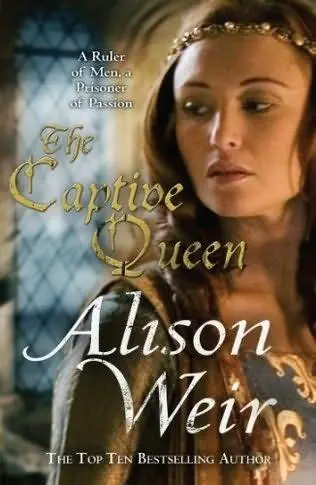
- Название:Captive Queen
- Автор:
- Издательство:BALLANTINE
- Жанр:
- Год:2010
- ISBN:978-0-345-52195-8
- Рейтинг книги:3 / 5. Голосов: 1
-
Избранное:Добавить в избранное
- Отзывы:
-
Ваша оценка:
Captive Queen: краткое содержание, описание и аннотация
Предлагаем к чтению аннотацию, описание, краткое содержание или предисловие (зависит от того, что написал сам автор книги «Captive Queen»). Если вы не нашли необходимую информацию о книге — напишите в комментариях, мы постараемся отыскать её.
Renowned for her highly acclaimed and bestselling British histories, Alison Weir has in recent years made a major impact on the fiction scene with her novels about Queen Elizabeth and Lady Jane Grey. In this latest offering, she imagines the world of Eleanor of Aquitaine, the beautiful twelfth-century woman who was Queen of France until she abandoned her royal husband for the younger man who would become King of England. In a relationship based on lust and a mutual desire for great power, Henry II and Eleanor took over the English throne in 1154, thus beginning one of the most influential reigns and tumultuous royal marriages in all of history. In this novel, Weir uses her extensive knowledge to paint a most vivid portrait of this fascinating woman.
Captive Queen — читать онлайн бесплатно полную книгу (весь текст) целиком
Ниже представлен текст книги, разбитый по страницам. Система сохранения места последней прочитанной страницы, позволяет с удобством читать онлайн бесплатно книгу «Captive Queen», без необходимости каждый раз заново искать на чём Вы остановились. Поставьте закладку, и сможете в любой момент перейти на страницу, на которой закончили чтение.
Интервал:
Закладка:
So lost in anguish was he that he did not see the sad-faced, cobweb-fine gray shadow glide slowly up behind him with its filmy arms outstretched, and hover there for a long, wistful moment before vanishing into the gloom of the vaulted chapel—but he felt even more bereft.
53
Winchester, 1180
Eleanor was fifty-eight, and she had been a prisoner for seven long and difficult years. Yet nowadays her prison was a gilded cage appropriate to her rank, for after her visit to Winchester, the security that surrounded her had been relaxed by degrees. The monotonous tedium of Sarum was gradually ameliorated, as the King had been increasingly pleased to permit her to lodge at different places—in Northamptonshire, in Berkshire, and at the royal castle at Ludgershall in Wiltshire. Always, she was in the custody of the charming Ranulf Glanville or the taciturn Ralph FitzStephen, and attended by the faithful Amaria. Henry had never allowed her any additional personal servants.
Now she was comfortably installed at Winchester again, in greater state than hitherto, occupying well-appointed chambers, with the choicest food on her table and a newly appointed chamberlain to order her small household.
By and by, the rules had been relaxed, and she was permitted to write the occasional letter—although not to her sons; Henry still did not trust her enough for that—and to receive news of the outside world. Ranulf Glanville, whom she now accounted a dear friend, often imparted snippets of information at the dinner table. Amaria, in her forays to the market and through seemingly idle chatter with the castle servants, picked up a lot more, which, these days she was less reluctant to repeat to her mistress. Thus it was that Eleanor learned of Rosamund’s death, although not of the strange rumors that had begun to circulate about it, or of the great scandal of the King living openly with their son Richard’s betrothed; both Glanville and Amaria were anxious to protect the Queen from anything that might cause her pain and distress. Yet the gossip on both counts was rife throughout the kingdom and beyond.
Eleanor indeed wondered why Richard’s marriage to Alys had not yet taken place. Both were of age, and ripe for bedding—and Aquitaine needed an heir. The Young King had sired a son on Queen Marguerite three years ago, although sadly his little William died soon after birth. Eleanor felt deeply grieved that she had never seen any of her grandchildren; it was a continuing sorrow to be cut off from her flesh and blood.
Had Louis been pressing for Alys’s marriage? He had good reason to chafe at the delay, but she suspected that Henry had some devious reason of his own for putting it off. And Richard seemed to be in no hurry. She heard that he was still much occupied with enforcing his authority in Aquitaine—and shuddered to think what that might mean.
By all reports, Matilda was contentedly producing baby after baby in Germany, and Joanna seemed to have settled down happily in Sicily, although something Ranulf let slip had disturbed Eleanor.
“They say that King William has adopted many of the customs of his Moorish subjects,” he told her, “and that Queen Joanna lives entirely in seclusion.”
“Don’t tell me he has a harem!” Eleanor had interjected sharply. She’d seen harems in Constantinople and the lands of the Turks during the long-ago crusade, and knew what ills they concealed.
Ranulf looked ill at ease. “I did hear something of the sort,” he disclosed, “but the Queen his wife has her own apartments.”
So poor Joanna was having to deal with her lord’s infidelity right from the first, Eleanor thought, dismayed. If she had been given her head, she would have hastened across the seas and snatched her daughter back, but there was no hope of that. She must endure the knowledge of Joanna’s situation, just as Joanna herself was having to learn to bear it. But how uncivilized of King William to expect his wife to tolerate a harem in the palace! Eleanor was fuming inside.
It was Ranulf Glanville who informed Eleanor when John was made nominal King of Ireland, and when her daughter Eleanor was sent to Castile to marry King Alfonso. It was hard to believe that little Eleanor, with her heart-shaped face, was nineteen and a bride. How the years had flown—and so many of them, latterly, wasted. She felt weary with the futility of it all.
“The Lord Geoffrey has been knighted by the King,” her custodian told her one rainy July evening.
“I rejoice that my lord now enjoys good relations with our sons,” Eleanor replied, remembering that Henry and his three eldest had kept such a magnificent court together last Christmas at Angers that it was still spoken of with wonder.
“God be thanked, they are at peace at last.” Ranulf’s sentiments were genuine. “I hear that the Young King has been rushing around all over France fighting in tournaments and carrying off the prizes. His fame is sung everywhere.”
“Henry will like that,” Eleanor observed.
“Indeed he does. In fact, the King has been so delighted by the Young King’s many triumphs that he has restored to him in full all the lands and possessions he had taken away.” It did Eleanor’s heart good to hear that, but—as always—there was, underlying her pleasure, a nagging sadness and resentment that she herself was never embraced by Henry’s evident desire to set things right.
Richard, she later heard, had achieved great victories in Aquitaine.
“He is now acknowledged one of the great generals of our age,” Ranulf told her proudly.
Yes, she thought, but at what cost? What violence and bloodshed has he committed, at Henry’s behest, to earn that reputation? Her heart bled for Aquitaine, and she could take little joy in Richard’s fame, although she was gratified to hear that he, like the Young King before him, had been received with honor by his father. Please God, matters were now mended between them.
“My lady, the King of France is dead,” announced Amaria, coming into the royal lodgings with a basket of autumn herbs for the simples she liked to make, swearing by her own remedies for aching joints and blistered heels.
A great wave of sadness engulfed Eleanor. Whatever his failings, Louis had once, many years in the past, been her husband. She had done him many wrongs, and there had been some bitterness between them, but he’d been a good and devout man who stood by her and her sons in their hour of need, and done many good deeds in his days—and now he was no more.
She went to her chapel and sank to her knees to pray for Louis; he had been a saintly man, and surely his soul was even now on its winged flight to Heaven. She had known he was ill. The year before, he came to England on a pilgrimage to St. Thomas’s shrine at Canterbury, in company with the thousands who now flocked to keep vigil at Becket’s tomb, hoping for one of the miracles that the saintly Archbishop was widely reputed to work. Louis had needed such a miracle. He was in poor health and not really fit enough to make the journey. But Henry afforded him a splendid reception, and they went together in procession to the cathedral, where Louis made offerings of a great ruby ring and other precious gifts.
Then he had hastened back to France to prepare for the crowning of his heir, Philip Augustus, now grown almost to manhood. Louis had not been there to see it. A massive apoplexy suddenly struck him down and effectively ended his reign. He had lingered for more than a year, as his crafty and ambitious son seized the reins of government—and now, poor shadow of his former self, he had gone to his much-deserved rest. His former wife paid him the compliment of her tears as she looked back on his virtues and tried to forget that he had once been a timorous young man who drove her to distraction because he was better suited to the cloister than to wielding a scepter and doing his duty by her in bed.
Читать дальшеИнтервал:
Закладка:
Похожие книги на «Captive Queen»
Представляем Вашему вниманию похожие книги на «Captive Queen» списком для выбора. Мы отобрали схожую по названию и смыслу литературу в надежде предоставить читателям больше вариантов отыскать новые, интересные, ещё непрочитанные произведения.








Обсуждение, отзывы о книге «Captive Queen» и просто собственные мнения читателей. Оставьте ваши комментарии, напишите, что Вы думаете о произведении, его смысле или главных героях. Укажите что конкретно понравилось, а что нет, и почему Вы так считаете.