Alison Weir - Captive Queen
Здесь есть возможность читать онлайн «Alison Weir - Captive Queen» весь текст электронной книги совершенно бесплатно (целиком полную версию без сокращений). В некоторых случаях можно слушать аудио, скачать через торрент в формате fb2 и присутствует краткое содержание. Год выпуска: 2010, ISBN: 2010, Издательство: BALLANTINE, Жанр: Историческая проза, на английском языке. Описание произведения, (предисловие) а так же отзывы посетителей доступны на портале библиотеки ЛибКат.
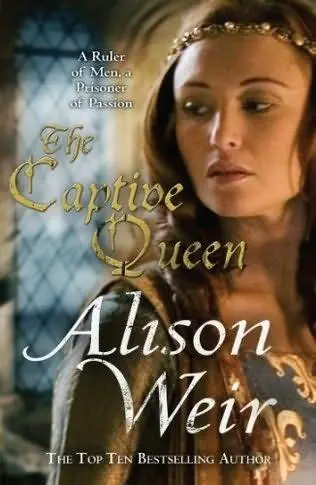
- Название:Captive Queen
- Автор:
- Издательство:BALLANTINE
- Жанр:
- Год:2010
- ISBN:978-0-345-52195-8
- Рейтинг книги:3 / 5. Голосов: 1
-
Избранное:Добавить в избранное
- Отзывы:
-
Ваша оценка:
Captive Queen: краткое содержание, описание и аннотация
Предлагаем к чтению аннотацию, описание, краткое содержание или предисловие (зависит от того, что написал сам автор книги «Captive Queen»). Если вы не нашли необходимую информацию о книге — напишите в комментариях, мы постараемся отыскать её.
Renowned for her highly acclaimed and bestselling British histories, Alison Weir has in recent years made a major impact on the fiction scene with her novels about Queen Elizabeth and Lady Jane Grey. In this latest offering, she imagines the world of Eleanor of Aquitaine, the beautiful twelfth-century woman who was Queen of France until she abandoned her royal husband for the younger man who would become King of England. In a relationship based on lust and a mutual desire for great power, Henry II and Eleanor took over the English throne in 1154, thus beginning one of the most influential reigns and tumultuous royal marriages in all of history. In this novel, Weir uses her extensive knowledge to paint a most vivid portrait of this fascinating woman.
Captive Queen — читать онлайн бесплатно полную книгу (весь текст) целиком
Ниже представлен текст книги, разбитый по страницам. Система сохранения места последней прочитанной страницы, позволяет с удобством читать онлайн бесплатно книгу «Captive Queen», без необходимости каждый раз заново искать на чём Вы остановились. Поставьте закладку, и сможете в любой момент перейти на страницу, на которой закончили чтение.
Интервал:
Закладка:
“It’s odd that all that talk of divorce suddenly died down,” Eleanor reflected as she and Amaria sat at their embroidery in a window embrasure, enjoying an unseasonably warm breeze. Over the years, she had painstakingly taught her maid the art of plying her needle to decorative effect, and Amaria proved a willing pupil. They were now working on an altar frontal for the chapel.
Amaria remained silent, but that was nothing unusual. She had the peasant’s way of few words.
“The last I heard, Henry had appealed to the Pope, but that was years ago,” Eleanor went on. “He must have thought better of it. Nevertheless, being thwarted by His Holiness should not stop him from marrying Richard to Alys. They should have been wed long since.” She rethreaded some red silk through her needle, then looked up. To her consternation, she saw that Amaria’s eyes were filled with tears.
“What’s the matter?” she asked.
“Nothing,” muttered the woman.
“No one weeps for nothing,” Eleanor said. “Have you had bad news?”
Amaria shook her head. “Really, my lady, ’tis nothing.”
“Now you have me worried!” her mistress declared. “Tell me what troubles you. I command it!”
“You won’t like it,” Amaria said in a low voice.
“Tell me!” ordered Eleanor, really worried now. “Has someone died?” Her heart was instantly pounding. If it was one of her children, she did not think she could bear it.
Amaria braced herself. “There be rumors that the King has got the Princess Alys with child.” She omitted to mention that these rumors had been fueling the public imagination for years now, and that they alleged far more than she’d revealed.
Eleanor caught her breath. So … Everything suddenly became clear. She instinctively knew that rumor spoke truth—or something like it. How could Henry have stooped so low? To compromise the honor of a princess of France was bad enough, but when that princess was his son’s betrothed—that was another matter entirely! Disgust consumed her.
When she regained her composure, another thought struck home. How long had this been going on? Was it the reason why she had heard no more of a divorce? And had she been the only person left in ignorance of what was going on? If Amaria had heard these rumors, then it was a certainty that most of England had too.
She wondered if Louis had known, if he had spoken out. But surely not. He would hardly have gone to Becket’s shrine with Henry in the circumstances. And Richard—where did he stand in all this? She was outraged on Richard’s behalf, and incensed against Henry.
She turned to Amaria, who was concentrating furiously on her sewing.
“What more do you know of this matter?” she probed.
“Only what that rumor said, lady,” Amaria lied. She was not about to repeat the gossip that accused Alys of having borne the King at least three children that died, or the shocked expletives of people scandalized to hear of Henry’s vile behavior. Nor would she say anything of those other rumors … Had it been the King who had put them about, perhaps seeking yet another pretext to put Eleanor away—this time for good?
But Eleanor was ahead of her. “Talking of rumors,” she said, resolutely moving on from the horrible gossip about Henry, “I overheard Fulcold”—the chamberlain—“talking with Master FitzStephen the other day. They were in the outer chamber, but the door had been left open. I could not catch everything they said, but I am sure that I heard Fulcold say, ‘All the world knows that Queen Eleanor murdered Rosamund.’ And Master FitzStephen, dour old fellow that he is, actually laughed, so I supposed the remark to have been made in jest. But what an odd thing to say. How could I murder Rosamund, shut up as I have been these seven years?”
Amaria mentally girded her loins; Eleanor could almost see her doing it.
“There have been tales to that effect,” she said at length.
“What tales? How could there be?” She could not credit it. Why should people always believe ill of her, especially when there was not the slightest justification for it? This really was too much!
“Aye, there be all kinds of silly stories. I took little notice of them, they was so far-fetched, and as I knew them to be false—and I said so often, mark ye, my lady! But folks likes to believe such things.”
Eleanor knew that. They livened up the daily round of ordinary people’s lives, provided the excitement that was lacking elsewhere. But she hated the idea of herself being the focus of such stupid and unjust calumnies.
“Tell me what they say of me!” she demanded, her anger rising.
“They say the King kept the Lady Rosamund—the Fair Rosamund, they call her—”
“Putrid by now, I should think!” Eleanor interrupted.
“They say you hated her, my lady, and that the King kept her shut up in a tower at Woodstock, for fear you would discover her, and had a maze put around the tower, so that you could never find the way in.”
“There was a maze, but it was built for her pleasure,” Eleanor said. “This is just nonsense.”
“Aye, it is nonsense, I know. Then you are supposed to have found a clue of thread or silk from the lady’s sewing basket, and followed it through the maze until you discovered her in her tower.”
“And then I supposedly murdered her!” Eleanor sniffed furiously. “I should like to know how!”
“Saving your pardon, but there are lots of gruesome stories,” Amaria admitted. “Some say you stripped her naked and roasted her between two fires, with venomous toads on her breasts; some say you let her bleed to death in a hot bath, some that you poisoned her, and others that you stabbed her with a dagger after putting out her eyes. I say some people have a vivid imagination.”
Eleanor had been listening to all this in mounting horror. “How could people think these things of me?” she cried. “It is all lies, vile lies. Yet they believe it, against all logic. I dare say some think this supposed murder is the cause for which I am still shut up.”
“A few do,” Amaria confirmed. “Although I have heard other people scoff at the rumors. Not everyone believes them, mark me.”
“But some do, and that is what offends me!” Eleanor cried. “How am I to defend myself against such slanders? I am powerless. Surely people realize that I could not possibly have had anything to do with Rosamund’s death.”
As the words were spoken, a salutary inner voice reminded her that she had once taken pleasure in imagining herself doing vengeful violence on Rosamund’s body—and that she had rejoiced in the most un-Christian manner on hearing news of her rival’s death. But I would never actually have done her harm, she told herself; God knows, I shrink from bloodshed. And when I was told of her sufferings before she died, I realized that what is written in Scripture is true: Vengeance is mine, saith the Lord: I will repay. And then I felt remorse for my unseemly joy in her death, and a belated pity for her.
“I will write to the King,” she vowed. “I will acquaint him of these terrible calumnies and demand that he publicly refute them. He must know that, even had I had the opportunity, I do not have it in me to do such a thing.”
Ralph FitzStephen looked dubious when the Queen asked for writing materials so she could send a letter to the King. She had never ventured to write to Henry before, and he wasn’t sure if it was permitted or not; but, in the absence of specific instructions, he grudgingly gave his consent.
Eleanor’s message was to the point:
“Eleanor, by the grace of God, Queen of England, to her Lord Henry, King of England, greetings,” she began. Then she simply said it had come to her notice that rumor unjustly accused her of murdering Rosamund de Clifford, and asked him to issue a public proclamation declaring her innocence. Left like that, it looked a bit abrupt, so she added two short sentences: “I trust you are in health. The Lord have you in His keeping.” Then she signed her name, showed it to a suspicious FitzStephen, and sealed it.
Читать дальшеИнтервал:
Закладка:
Похожие книги на «Captive Queen»
Представляем Вашему вниманию похожие книги на «Captive Queen» списком для выбора. Мы отобрали схожую по названию и смыслу литературу в надежде предоставить читателям больше вариантов отыскать новые, интересные, ещё непрочитанные произведения.


Обсуждение, отзывы о книге «Captive Queen» и просто собственные мнения читателей. Оставьте ваши комментарии, напишите, что Вы думаете о произведении, его смысле или главных героях. Укажите что конкретно понравилось, а что нет, и почему Вы так считаете.