Bernard Cornwell - The Winter King
Здесь есть возможность читать онлайн «Bernard Cornwell - The Winter King» весь текст электронной книги совершенно бесплатно (целиком полную версию без сокращений). В некоторых случаях можно слушать аудио, скачать через торрент в формате fb2 и присутствует краткое содержание. Год выпуска: 1997, Издательство: MacMillan Publishers, Жанр: Историческая проза, на английском языке. Описание произведения, (предисловие) а так же отзывы посетителей доступны на портале библиотеки ЛибКат.
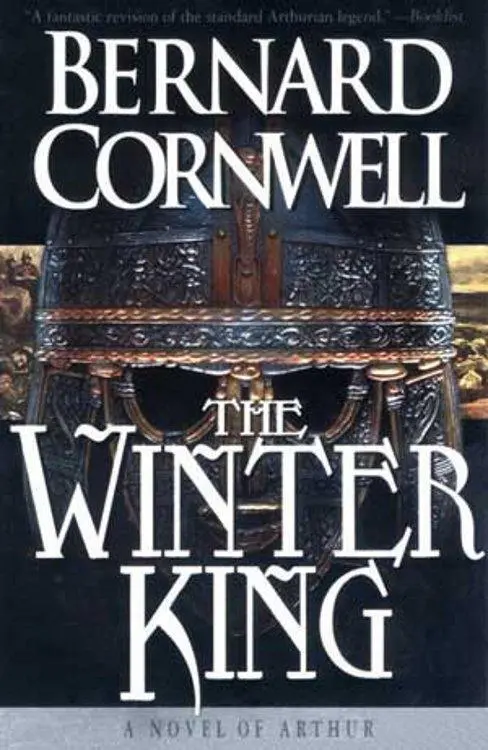
- Название:The Winter King
- Автор:
- Издательство:MacMillan Publishers
- Жанр:
- Год:1997
- ISBN:нет данных
- Рейтинг книги:4 / 5. Голосов: 1
-
Избранное:Добавить в избранное
- Отзывы:
-
Ваша оценка:
The Winter King: краткое содержание, описание и аннотация
Предлагаем к чтению аннотацию, описание, краткое содержание или предисловие (зависит от того, что написал сам автор книги «The Winter King»). Если вы не нашли необходимую информацию о книге — напишите в комментариях, мы постараемся отыскать её.
Fifth century Britain lies on the edge of darkness. Memories of Roman civilization are fading; the pagan Gods are retreating before the spread of Christianity; the Saxons are snapping and snarling at the borders. Only fragile bonds unite the unruly kingdoms of Britain against the invaders, bonds cemented by the vigour of the High King, Uther Pendragon. But the Pendragon is failing, and his heir is no strong leader but a child, born on a bitter winter night.
Only one man could keep Uther's throne safe,only he could hold the warring kingdoms together to face their true enemy, the Saxons. That man is Arthur: soldier, statesman, Merlin's protege, Uther's illegitimate son. But he has been banished, exiled by his own father to Brittany. Derfel, one of his spearmen, narrates the story of Arthur's return and of his quest for peace: embattled, bloody and, finally, triumphant.
The Winter King is a magnificent tale of the Dark Ages and the reality of war and political strife in a land where religion vied with magic for the souls of the people. It portrays Arthur the man rather than the legend, a military genius who, with a small band of warriors bound to him by loyalty and love, struggled to keep alive a flicker of civilization.
The Winter King — читать онлайн бесплатно полную книгу (весь текст) целиком
Ниже представлен текст книги, разбитый по страницам. Система сохранения места последней прочитанной страницы, позволяет с удобством читать онлайн бесплатно книгу «The Winter King», без необходимости каждый раз заново искать на чём Вы остановились. Поставьте закладку, и сможете в любой момент перейти на страницу, на которой закончили чтение.
Интервал:
Закладка:
Saxon at a flat run, my spear levelled, and I saw the fear in his eyes and I knew he was dead. The spear stuck fast in his belly, so I drew Hywel's sword, that now I called Hywelbane, and finished him with a sideways cut, then waded into the stream itself and killed two more. I was screaming like an evil spirit, shouting at the Saxons in their own tongue to come and taste death, and then a huge warrior accepted my invitation and charged me with one of the big axes that look so terrifying. Except an axe has too much dead weight. Once swung it cannot be reversed, and I put the big man down with a straight sword thrust that would have warmed Owain's heart. I took three gold torques, four brooches and a jewelled knife off that one axe man alone and I kept his axe blade to make my first battle rings. The Saxons fled, leaving eight dead and as many again wounded. I had killed no fewer than four of the enemy, a feat which was noticed by my companions. I basked in their respect, though later, when I was older and wiser, I ascribed my day's disproportionate killing to mere youthful stupidity. The young will often rush in where the wise go steadily. We lost three men, one of them Licat, the man who had saved my life on the Moor. I retrieved my spear, collected two more silver torques from the men I had killed in the stream, then watched as the enemy wounded were despatched to the Otherworld where they would become the slaves of our own dead fighters. We found six British captives huddled in the trees. They were women who had followed our levy to war and been captured by these Saxons, and it was one of those women who discovered the single enemy warrior still hiding in some brambles at the stream's edge. She screamed at him, and tried to stab him with a knife, but he scrambled away into the stream where I captured him. He was only a beardless youngster, perhaps my own age, and he was shaking with fear.
“What are you called?” I asked him with my bloody spear-blade at his throat. He was sprawling in the water. “Wlenca,” he answered, and then he told me he had come to Britain just weeks before, though when I asked him where he had come from he could not really answer except to say from home. His language was not quite the same as mine, but the differences were slight and I understood him well enough. The King of his people, he told me, was a great leader called Cerdic who was taking land on the south coast of Britain. Cerdic, he said, had needed to fight Aesc, a Saxon king who now ruled the Kentish lands, to establish his new colony, and that was the first time I realized that the Saxons fought amongst themselves just as we British did. It seems that Cerdic had won his war against Aesc and was now probing into Dumnonia.
The woman who had discovered Wlenca was squatting close by and hissing threats at him, but another of the women declared that Wlenca had taken no part in the raping that had followed their capture. Griffid, feeling relief at having some booty to take home, declared that Wlenca could live and so the Saxon was stripped naked, put under a woman's guard and marched west towards slavery. That was the last expedition of the year and though we declared it a great victory it paled beside Arthur's exploits. He had not only driven Aelle's Saxons out of northern Gwent, but had then defeated the forces of Powys and in the process had chopped off King Gorfyddyd's shield arm. The enemy King had escaped, but it was a great victory all the same and all of Gwent and Dumnonia rang with Arthur's praises. Owain was not happy.
Lunete, on the other hand, was delirious. I had brought her gold and silver, enough so she could wear a bearskin robe in winter and employ her own slave, a child of Kernow whom Lunete purchased from Owain's household. The child worked from dawn to dusk, and at night wept in the corner of the hut we now called home. When the girl cried too much Lunete hit her, and when I tried to defend the girl Lunete hit me. Owain's men had all moved from Caer Cadarn's cramped warrior quarters to the more comfortable settlement at Lindinis where Lunete and I had a thatched, wattle-walled hut inside the low earth ramparts built by the Romans. Caer Cadarn was six miles away and was occupied only when an enemy came too close, or when a great royal occasion was celebrated. We had one such occasion that winter on the day when Mordred turned one year old and when, by chance, Dumnonia's troubles came to their head. Or perhaps it was not chance at all, for Mordred was ever ill-omened and his acclamation was doomed to be touched by tragedy.
The ceremony happened just after the Solstice. Mordred was to be acclaimed king and the great men of Dumnonia gathered at Caer Cadarn for the occasion. Nimue came a day early and visited our hut, which Lunete had decorated with holly and ivy for the solstice. Nimue stepped over the hut's threshold that was scored with patterns to keep the evil spirits away, then sat by our fire and pushed back the hood of her cloak.
I smiled because she had a golden eye. “I like it,” I said.
“It's hollow,” she said, and disconcertingly tapped the eye with a fingernail. Lunete was shouting at the slave for burning the pottage of sprouted barley seeds and Nimue flinched at the display of anger.
“You're not happy,” she said to me.
“I am,” I insisted, for the young hate to admit making mistakes. Nimue glanced about the untidy and smoke-blackened interior of our hut as though she was scenting the mood of its inhabitants. “Lunete's wrong for you,” she said calmly as she idly picked from the littered floor half an empty egg-shell and crunched it into fragments so that no evil spirit could lurk in its shelter.
“Your head is in the clouds, Derfel,” she went on as she tossed the shell fragments on to the flames, 'while Lunete is earth-bound. She wants to be rich and you want to be honourable. It won't mix." She shrugged, as though it was not really important, then gave me her news of Ynys Wydryn. Merlin had not come back and no one knew where he was, but Arthur had sent money captured from the defeated King Gorfyddyd to pay for the Tor's reconstruction and Gwlyddyn was supervising the building of a new and grander hall. Pellinore was alive, as were Druidan and Gudovan the scribe. Norwenna, Nimue told me, had been buried in the shrine of the Holy Thorn where she was revered as a saint.
“What's a saint?” I asked.
“A dead Christian,” she said flatly. “They should all be saints.”
“And what about you?” I asked her.
“I'm alive,” she said tonelessly.
“Are you happy?”
“You always ask such stupid things. If I wanted to be happy, Derfel, I'd be down here with you, baking your bread and keeping your bedding clean.”
“Then why aren't you?”
She spat in the fire to ward off my stupidity. “Gundleus lives,” she said flatly, changing the subject.
“Imprisoned in Corinium,” I said, as though she did not already know where her enemy was.
“I've buried his name on a stone,” she said, then gave me a golden-eyed glance. “He made me pregnant when he raped me, but I killed the foul thing with ergot.” Ergot was a black blight that grew on rye and women used it to abort their young. Merlin also used it as a means of going into the dream-state and talking with the Gods. I had tried it once and was sick for days.
Lunete insisted on showing Nimue all her new possessions: the trivet, cauldron and sieve, the jewels and cloak, the fine linen shift and the battered silver jug with the naked Roman horseman chasing a deer about its belly. Nimue made a bad pretence of being impressed, then asked me to walk her to Caer Cadarn where she would spend the night. “Lunete's a fool,” she told me. We were walking along the edge of a stream that flowed into the River Cam. Brown brittle leaves crunched underfoot. There had been a frost and the day was bitterly cold. Nimue looked angrier than ever and, because of that, more beautiful. Tragedy suited Nimue, she knew it and so she sought it. “You're making a name for yourself,” she said, glancing at the plain iron warrior rings on my left hand. I kept my right hand free of the rings so I could keep a firm grip of a sword or spear, but I now wore four iron rings on my left hand.
Читать дальшеИнтервал:
Закладка:
Похожие книги на «The Winter King»
Представляем Вашему вниманию похожие книги на «The Winter King» списком для выбора. Мы отобрали схожую по названию и смыслу литературу в надежде предоставить читателям больше вариантов отыскать новые, интересные, ещё непрочитанные произведения.

Обсуждение, отзывы о книге «The Winter King» и просто собственные мнения читателей. Оставьте ваши комментарии, напишите, что Вы думаете о произведении, его смысле или главных героях. Укажите что конкретно понравилось, а что нет, и почему Вы так считаете.