Ben Elton - Two Brothers
Здесь есть возможность читать онлайн «Ben Elton - Two Brothers» весь текст электронной книги совершенно бесплатно (целиком полную версию без сокращений). В некоторых случаях можно слушать аудио, скачать через торрент в формате fb2 и присутствует краткое содержание. Город: London, Год выпуска: 2012, ISBN: 2012, Издательство: Transworld Publishers, Жанр: Историческая проза, на английском языке. Описание произведения, (предисловие) а так же отзывы посетителей доступны на портале библиотеки ЛибКат.
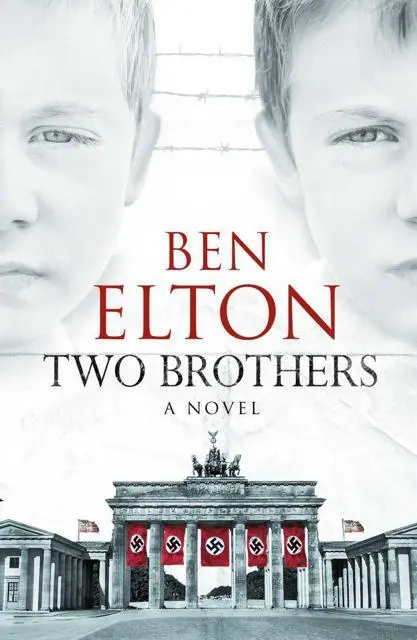
- Название:Two Brothers
- Автор:
- Издательство:Transworld Publishers
- Жанр:
- Год:2012
- Город:London
- ISBN:9780593062050
- Рейтинг книги:4 / 5. Голосов: 1
-
Избранное:Добавить в избранное
- Отзывы:
-
Ваша оценка:
Two Brothers: краткое содержание, описание и аннотация
Предлагаем к чтению аннотацию, описание, краткое содержание или предисловие (зависит от того, что написал сам автор книги «Two Brothers»). Если вы не нашли необходимую информацию о книге — напишите в комментариях, мы постараемся отыскать её.
Two Brothers BEN ELTON’s career as both performer and writer encompasses some of the most memorable and incisive comedy of the past twenty years. In addition to his hugely influential work as a stand-up comic, he is the writer of such TV hits as
and
. Most recently he has written the BBC series
on the subject of young parenthood. Elton has written three musicals,
and
and three West End plays. His internationally bestselling novels include *
,
,
,
and
. He wrote and directed the successful film
based on his novel
starring Hugh Laurie and Joely Richardson. About the Author
Two Brothers — читать онлайн бесплатно полную книгу (весь текст) целиком
Ниже представлен текст книги, разбитый по страницам. Система сохранения места последней прочитанной страницы, позволяет с удобством читать онлайн бесплатно книгу «Two Brothers», без необходимости каждый раз заново искать на чём Вы остановились. Поставьте закладку, и сможете в любой момент перейти на страницу, на которой закончили чтение.
Интервал:
Закладка:
‘Well you can try and control the consequences of course, Frau Schmidt,’ Frieda said, probing gently at her patient’s belly with delicate fingers. ‘No woman need feel obliged to have a child these days, you know, or at least you can considerably reduce the risk. In the past I have mentioned to you the idea of birth control—’
‘Hush, doctor! That’s treason!’ The woman laughed, her big, stretched, purple-streaked, tired old tummy wobbling with merriment. ‘Never mind obliged , haven’t you heard? These days it’s our duty! All these years I’ve been thinking I was an idiot for letting the old fella bother me when he’s been on the beer and it turns out I’m a hero! How about that, eh? Mind you, I actually thought I was a bit of a hero at the time, to be honest — he’s not getting any thinner or any easier on the eye.’
They laughed together, a shared moment of female solidarity in a man’s world.
‘Besides which, doctor, this one’s going to turn a profit. How about that, eh?’
Frieda smiled, she knew that the woman was referring to the government plans to ‘reward’ motherhood. Repayment of state family loans could be offset against the number of children that were produced. Abgekindert , as the joke went: borrow money and then ‘child it off’.
‘That’s a good thing though, isn’t it?’ Frau Schmidt went on. ‘I mean, you can’t deny that.’
The jolly, red-faced woman looked slightly uncomfortable. In recent weeks Frieda had got used to people avoiding her eye as they selfconsciously encouraged her to acknowledge the ‘good’ things that ‘they’ were doing for the nation. She had even noticed some irritation amongst non-Jewish acquaintances about the way Jews seemed fixated with their own situation. As if anti-Semitism was the only relevant feature of the new government. After all, everyone was making sacrifices for Germany’s reawakening, weren’t they? Why shouldn’t the Jews?
‘I don’t think quite all of us will be eligible for the payment,’ Frieda replied quietly. ‘I’m not sure Herr Hitler is anxious for people like myself to procreate.’
‘Mister’ Hitler. It was how Frieda and all her Jewish friends referred to the Leader, in the desperate, unspoken hope that somehow referring to him in a civilized manner might actually make him civilized himself. That perhaps even after everything he’d said, beneath the surface he was a legitimate politician who recognized some sort of rules and norms of behaviour, rather than a deranged psychopath, the stuff of gothic nightmares.
Once more Frau Schmidt avoided Frieda’s eye. Concentrating instead on buttoning up the front of her dress.
‘No,’ she said brightly, ‘I suppose not. But then you never wanted a large family anyway, Frau Stengel. You after all are a doctor .’
‘I am at the moment, Frau Schmidt.’
Frieda put away her stethoscope. She took the Schmidt family medical file from the bulging filing system that covered an entire wall of her surgery and went to her desk to write down the conclusions of her examination.
Frieda had worked in that same office, at that same community clinic, since graduating from medical school in 1923. Ten years of long, tough days and many many disturbed nights. Endless hours of hard and emotionally draining work on a small civil service grade salary.
This was a sacrifice that she had not made alone. Her family had made it with her. The boys had often missed their mum at supper time and even bedtime, while Wolfgang’s dreams of spending long days writing jazz symphonies had been sacrificed to child care and bread and butter engagements.
‘When are you going to finally stop being a martyr, put up a brass plate on your door and make some proper money, girl,’ Wolfgang had often begged, only half joking. ‘Help some fat society mommas with their hot flushes. Charge them a fortune to loosen their corsets and give them an aspirin.’
But Frieda loved her work, she was passionately committed to the Weimar Government’s public health policies, which were the most advanced in the world, and she felt huge responsibility to her patients. After her family, the Friedrichshain community clinic was the centre of Frieda’s life.
‘If we don’t look after these people,’ she’d tell her husband as they struggled to balance their own family budget, ‘who else will?’
‘Well, I’m with your dad on this one,’ Wolfgang would reply. ‘Fuck ’em,’ and Frieda hoped he was joking.
Flicking through the Schmidt file in search of the right card, Frieda found herself reflecting how badly her handwriting had deteriorated over her decade of practice. In that file were some of the first notes she had made as a junior doctor, when Frau Schmidt’s husband had registered with the clinic as a young single man. He had come to her with a case of gonorrhoea picked up in an army brothel in Belgium. She had noted down the details in a clear youthful hand. The writing she added to the file now was, as with most doctors, legible only to herself and the local chemist.
‘You will still be coming to see me, Frau Schmidt?’ Frieda enquired, without looking up from her desk. ‘You still wish me to deliver your baby?’
‘Of course, Frau Doktor . You’ve delivered all the others, one a year since 1927, all ship-shape and screaming blue murder. Why stop now?’
‘Well, Frau Schmidt, I think perhaps you know why. These are changing times.’
Now Frieda looked up. Frau Schmidt was putting on her coat, on the collar of which was a small swastika badge. Women were not allowed to be actual members of the Nazi Party but that did not stop them buying brooches to show their support.
‘You mean because you are Jewish?’ Schmidt said, once more a little embarrassed. ‘Well, yes, of course it is… unfortunate… for you I mean. It must be a very worrying time. But really you mustn’t fret, everybody knows that you are not one of them , Frau Doktor Stengel. The Jews in Berlin are different, aren’t they? I know two or three SA men with Jewish girlfriends.’
Frieda tried to smile. She encountered this same attitude all the time. She was not one of those Jews, the ones Herr Hitler was talking about. The ones depicted weekly in the million-selling Der Stürmer magazine, who drank the blood of Christian virgins to fuel their dark Satanic rituals. Those Jews were somewhere else, out in the countryside perhaps, where the Herrenvolk were already putting banners across the entrances to their villages, saying Jews should keep out or risk the consequences. Here in Berlin people knew Jews. They worked with them, banked with them, bought cakes from them. They knew that it could not be those Jews who spent their time, as Herr Hitler had written, lying in wait for hour after hour in darkened streets stalking pure young Aryan girls in pursuance of a deliberate policy of corrupting their blood through rape.
If Herr Webber the baker or Herr Simeon the jeweller or Wolfgang Stengel the music teacher and jazz trumpeter had been doing that sort of thing, surely people would have noticed.
‘You’re not that sort of Jew,’ Frau Schmidt assured Frieda, clearly under the impression she was being kind. ‘I can’t see how the Führer would object to you .’
‘Well, we shall have to wait and see,’ Frieda replied.
Frieda Stengel did not to have to wait long.
One thing that could not be said of Adolf Hitler was that he did not give the world fair warning. From his very first speeches and writings he had made it absolutely clear what treatment he had in mind for the Jews. On 31 March 1933, having been Chancellor for just sixty days, Hitler showed them that he meant what he said.
Читать дальшеИнтервал:
Закладка:
Похожие книги на «Two Brothers»
Представляем Вашему вниманию похожие книги на «Two Brothers» списком для выбора. Мы отобрали схожую по названию и смыслу литературу в надежде предоставить читателям больше вариантов отыскать новые, интересные, ещё непрочитанные произведения.





Обсуждение, отзывы о книге «Two Brothers» и просто собственные мнения читателей. Оставьте ваши комментарии, напишите, что Вы думаете о произведении, его смысле или главных героях. Укажите что конкретно понравилось, а что нет, и почему Вы так считаете.