Ben Elton - Two Brothers
Здесь есть возможность читать онлайн «Ben Elton - Two Brothers» весь текст электронной книги совершенно бесплатно (целиком полную версию без сокращений). В некоторых случаях можно слушать аудио, скачать через торрент в формате fb2 и присутствует краткое содержание. Город: London, Год выпуска: 2012, ISBN: 2012, Издательство: Transworld Publishers, Жанр: Историческая проза, на английском языке. Описание произведения, (предисловие) а так же отзывы посетителей доступны на портале библиотеки ЛибКат.
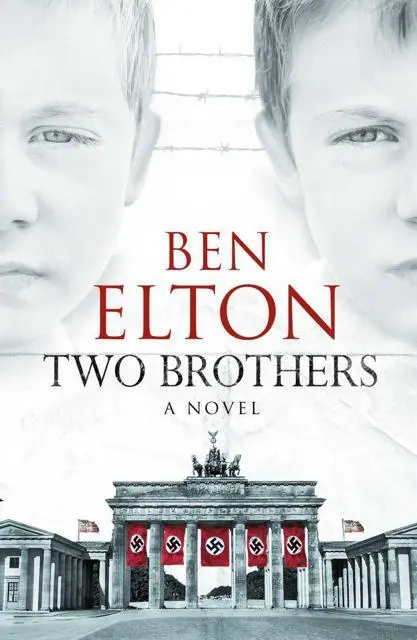
- Название:Two Brothers
- Автор:
- Издательство:Transworld Publishers
- Жанр:
- Год:2012
- Город:London
- ISBN:9780593062050
- Рейтинг книги:4 / 5. Голосов: 1
-
Избранное:Добавить в избранное
- Отзывы:
-
Ваша оценка:
Two Brothers: краткое содержание, описание и аннотация
Предлагаем к чтению аннотацию, описание, краткое содержание или предисловие (зависит от того, что написал сам автор книги «Two Brothers»). Если вы не нашли необходимую информацию о книге — напишите в комментариях, мы постараемся отыскать её.
Two Brothers BEN ELTON’s career as both performer and writer encompasses some of the most memorable and incisive comedy of the past twenty years. In addition to his hugely influential work as a stand-up comic, he is the writer of such TV hits as
and
. Most recently he has written the BBC series
on the subject of young parenthood. Elton has written three musicals,
and
and three West End plays. His internationally bestselling novels include *
,
,
,
and
. He wrote and directed the successful film
based on his novel
starring Hugh Laurie and Joely Richardson. About the Author
Two Brothers — читать онлайн бесплатно полную книгу (весь текст) целиком
Ниже представлен текст книги, разбитый по страницам. Система сохранения места последней прочитанной страницы, позволяет с удобством читать онлайн бесплатно книгу «Two Brothers», без необходимости каждый раз заново искать на чём Вы остановились. Поставьте закладку, и сможете в любой момент перейти на страницу, на которой закончили чтение.
Интервал:
Закладка:
‘A wife! My God, what a funny way to propose!’
‘Dagmar,’ Paulus began.
‘And what a wonderful idea. Of course, the wife of an SS man, what better cover could there possibly be? Well, it’s not a very romantic setting to be saying it in, I’d always imagined Paris and the Eiffel Tower, but I accept.’
Silke stared at the table, drawing rings with her finger in the beer froth to cover her evident embarrassment.
Paulus took Dagmar’s hand.
‘Dagmar,’ Paulus said, ‘you know how much I would love it if that could be. You know how I feel about you.’
Now Silke turned away completely, staring at the barmaids rushing about in their Bavarian costumes with their trays full of brimming steins of beer.
‘But you said,’ Dagmar began.
‘It’s illegal for a German to marry a Jew, you know that.’
‘But you said I was to have a new identity.’
‘Yes, we hope, but not one that could possibly stand the scrutiny it would be under in a marriage contract. You know very well that any German, particularly an SS man’s fiancée, must provide proof of racial lineage back to the eighteenth century before they can marry. Every church and civil record is checked.’
‘Then what are you talking about?’
‘Dagmar, a married German soldier is entitled to a home, and his wife is legally entitled to employ a maid.’
‘A maid?’
‘Yes. Tens of thousands of Czech and Polish girls are being stolen for domestic service in Berlin.’
Dagmar’s mouth dropped open.
‘I’m… to become a Polish maidservant?’
‘To the world, yes!’ Paulus said with a smile. ‘It’s a brilliant plan, though I say it myself. One set of forged papers plus a peasant’s haircut and we’re done. Nothing else, no records, no family, no past. No conversation even, since you don’t speak German. You were snatched from your village three hundred miles away and forced into domestic service in Germany. These girls are getting off the train with nothing but a movement order. I’ve seen them; their lives begin at the station. Dagmar Fischer’s life, on the other hand, is over. She left a suicide note like so many Jews are doing and threw herself in the river Spree, no body was ever found. Little Miss Czech or Pole, however, is working legally in Berlin for Corporal and Frau Stengel.’
‘Frau Stengel,’ Dagmar asked, ‘and who’s Frau…’
The penny dropped. She looked across the table at Silke.
‘Who would have thought it?’ Silke said. ‘I’m marrying Paulus.’
‘You—’ Dagmar gasped — ‘marrying Paulus.’
‘Yes,’ Silke said with a smile. ‘Funny the way life goes, isn’t it? When I was a little girl I can remember dreaming of marrying Otto Stengel and now I am. Of course, it’s not the one I imagined, but we all have to make readjustments, don’t we?’ Silke raised her glass. ‘Shall we do it properly and put an announcement in the Völkischer Beobachter , Pauly? Otto Stengel, betrothed to Silke, only daughter of Edeltraud Krause.’
Final Briefing
London, 1956
‘YOU WERE RIGHT,’ the man who looked like Peter Lorre said, ‘Silke Stengel née Krause is an officer at the Ministry of State Security. Right at the heart of it, in fact. In Berlin-Lichtenburg on the Ruschestrasse.’
‘Stasi headquarters.’
‘Yes. Stasi headquarters. She has a service record dating back to shortly after the war. You say she used to be a friend?’
‘Yes. A good friend.’
Stone closed his eyes.
Seeing once again the golden freckled shoulders. The thin strip of sunlight from the window moving across them over and over again as the train thundered towards Rotterdam.
Other memories flashed across his mind.
Silke at three or four years old in a flurry of tumbling wooden bricks, sitting first on Paulus’s fort and then on his.
At the Saturday music lessons, singing and banging a tambourine.
Running, jumping. Dancing. Fighting.
Helping carry a body in a rolled-up rug into a lift.
Brown legs pumping at the pedals of her bicycle. Pretty legs, surprisingly pretty.
Lying beside him beneath the stars telling him for the first time about the Rote Hilfe .
Locking horns with Dagmar, the millionaire’s daughter.
‘She always was a Communist,’ Stone said. ‘I suppose she still is.’
‘Well, then,’ Bogart remarked with a gentle smile, ‘here’s your passport, all stamped and ready. Off you go.’
Mixed Marriage
Berlin, 1940
NEITHER THE BRIDE’S nor the groom’s parents attended Paulus and Silke’s wedding.
Silke’s father had of course last been seen disappearing from a boarding-house bedroom in 1920, and she and her mother had not spoken to each other since the mid-1930s.
Wolfgang was dead, which left only Frieda.
She stayed away as a matter of decorum. It would not have done for an SS corporal to have a race enemy attend his wedding.
Paulus had known that he must move quickly to get his domestic arrangements in order. Germany may have been victorious in the east but the nation was still at war with Britain and France and there was little doubt that a reckoning would not be long in coming in the west. As a soldier in the Waffen SS, Paulus would have to fight and might very well be killed, so there was no time to lose.
He and Silke had settled on a furnished apartment in his mother’s childhood district of Moabit. Neither he nor Silke were known there, and it was also a goodish distance from the leafy suburb of Charlottenburg in which Dagmar had grown up.
As a single man and serving soldier it would have been out of the question for Paulus to have enjoyed the luxury of a foreign maid, so before Dagmar could be hidden away in her new home with her new identity, Paulus must first marry Silke according to their plan.
On the morning of the wedding, Silke and Paulus met at the apartment which from that day on they were to share.
‘You look very nice, Silks,’ Paulus said.
She was wearing a pale green two-piece suit and a cream-coloured hat with a feather in it. Her thick blonde hair had been set specially for the occasion, and, rarely for her, she was wearing lipstick.
She did indeed look nice.
‘Thanks,’ Silke replied. ‘I’m trying to look stern and noble but also feminine and compliant. A credit to the Führer.’
‘You got it bang on. Goebbels could put you on a poster.’
Silke smiled and looked Paulus up and down.
‘I won’t say you look nice ,’ she said. ‘Not with that awful armband. But handsome. Very handsome. They do good uniforms, the Nazis, you have to give them that. I saw some photographs of British Tommies in a Signal magazine somebody left on the U-Bahn and they looked like plumbers in overalls.’
‘Come on,’ Paulus said, ‘take a look at the apartment of the soon-to-be Frau Stengel.’
He took Silke’s arm and guided her around the flat.
‘I thought this could be your bedroom,’ he said. ‘I mean, if that’s all right. Then Dagmar and I could take this one. It’s up to you, of course. I mean, you can choose.’
‘I’m fine, whatever you think,’ Silke said briskly. ‘I imagine I’ll be out quite a lot anyway.’
They paused together outside the room Paulus had suggested for himself and Dagmar.
‘Funny how things turn out, isn’t it?’ Paulus said.
‘Do you think,’ Silke began, and then stopped.
‘Do I think what?’
‘Nothing. It’s not important.’
‘I know what you were going to ask,’ he said. ‘Do I think Dagmar would have ended up wanting to marry me if there’d never been any Nazis? If she was still a Ku’damm princess and me the son of a trumpeter?’
Читать дальшеИнтервал:
Закладка:
Похожие книги на «Two Brothers»
Представляем Вашему вниманию похожие книги на «Two Brothers» списком для выбора. Мы отобрали схожую по названию и смыслу литературу в надежде предоставить читателям больше вариантов отыскать новые, интересные, ещё непрочитанные произведения.








Обсуждение, отзывы о книге «Two Brothers» и просто собственные мнения читателей. Оставьте ваши комментарии, напишите, что Вы думаете о произведении, его смысле или главных героях. Укажите что конкретно понравилось, а что нет, и почему Вы так считаете.