Ben Elton - Two Brothers
Здесь есть возможность читать онлайн «Ben Elton - Two Brothers» весь текст электронной книги совершенно бесплатно (целиком полную версию без сокращений). В некоторых случаях можно слушать аудио, скачать через торрент в формате fb2 и присутствует краткое содержание. Город: London, Год выпуска: 2012, ISBN: 2012, Издательство: Transworld Publishers, Жанр: Историческая проза, на английском языке. Описание произведения, (предисловие) а так же отзывы посетителей доступны на портале библиотеки ЛибКат.
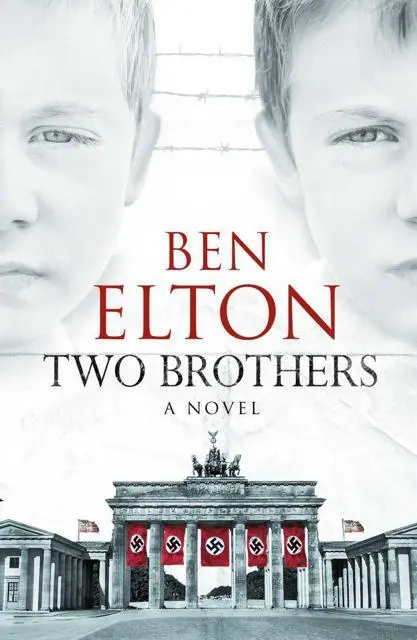
- Название:Two Brothers
- Автор:
- Издательство:Transworld Publishers
- Жанр:
- Год:2012
- Город:London
- ISBN:9780593062050
- Рейтинг книги:4 / 5. Голосов: 1
-
Избранное:Добавить в избранное
- Отзывы:
-
Ваша оценка:
Two Brothers: краткое содержание, описание и аннотация
Предлагаем к чтению аннотацию, описание, краткое содержание или предисловие (зависит от того, что написал сам автор книги «Two Brothers»). Если вы не нашли необходимую информацию о книге — напишите в комментариях, мы постараемся отыскать её.
Two Brothers BEN ELTON’s career as both performer and writer encompasses some of the most memorable and incisive comedy of the past twenty years. In addition to his hugely influential work as a stand-up comic, he is the writer of such TV hits as
and
. Most recently he has written the BBC series
on the subject of young parenthood. Elton has written three musicals,
and
and three West End plays. His internationally bestselling novels include *
,
,
,
and
. He wrote and directed the successful film
based on his novel
starring Hugh Laurie and Joely Richardson. About the Author
Two Brothers — читать онлайн бесплатно полную книгу (весь текст) целиком
Ниже представлен текст книги, разбитый по страницам. Система сохранения места последней прочитанной страницы, позволяет с удобством читать онлайн бесплатно книгу «Two Brothers», без необходимости каждый раз заново искать на чём Вы остановились. Поставьте закладку, и сможете в любой момент перейти на страницу, на которой закончили чтение.
Интервал:
Закладка:
But murder? Mass murder? Surely not. That couldn’t be.
Nobody. Nobody would do that.
Least of all the sons and daughters of Bach, Beethoven, Goethe, Schiller, Mozart, Bismarck, Gutenberg and Luther.
Murder all the Jews. All of them?
It couldn’t happen.
And yet…
Maybe it wasn’t planned. Maybe they scarcely even knew themselves that this was what they were about. But Paulus had seen in Poland with his own eyes which way the devilish wind was blowing. He had seen what sudden and absolute victory was doing to the men in black and, yes, also in field grey. They were supermen and they could do what they liked.
And what they liked, it seemed, was to kill defenceless people.
Poles, gypsies, the weak, the sick. And above all Jews.
Certainly it had seemed improvised and almost random; there appeared to Paulus to be no guiding system or specific orders. And yet everywhere he had been as the lightning war struck, he had seen dead Jews.
Or Jews for whom he could see no chance of survival.
Herded up. Shipped from here to there.
To where?
Three times the truck in which he was riding with his Wehrmacht comrades had been commandeered by the SS in charge of huddled masses of humanity being torn from their villages.
‘Don’t let them take us,’ came the pitiful cries of children. ‘They’ll kill us.’
Paulus’s comrades said they wouldn’t.
Even they, who had passed village squares in which every father hung from a rope, still declined to believe it.
‘They won’t kill them. That’s a Jewish lie. A slur on Germany. They’re just shifting them out to make room for decent Germans.’
But Paulus could only ask himself the obvious question.
Shifting them to where?
If you tore every Jew from his home as clearly the Einsatzkommando of the SS were intent on doing, what would you do with them then? He had been told that they were being taken to the cities, massed in tiny ghettos from which they were not allowed to leave.
And what then?
Paulus thought that if he were Hitler he would kill them. After all, they were vermin and leaving them to starve would be messy and dangerous. A source of infection. A source of resistance. A source of witness.
Paulus had concluded that the path down which Germany was travelling could lead to only one dark and terrible place.
And his mother and his beloved Dagmar were trapped in Berlin.
Which is why, bumping along the dusty roads towards the charnel house that Germany was to make of the ancient city of Warsaw, he had made his plan.
‘I want to join the SS in order to better serve my Führer and to cleanse myself once and for all of my shameful family history, Sturmscharführer sir!’
‘Well done, lad,’ the sergeant said. ‘I think we’ll take you.’
A Marriage is Discussed
Berlin, 1940
THE NEWLY APPOINTED SS Obergefreiter Stengel turned left on to Prinz-Albrecht-Strasse and walked the length of the state security building. His jackboots rang on the paving stones as he passed the various queues of miserable people who had come with their papers in search of some stamp or other. Helpless suppliants begging for permission to survive.
He turned right on to Saarlandstrasse, a great blood-red double vein of fluttering flags, which led up to Potsdamer Platz. Two lanes plus a central island. So many flags. Red and black. Red and black. Red and black. All the way up to the Haus Vaterland .
He saw Dagmar before she saw him.
Which gave him a moment. A moment to drink her in. To savour. To treasure. To stand and stare across the thundering traffic at an oasis of poise and beauty.
She was standing beneath the famous Traffic-light Tower.
They loved the tower. Everyone in Berlin did. They had both been present at its unveiling in 1924. She a much-indulged little princess, separate and safe in a viewing area reserved for city dignitaries and leaders of commerce. He in the crowd, watching with his brother from atop their parents’ shoulders, cheering and shouting as the policeman in his little box seven metres above the ground turned on the lights that would finally bring order to the traffic chaos of the Potsdamer Platz.
The tower had been a symbol of Germany’s burgeoning economic revival. A miracle of modern technology, the first of its kind in Europe.
The tower was hung with swastikas now of course. The whole city was hung with swastikas and had been for six long years. Paulus no longer really thought of it as Berlin at all. Just Nazi Town, capital of Nazi Land, a hostile foreign country in which he was a prisoner.
Paulus looked once more at Dagmar.
How elegant she looked. From her fashionably broad-brimmed Homburg hat to her neat little lace-up brogues. No stockings, of course, they had disappeared from Berlin, but even ankle socks looked sophisticated on Dagmar.
It seemed to Paulus that of all the scurrying creatures hurrying this way and that across the great junction, Dagmar appeared the most naturally placed. Here in the heart of Berlin’s shopping district, standing at the epicentre of its finest thoroughfares, she might have been posing for a fashion photograph to be placed in a stylish magazine. Or, more likely these days, to feature in one of those photo stories they published in Signal , to show the troops that life in the capital was still prosperous and normal and that the German girls were still beautiful.
Paulus’s reverie was interrupted by a voice at his shoulder.
‘Come on,’ Silke said, ‘I’ve only got an hour.’
In a rush as ever.
But there, just as she had promised. She never let him down.
Good old Silke.
Golden hair all wrapped up in a knotted scarf, someone else’s baby’s dribble on the shoulder of her housecoat. Shivering against the cold and damp for which she was ill-clad as ever. But smiling nonetheless. A big bright smile spread across a face so sun-browned it was still tanned even now as winter began to thaw.
She put her arm in his and at the automated bidding of the Traffic-light Tower (no friendly seven-metre-high policeman any more), they crossed the street together to join Dagmar.
The three of them were to have lunch in the magnificent Haus Vaterland . The internationally famous ‘World in One House’ where up to eight thousand people at a time could dine in the largest café in the world and at the various internationally themed restaurants. They could have chosen the Wild West American Bar, the Bodega Spanish winery or the Japanese tea room. There were Turkish, Hungarian and Viennese options too. With supreme irony there had never been a British or a French restaurant because the ultra-patriotic Herr Kempinski, the Jewish restaurateur who had founded Fatherland House, had never forgiven Germany’s Great War enemies for the Treaty of Versailles.
When Paulus had come here with his parents and his brother back in the dream time they had, of course, always chosen the American Bar. Where they had steak and cornbread and a fancy coloured cocktail for Frieda. Now, however, being a good German soldier in uniform with not one but two girls on his arms, he steered the ladies towards the Lowenbräu Bavarian beer restaurant.
This was the loudest hall in the whole building, in which Nazi marching music blaring from loudspeakers competed with the beer-soaked din. It was a rowdy, triumphalist, unpleasant environment. Intimidating even. It therefore provided the best kind of cover for a planning meeting of race enemies and Communist-inclined traitors to the Reich.
Inevitably the Horst Wessel Lied was blaring from the loudspeakers as they entered the room and waited for a table.
‘Don’t grimace, Dagmar,’ Silke said, smiling broadly.
Читать дальшеИнтервал:
Закладка:
Похожие книги на «Two Brothers»
Представляем Вашему вниманию похожие книги на «Two Brothers» списком для выбора. Мы отобрали схожую по названию и смыслу литературу в надежде предоставить читателям больше вариантов отыскать новые, интересные, ещё непрочитанные произведения.







Обсуждение, отзывы о книге «Two Brothers» и просто собственные мнения читателей. Оставьте ваши комментарии, напишите, что Вы думаете о произведении, его смысле или главных героях. Укажите что конкретно понравилось, а что нет, и почему Вы так считаете.