Jay Parini - The Last Station
Здесь есть возможность читать онлайн «Jay Parini - The Last Station» весь текст электронной книги совершенно бесплатно (целиком полную версию без сокращений). В некоторых случаях можно слушать аудио, скачать через торрент в формате fb2 и присутствует краткое содержание. Город: London, Год выпуска: 2007, ISBN: 2007, Издательство: Canongate Books, Жанр: Историческая проза, на английском языке. Описание произведения, (предисловие) а так же отзывы посетителей доступны на портале библиотеки ЛибКат.
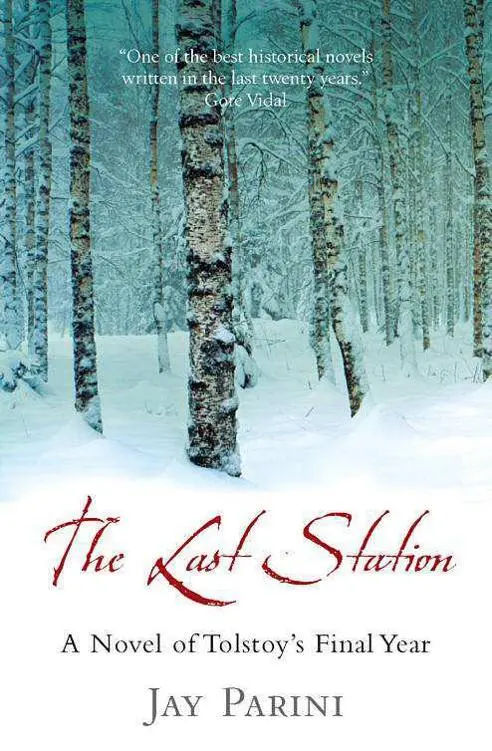
- Название:The Last Station
- Автор:
- Издательство:Canongate Books
- Жанр:
- Год:2007
- Город:London
- ISBN:978-1-84767-394-7
- Рейтинг книги:4 / 5. Голосов: 1
-
Избранное:Добавить в избранное
- Отзывы:
-
Ваша оценка:
The Last Station: краткое содержание, описание и аннотация
Предлагаем к чтению аннотацию, описание, краткое содержание или предисловие (зависит от того, что написал сам автор книги «The Last Station»). Если вы не нашли необходимую информацию о книге — напишите в комментариях, мы постараемся отыскать её.
Jay Parini moves deftly between a colorful cast of characters to create a stunning portrait of one of the world’s most treasured authors. Dancing between fact and fiction,
is a brilliant and moving literary performance.
The Last Station — читать онлайн бесплатно полную книгу (весь текст) целиком
Ниже представлен текст книги, разбитый по страницам. Система сохранения места последней прочитанной страницы, позволяет с удобством читать онлайн бесплатно книгу «The Last Station», без необходимости каждый раз заново искать на чём Вы остановились. Поставьте закладку, и сможете в любой момент перейти на страницу, на которой закончили чтение.
Интервал:
Закладка:
‘I have been sent by the Empress Catherine on official business,’ he said, exaggerating slightly.
The doorman, with animal fear in his eye, pointed the way to Potemkin’s study.
Through corridors carpeted with thick runners from the Orient, past galleries and music rooms, Shuvalkin approached the infamous study. The door was shut. Shuvalkin knocked once, then waited. There was no response. He had read in a book somewhere that opportunity doesn’t knock twice and decided, perhaps rashly, to take the plunge. He turned the brass handle slowly. To his astonishment, it was not locked.
Potemkin sat at his desk at the opposite end of the vast, musty room with the shutters closed, the room barely lit. He was sitting in a nightshirt behind his desk, unshaven, motionless. It did not seem possible to little Shuvalkin that the great prince, for whom he had run many errands, could look so poorly. Aware that his time was limited, he thrust the stack of documents under Potemkin’s nose.
Dipping a steel-tipped pen from the desk into a jar of ink, he handed it to Potemkin, who took the pen between his stubby fingers but seemed quite ignorant of Shuvalkin’s presence in the room.
‘Please sign the documents, Your Excellency. The empress’s need is urgent.’
Potemkin simply stared ahead, the pen in hand.
‘The documents are vital, Your Excellency. For the sake of the empress…’ It seemed hopeless, and Shuvalkin was about to flee when the prince, rock faced, began systematically to sign the documents. One by one, he turned the pages, signed, and blotted his signature. Soon the entire stack was finished.
Shuvalkin was elated. His career would soar. He imagined himself promoted to chief administrator of the city parks or head of document storage or, perhaps, administrative counsel to Potemkin himself. His heart leaped, and he had to restrain himself from kissing the prince as he gathered the documents in his arms. Wobbly kneed, he said, ‘Thank you, Your Excellency. Thank you so very much, Your Excellency.’ Still bowing and muttering, he closed the door to Potemkin’s chambers and ran into the streets.
Back at the palace, he entered the antechamber where the counselors were still assembled. The blaze of triumph was in his eyes as he held the documents before him. ‘They have all been signed,’ he said. ‘Every one of them!’
With amazement, the chief counselor accepted the documents. They were spread on a broad trestle table, and the counselors gathered round. Breathlessly, they bent to look.
The whole group seemed paralyzed. The chief counselor looked gravely at Shuvalkin.
‘Is anything wrong?’ he asked, stepping forward to the table. It was then he saw that the great Potemkin had indeed signed the papers, but he had signed document after document, in a bold hand, Shuvalkin… Shuvalkin… Shuvalkin….
Today I was Shuvalkin. I have behaved with fidelity, spoken truthfully to Leo Nikolayevich, to Vladimir Grigorevich, to Sofya Andreyevna. But everyone now considers me a fraud. They see my name on every evil document, but I have not written it there. Still, I must not blame Leo Tolstoy. He is not my Potemkin. God is my Potemkin, teasing me, playing a game that could cast me only in the worst possible light among this household or that of Telyatinki.
I received a letter from St Petersburg.
My dearest Valya,
Since returning, I have made contact with the Tolstoyans, who have welcomed me. You would be surprised at how much they know about us! Telyatinki fascinates them, and they all want to visit there. Yasnaya Polyana, for them, is Mecca.
They know a great deal about you. Rumors fly! They know that Leo Nikolayevicb admires you very much, and it is said that you and he spend long philosophical afternoons in the forest of Zasyeka. I assure them that all of this has been exaggerated…
Do you think of me? (I’m sure you do.) I think of you. I am quite glad, however, for this period of intermission. I felt your intensity too painfully. It was not comfortable, and it was hurting my ability to respond to you in the way I would like.
Let us write letters, lots of letters. I feel close to you now as I compose. Closer than that day in the pinewoods when we touched. Does that seem possible?
Let me know what you are thinking and feeling. And let me know what is happening at Yasnaya Polyana. I have been reading What Then Must We Do? , which L. N. wrote nearly thirty years ago! Have you read it lately? It once again braces me to work for justice in the world.
The inequities of rich and poor must be improved to the extent that they can. I know that you sincerely agree with me on these matters.
I wonder when and how we shall meet again. Will I return to Tula? Perhaps. In the meanwhile, know that I value our friendship and look forward to bearing from you often.
I could hardly breathe. Is it possible that I can live my life without Masha beside me? I have come to love her even more since she left, to yearn for her, to dream about her. I imagine myself beside her in our marriage bed, our children asleep in the next room. I imagine us, like kitty and Levin from Anna Karenina , tending the fields, working the land, enjoying the family hearth.
The possibility, the fear, of having too many lonely years without her stretches ahead of me, and I feel isolated and strangely vacant. God and work with Leo Nikolayevich should be enough to sustain me. But somehow, without Masha, my life seems valueless. I sat for many hours, alone, my eyes blurry with tears, reading and rereading the letter.
My attraction to the idea of marriage is not, however, enhanced by watching the daily struggle of man and wife in Yasnaya Polyana. Last night we had been sitting quietly as dusk covered the pond, watching the barn swallows dart and weave as they snagged fireflies in their tiny beaks. The August evening was dewy and rich. Red light streaked the horizon, the sun having just fallen behind the distant woods.
Shortly after dinner, Sofya Andreyevna came onto the terrace, where I was sitting with Leo Nikolayevich and Dr Makovitsky. She had a notebook in her hands. Her husband stiffened when he saw her.
‘I suppose your friends all know that you prefer men to women,’ she said, trying to provoke him, embarrassing Dushan Makovitsky so thoroughly that I thought he might crack.
‘For God’s sake, Sonya,’ Leo Nikolayevich said. he seemed less angry than weary.
Peace was not her object. ‘I have been rereading your old diaries,’ she said. ‘May I read something to your friends? They are both fascinated by everything the great Tolstoy has said or written – so they pretend.’
I hated being privy to such talk, but where was I to go? The normally expressive face of Leo Nikolayevich became impassive. He looked away from his wife.
‘Listen to this, friends,’ she went on. The note of insolence in her voice shocked me. ‘I copied this from his diary of 29 November 1851. It is quite revealing: ‘I have never been in love with a woman…. Yet I have very often fallen in love with a man.’” She stopped to let the weight of this passage sink in. ‘Can you believe it? Now listen to this: “For me the main indication of love is the fear of offending the beloved, of not pleasing him, or just fear itself… I fell in love with a man before I realized what pederasty was; yet even when I found out what it was, the possibility never crossed my mind.”’
‘So there it is!’ shouted Dr Makovitsky. ‘He has explained himself. We do not need to hear more of this, Sofya Andreyevna.’ His bald head twitched as he spoke, the slight dent in his brow going purple with fury.
‘I shall continue, Dushan Petrovich. It is all very intriguing,’ she said. ‘“Beauty has always been a huge factor in my attraction to people…. There is Dyakov, for instance. How could I ever forget the night we left Pirogovo together, when, wrapped in my blanket, I felt as though I could devour him with kisses and weep for joy. Lust was not absent, yet it is impossible to say exactly what part it played in my feelings, for my mind never tempted me with depraved images.”’
Читать дальшеИнтервал:
Закладка:
Похожие книги на «The Last Station»
Представляем Вашему вниманию похожие книги на «The Last Station» списком для выбора. Мы отобрали схожую по названию и смыслу литературу в надежде предоставить читателям больше вариантов отыскать новые, интересные, ещё непрочитанные произведения.






Обсуждение, отзывы о книге «The Last Station» и просто собственные мнения читателей. Оставьте ваши комментарии, напишите, что Вы думаете о произведении, его смысле или главных героях. Укажите что конкретно понравилось, а что нет, и почему Вы так считаете.