Nicola Griffith - Hild
Здесь есть возможность читать онлайн «Nicola Griffith - Hild» весь текст электронной книги совершенно бесплатно (целиком полную версию без сокращений). В некоторых случаях можно слушать аудио, скачать через торрент в формате fb2 и присутствует краткое содержание. Город: New York, Год выпуска: 2013, ISBN: 2013, Издательство: Farrar, Straus and Giroux, Жанр: Историческая проза, на английском языке. Описание произведения, (предисловие) а так же отзывы посетителей доступны на портале библиотеки ЛибКат.
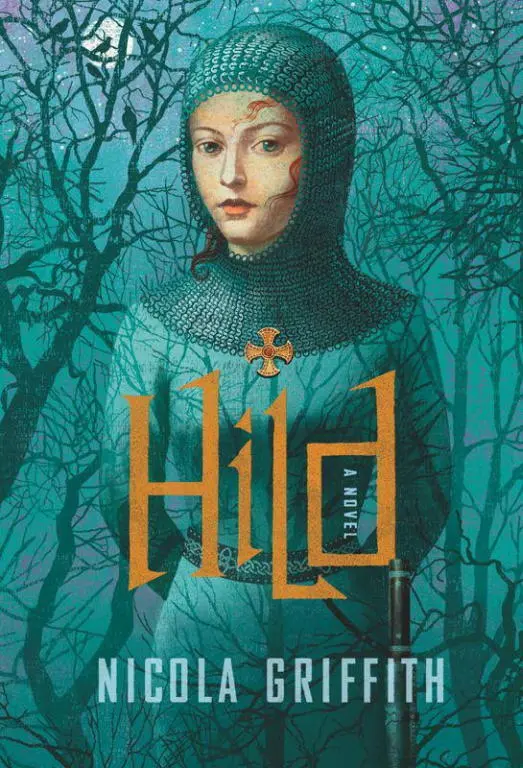
- Название:Hild
- Автор:
- Издательство:Farrar, Straus and Giroux
- Жанр:
- Год:2013
- Город:New York
- ISBN:978-0-374-28087-1
- Рейтинг книги:5 / 5. Голосов: 1
-
Избранное:Добавить в избранное
- Отзывы:
-
Ваша оценка:
Hild: краткое содержание, описание и аннотация
Предлагаем к чтению аннотацию, описание, краткое содержание или предисловие (зависит от того, что написал сам автор книги «Hild»). Если вы не нашли необходимую информацию о книге — напишите в комментариях, мы постараемся отыскать её.
But now she has only the powerful curiosity of a bright child, a will of adamant, and a way of seeing the world—of studying nature, of matching cause with effect, of observing her surroundings closely and predicting what will happen next—that can seem uncanny, even supernatural, to those around her.
Her uncle, Edwin of Northumbria, plots to become overking of the Angles, ruthlessly using every tool at his disposal: blood, bribery, belief. Hild establishes a place for herself at his side as the king’s seer. And she is indispensable—unless she should ever lead the king astray. The stakes are life and death: for Hild, for her family, for her loved ones, and for the increasing numbers who seek the protection of the strange girl who can read the world and see the future.
Hild is a young woman at the heart of the violence, subtlety, and mysticism of the early Middle Ages—all of it brilliantly and accurately evoked by Nicola Griffith’s luminous prose. Working from what little historical record is extant, Griffith has brought a beautiful, brutal world—and one of its most fascinating, pivotal figures, the girl who would become St. Hilda of Whitby—to vivid, absorbing life.
Hild — читать онлайн бесплатно полную книгу (весь текст) целиком
Ниже представлен текст книги, разбитый по страницам. Система сохранения места последней прочитанной страницы, позволяет с удобством читать онлайн бесплатно книгу «Hild», без необходимости каждый раз заново искать на чём Вы остановились. Поставьте закладку, и сможете в любой момент перейти на страницу, на которой закончили чтение.
Интервал:
Закладка:
“You have promised me your daughter for baptism, my lord,” Paulinus said.
“I have promised her if you can promise your Christ will give me victory. Can you? Or will you witter like that fool bishop of the Dyfneint who told me all prophecy is the work of demons?”
“Not all prophecy, my lord.”
“And you have seen my victory?”
“I have prayed. I have asked for the aid of our Lord Jesus Christ and all His saints and angels.”
“Pity you didn’t ask yesterday.” He ran a finger up and down the clotted channel of his sword, sniffed it, wiped his hand on his thigh. He lifted the sword. “Come closer.”
The black-clad figure stepped forward.
“Closer.” Edwin touched the point of his sword to the bishop’s throat, just below the throat apple.
Hild admired the Crow’s courage, and his self-possession. He wore clean robes and had shaved. The apple in his throat did not bobble.
“Will you take a wager?” Edwin said.
“Name the terms, my lord.”
“My daughter against your life. Victory against the Saxons and you shall baptise her. If not…” He smiled and pushed, gently.
“I accept the wager.”
A growl of approval ran through the hall. They liked a brave man. They liked a betting man.
“Tondhelm!” The whole hall jumped. Edwin lifted the sword away and held it out hilt-first to his thegn. “Clean this and put it away. And bring food. I’m as hungry as a goat. And cut him loose.” Hild along with everyone else followed his gaze to Cian. “And someone find that tooth of a blade and his belt. He’ll need a blade to swear on.”
Hild backed away slowly.
“And, Niece.” She froze. “Find that priest of yours and bring him to me.”
Outside, she leaned against the doorpost and threw up her breakfast while Cian swore his life to the king.
Hild forgot about the salve she held and watched Cian spar with Berhtnoth, shield to shield, his moves simple and deft, like a poem: never lunging, never off-balance, always over his feet, always behind his shield.
Behind them, Coelfrith, as attentive to detail as his father, oversaw the grooms bringing horses in batches from the pasture for his examination. The war band would be moving fast. He ran a hand over fetlocks and face, approved each mount with a nod just like his father’s. Every single mount must carry its gesith forty miles a day into Saxon territory and still have the strength for a hard gallop away if the battle went badly.
The gesiths paid no attention; the horses were not their concern.
Berhtnoth began to pant, though Cian did not. Not long after that, Cian banged Berhtnoth’s shield to one side, stepped away when Berhtnoth lunged, and ran his padded sword along the gap between Berhtnoth’s cheek flap and mailed shoulder. Berhtnoth was dead.
They stepped apart and a wealh ran to take their shields and helmets, and the two gesiths slapped each other on the back and laughed over each stroke while the wealh ran back with cold well water.
The king was nowhere about. She stepped from the shadow of the wall.
Cian saw her and walked over, water spilling from the jar into the grass. His leathers reeked of sweat and his mail of grease and iron.
“You’re very good,” Hild said.
“I am.” He grinned and wiped his face. The left side was still greenish-yellow. “I’m a king’s gesith! I’m going to war! All those days fighting in the furze with sticks. And then Mulstan—oh, he’s a strong shield fighter! He beat me so many times, just banging me aside, not even breaking a sweat. ‘Hoard your strength!’ he’d say, and wallop me on the head. ‘Mind your feet and hoard your strength! The loser in a shield fight is the one whose legs start to tremble first.’ And soon—” He broke off. “What’s wrong?”
Hild shook her head. He was going to war. He didn’t need her burden: a missing Fursey to find and nightmares of a suspicious king. Besides, soon she wouldn’t have to worry about the king’s mood.
“Where’s Begu?”
“With the queen and the baby.”
Cian made that face men made when women mentioned babies, and drank more water.
“Cian.”
He wiped his mouth.
Come home safe. Don’t be a hero. Stay away from the king. But he was a king’s gesith. She might as well tell rain not to fall. “Remember Mulstan’s lessons. Wash your wounds well.” She hefted the waxed sausage of salve she’d prepared, then held it out. “And send a message when you can.”
13
BEGU’S HAIR STRAYED FROM UNDER HER VEIL BAND and she muttered to herself as she folded dresses and rolled hose. Her muttering became peevish. The war band had been gone a fortnight.
“Gwladus will do that,” Hild said.
“Gwladus is busy doing the work of all the men who left with the gesiths. I’m doing this.”
Hild doubted Gwladus would ever do men’s work, but she said nothing. She leaned against the doorpost, remembering Mulstanton, Begu wondering out loud whether she would need her bed.
Begu carefully stowed their ivory treasure boxes in the carved trunk that would ride under their direct supervision. “I don’t even see why we have to leave the Derwent. Eanflæd is still so tiny!”
Hild shrugged. “It’s how it is.”
“Why can’t we at least wait until the war band comes back?”
They wouldn’t all come back; they never did. And this time Cian was with them.
“I wouldn’t move a lamb at that age, never mind a princess!”
Hild nodded.
“What’s Sancton like? Is it near the sea?”
“No. But Brough, where we’ll go later, is on a river as wide as the sea, and sometimes if you’re at the dock early enough you can go out on a boat that will go to the sea and be back in time for dinner.”
“But not at Sancton.”
“No.”
“I miss the gulls.”
Hild stroked the back of Begu’s arm. “I’m sorry we have no home.”
Begu said without turning, “Moving is stupid!”
Her hair smelt of the resiny pine they used to ward off moths. Hild didn’t know what to say.
“Oh, just go away and let me finish this in peace. I think the queen wants to talk to you about something.”
At the door of the queen’s apartment, Hild put her finger to her lips for a moment and old Wulfhere, who had taken a spear behind the knee at some long-ago Kentish battle, nodded and said nothing.
She watched Wilnoð and the queen, who sat on stools with a tablet weave between them. Every now and again Wilnoð tapped the foot of the painted and gilded cradle and kept it rocking.
After a moment Hild cleared her throat. Wilnoð looked up. “Good,” she said. “You can take the queen out for a brisk walk. Accept no excuse.” The queen began to shake her head. “The babe’s asleep, Æthelburh. She won’t melt if you let her out of your sight. Go for a walk.”
The string-thin paths of early spring were wider now, wide enough for the queen and Hild to walk abreast. The soft green tapestry of the woods was stitched with the bright gleam of birdcall, too many birds to name.
They walked silently. It was clear the queen’s thoughts were elsewhere. Or she was trying to find a way to say something.
They’d been walking now for a while. The queen seemed to have forgotten that they should pause for Wulfhere to catch up but Hild felt no obligation to remind her.
They heard the creak-crash of a deer deep in the woods, followed by a sudden hammering nearby. Æthelburh clutched at her cross.
“It’s a woodpecker,” Hild said.
“Not a wood sprite?”
Hild shook her head. The hammering, loud—a big woodpecker—came closer. “If we keep still it might fly this— There.” A red plumb-bob shape flicked across the trail in the characteristic rise-and-dip path. It would be heading for the big oak by the clearing. Woodpeckers liked that one; she had seen the plates of bark there the other day; the tree must be infested. Perhaps it would fall in the next big storm, be nothing but broken wood when they came back to the Derwent. Once again, Hild was struck with longing to have a home, year-round, where she could watch and learn a wood, a stream, a hillside in snow and fog and sun, in wind and rain, in summer and winter. Begu was right. Moving all the time was stupid.
Читать дальшеИнтервал:
Закладка:
Похожие книги на «Hild»
Представляем Вашему вниманию похожие книги на «Hild» списком для выбора. Мы отобрали схожую по названию и смыслу литературу в надежде предоставить читателям больше вариантов отыскать новые, интересные, ещё непрочитанные произведения.









Обсуждение, отзывы о книге «Hild» и просто собственные мнения читателей. Оставьте ваши комментарии, напишите, что Вы думаете о произведении, его смысле или главных героях. Укажите что конкретно понравилось, а что нет, и почему Вы так считаете.