Nicola Griffith - Hild
Здесь есть возможность читать онлайн «Nicola Griffith - Hild» весь текст электронной книги совершенно бесплатно (целиком полную версию без сокращений). В некоторых случаях можно слушать аудио, скачать через торрент в формате fb2 и присутствует краткое содержание. Город: New York, Год выпуска: 2013, ISBN: 2013, Издательство: Farrar, Straus and Giroux, Жанр: Историческая проза, на английском языке. Описание произведения, (предисловие) а так же отзывы посетителей доступны на портале библиотеки ЛибКат.
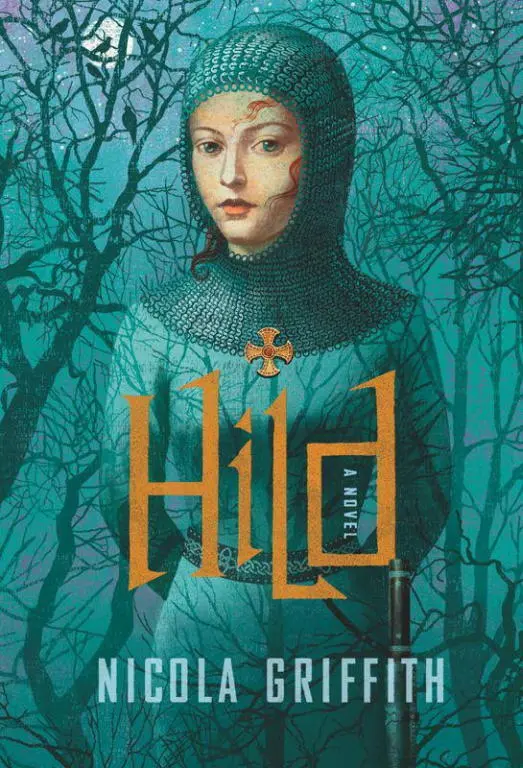
- Название:Hild
- Автор:
- Издательство:Farrar, Straus and Giroux
- Жанр:
- Год:2013
- Город:New York
- ISBN:978-0-374-28087-1
- Рейтинг книги:5 / 5. Голосов: 1
-
Избранное:Добавить в избранное
- Отзывы:
-
Ваша оценка:
Hild: краткое содержание, описание и аннотация
Предлагаем к чтению аннотацию, описание, краткое содержание или предисловие (зависит от того, что написал сам автор книги «Hild»). Если вы не нашли необходимую информацию о книге — напишите в комментариях, мы постараемся отыскать её.
But now she has only the powerful curiosity of a bright child, a will of adamant, and a way of seeing the world—of studying nature, of matching cause with effect, of observing her surroundings closely and predicting what will happen next—that can seem uncanny, even supernatural, to those around her.
Her uncle, Edwin of Northumbria, plots to become overking of the Angles, ruthlessly using every tool at his disposal: blood, bribery, belief. Hild establishes a place for herself at his side as the king’s seer. And she is indispensable—unless she should ever lead the king astray. The stakes are life and death: for Hild, for her family, for her loved ones, and for the increasing numbers who seek the protection of the strange girl who can read the world and see the future.
Hild is a young woman at the heart of the violence, subtlety, and mysticism of the early Middle Ages—all of it brilliantly and accurately evoked by Nicola Griffith’s luminous prose. Working from what little historical record is extant, Griffith has brought a beautiful, brutal world—and one of its most fascinating, pivotal figures, the girl who would become St. Hilda of Whitby—to vivid, absorbing life.
Hild — читать онлайн бесплатно полную книгу (весь текст) целиком
Ниже представлен текст книги, разбитый по страницам. Система сохранения места последней прочитанной страницы, позволяет с удобством читать онлайн бесплатно книгу «Hild», без необходимости каждый раз заново искать на чём Вы остановились. Поставьте закладку, и сможете в любой момент перейти на страницу, на которой закончили чтение.
Интервал:
Закладка:
“And what about Cian?”
“Shh,” Gwladus said, “she’s seeing.”
Cian. Gwladus was right. He would swear an oath to the king, swear to lay his life down for the king’s honour. He would be a hero with a ringed sword. And more, for Lilla was dead, and Forthere, and Edwin wouldn’t know whom to trust, and Cian had proved his loyalty. Edwin… She shook her head.
“What? What are you seeing now? What’s she seeing now?”
“Hush,” said Gwladus, and to Hild, in British, “Drink this. Ah, and another sip. Now look you, look deeper.”
And with the mead burning in her gullet, Hild felt all-wise, all-seeing, all-powerful.
She looked in the water, watched the rippling faces of her companions. Rustic little Begu, who knew nothing of the world. Gwladus, a wealh of the Dyfneint, who just wanted to go home. And perhaps she would. A Gewisse had tried to kill the king, a Gewisse who had forsworn himself.
“The king will hunt Gewisse. There will be war with the West Saxons.” Enemies of the Dyfneint. But they knew that.
“Will Lintlaf fight the West Saxons alongside the king?”
“Yes,” Hild said, in British. He was a gesith. What else would he do? “He will kill many Saxons.”
“Will he come home to me safe?”
“Home…” If the war went well—and of course it would, Edwin’s war band was huge—perhaps he would choose to hold the land he took from the West Saxons, the land they had taken lately from the Dyfneint. And if Lintlaf did well… “The king will take the Dyfneint land. Lintlaf, if he chooses, could hold some of it in the king’s name.”
“Dyfneint land, Lintlaf? He could take me home?”
“What?” said Begu. “What? What are you saying?”
Hild looked up from the water. The wealh’s eyes glistened. It was so easy to change a life. “He could.”
Gwladus shrieked, hugged Begu. “I’m going home! I’m going home!”
“My turn, my turn,” Begu said. “See what’s for me.”
Hild smiled, looked in the water. That was even easier. Begu would marry and teach her children the name of every horse, cow, and goat on the land. But no, wait. Wait. Begu was now her gemæcce; she must follow Hild. But where would Hild go?
The foot of her hose, swollen with trapped air, rose from the depth of the pail, turned, and sank again, like a whale diving deep in the cold waters of the North Sea. Down and down and down into the dark…
She shivered. Begu’s fate was wedded to her own. She should have thought of that. Begu had no idea of Hild’s life; Hild should have explained. But it was too late. The queen herself had made them gemæcce; it couldn’t be undone. Begu’s life would never be simple again.
Why had the queen done it? The queen… The queen who had brought Paulinus, the Christ bishop… The Christ to whom the king was vowing to give the queen’s child for victory in battle. A Christian peaceweaver…
The wick floating in its fat flared yellow, and Hild remembered the road to Rendlesham, Fursey tapping the small fiery bead. You have forgotten the most powerful of all.
The yellow bead, blazing with light, next to the other beads: the one for Cynegils of the West Saxons, a deep angry red, and the reddish-orange beads for his three sons. One with a chip. Chipped. Chafing at his father. Oh.
“Cwichelm!” she said. “It was Cwichelm, prince of the Gewisse. He sent Eamer.”
She couldn’t remember the name of the other Saxon at the feast. Ceadda? He had not looked at Eamer but he must have passed some signal. Why hadn’t she seen it? Why hadn’t she been looking? Because she’d had Fursey at her elbow and Cian in her thoughts. Her mother would be angry. Her mother… Did she have anything to do with this? No: The chaos after assassination was not something she could control, and Breguswith liked control. Osric? She thought about the way his body showed his thoughts: No, he’d been as surprised as anyone. And where was Fursey?
“Hild, what about me?” Begu said. “What about my future—our future? Will we be happy? Will I?”
The wick flared again and spat. The Christ. Cwichelm. Fursey. Everything was changing, and she couldn’t see the pattern. It wasn’t easy anymore. The ache in her belly was making her feel sick.
The silver rim of Gwladus’s cup pressed against her bottom lip. “Drink.”
She swallowed. She wanted to lie down. But now her head was full of pictures: Edwin, looking wildly about him, blood dripping from his arm: Whom to trust, whom to trust? And she was glad, then, oh so very glad, that Eamer was not one of her hounds. She saw Edwin sitting on his great chair, eyes darting, making and unmaking decisions all spring and into summer until his advisers despaired and began to listen to the promises of other kings and princes. So many other kings: Anglisc, British, and Saxon, Irish, Pictish, and Scots. So much fear and greed, so many whispers: a foster-brother in Gwynedd, hard-faced nephews in exile with Picts and Scots, and Osric his black-haired cousin plotting in Arbeia. The clash of swords.
“Black hair and chestnut,” she said, watching the pattern of light and shadow twine and shimmer on the surface of the water.
Her hose rose again, like a dead and bloated whale.
She leaned closer. “So much blood.”
“Don’t touch it!” Begu caught her with her face so close to the water she could have flicked out her tongue and touched it. “It will spill and break the spell.”
“It smells,” she whispered.
“Well, yes. It’s full of your dirty clothes.”
Hild blinked. Clothes. Dirty water. Just dirty water. She straightened, then reached out and flicked the surface with her fingertip. The trembling water spilled down the side of the bucket. Hild stood, said to Gwladus, “When you’ve cleaned that up, bring me raspberry tea.”
Her belly did not ache the next day but her head did, and her skin smelt different, like a stranger’s.
Gwladus brought food and news that, according to Lintlaf, Cian was still whole, and according to Arddun, the queen and the baby were doing well. Hild sent her to make sure Cian had been fed, and she and Begu were sipping small beer and munching stickily on warm bread and honey when the curtain parted and Breguswith swept in.
“There you are. The king wants—” She stopped. “Well.” There was more in that one word than in the whole of a scop’s song. “What a lovely veil band.” For a moment—so briefly Hild wondered if she’d imagined it—her mother’s face seemed to thicken and pucker, like the skin on warmed milk, but then it smoothed to its usual unreadable expression. “A very fine purse, too. Kentish work, if I don’t mistake.” She stared deliberately at the spindle in Hild’s girdle, then at its match in Begu’s.
Hild brushed crumbs carefully from her skirts. Your mother will never tell you what to do again. She stood. She was taller than Breguswith. “What does my uncle want?” My uncle, not yours.
“Your meddling priest has found the West Saxon, Ceadda, the Gewisse who ran.”
“And the king wants me to question him?”
Breguswith smiled, a bright spark of eyes and teeth, like a flint striking steel. “Sadly, the king killed him before he could speak. He would have killed your priest, too, if he hadn’t run like a hare. If he’s any sense, he’ll keep running. However, word of your vision, black hair fighting chestnut hair, and your naming of Cwichelm, has run wild through the kitchen and reached Edwin. He is… anxious.”
Breguswith turned to Begu. “You must be the girl from Mulstanton. I thought you’d be better dressed.”
Begu tilted her head and studied Hild’s mother with one eye, then the other. “You must be Hild’s mother. I thought you’d be taller.”
Читать дальшеИнтервал:
Закладка:
Похожие книги на «Hild»
Представляем Вашему вниманию похожие книги на «Hild» списком для выбора. Мы отобрали схожую по названию и смыслу литературу в надежде предоставить читателям больше вариантов отыскать новые, интересные, ещё непрочитанные произведения.






Обсуждение, отзывы о книге «Hild» и просто собственные мнения читателей. Оставьте ваши комментарии, напишите, что Вы думаете о произведении, его смысле или главных героях. Укажите что конкретно понравилось, а что нет, и почему Вы так считаете.