Nicola Griffith - Hild
Здесь есть возможность читать онлайн «Nicola Griffith - Hild» весь текст электронной книги совершенно бесплатно (целиком полную версию без сокращений). В некоторых случаях можно слушать аудио, скачать через торрент в формате fb2 и присутствует краткое содержание. Город: New York, Год выпуска: 2013, ISBN: 2013, Издательство: Farrar, Straus and Giroux, Жанр: Историческая проза, на английском языке. Описание произведения, (предисловие) а так же отзывы посетителей доступны на портале библиотеки ЛибКат.
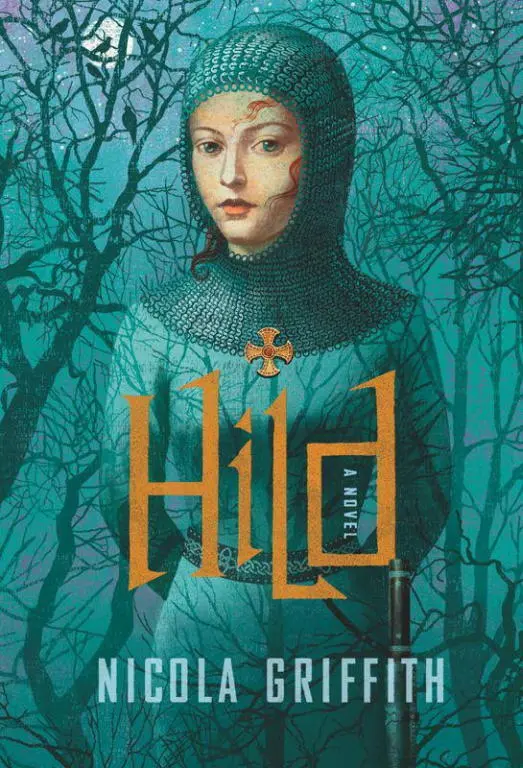
- Название:Hild
- Автор:
- Издательство:Farrar, Straus and Giroux
- Жанр:
- Год:2013
- Город:New York
- ISBN:978-0-374-28087-1
- Рейтинг книги:5 / 5. Голосов: 1
-
Избранное:Добавить в избранное
- Отзывы:
-
Ваша оценка:
Hild: краткое содержание, описание и аннотация
Предлагаем к чтению аннотацию, описание, краткое содержание или предисловие (зависит от того, что написал сам автор книги «Hild»). Если вы не нашли необходимую информацию о книге — напишите в комментариях, мы постараемся отыскать её.
But now she has only the powerful curiosity of a bright child, a will of adamant, and a way of seeing the world—of studying nature, of matching cause with effect, of observing her surroundings closely and predicting what will happen next—that can seem uncanny, even supernatural, to those around her.
Her uncle, Edwin of Northumbria, plots to become overking of the Angles, ruthlessly using every tool at his disposal: blood, bribery, belief. Hild establishes a place for herself at his side as the king’s seer. And she is indispensable—unless she should ever lead the king astray. The stakes are life and death: for Hild, for her family, for her loved ones, and for the increasing numbers who seek the protection of the strange girl who can read the world and see the future.
Hild is a young woman at the heart of the violence, subtlety, and mysticism of the early Middle Ages—all of it brilliantly and accurately evoked by Nicola Griffith’s luminous prose. Working from what little historical record is extant, Griffith has brought a beautiful, brutal world—and one of its most fascinating, pivotal figures, the girl who would become St. Hilda of Whitby—to vivid, absorbing life.
Hild — читать онлайн бесплатно полную книгу (весь текст) целиком
Ниже представлен текст книги, разбитый по страницам. Система сохранения места последней прочитанной страницы, позволяет с удобством читать онлайн бесплатно книгу «Hild», без необходимости каждый раз заново искать на чём Вы остановились. Поставьте закладку, и сможете в любой момент перейти на страницу, на которой закончили чтение.
Интервал:
Закладка:
As the weather worsened and the last of the leaves fell, she roamed the half-ruined wings of the old redcrest fort within a fort. One afternoon she ran into Paulinus—trailed by Stephanus—who ignored her wild hair and mud-smeared dress and served her a political smile and the information that he was surveying the wing for the queen. She wanted the royal ladies to have their own suites—including, of course, the lady Hild. Whom he hoped to call on soon in order to discuss the glories of Christ the Lord.
“Not my lord,” she said. “My lord is the king. My uncle.”
His smile didn’t waver but Hild heard the false note when he turned to Stephanus and said in Latin, “Note that many of these bricks are crumbling.”
Stephanus obediently pressed his stylus to the wax. Hild saw that what he wrote was Of course the bricks are crumbling! and she snorted.
Paulinus fixed her with his black eyes, and Hild knew she had made a mistake.
The next day, Hild stood by the queen, who had summoned her, in the centre of the echoing great hall of York. They watched as James the Deacon prepared to lead his tiny choir, four lay brothers selected because “they sing like cherubim, cherubim,” for the queen.
James’s face, up close, was the colour of charred alder. She wondered why Stephanus was called “the Black,” but James was not. He had coarse grey hair fizzing around his tonsure and eyes like jet beads. But his mien was not dark. He laughed a lot and spoke Anglisc with a bubbling Latin accent though he had admitted, cheerfully, that when it came to music and administration he had the soul of a torturer. According to Gwladus he had certainly tormented the housefolk that morning. “Take down all the hangings, all. And sweep out the rushes, every one. No, I don’t care that the king has said it is never to be moved. Talk to the queen. No, no cushions! No hangings! Get rid of them. All, I say. We are to have real music, music for the praise of God and the pleasure of the queen, for which I want this basilica as bare as a bone.” And in response to their pleas the queen had sent word to the household: Do as he asks, it’s just for today, and it will be a good excuse to clean the old cave.
The hall— basilica —without the fires, without the hangings, looked alien and old, and was as cold as death. Everyone in it stood wreathed about by their own breath. The queen wore a mantle tipped with beaver fur, the same sleek rich brown as her hair. Her great beaded gold necklace and cross gleamed at her throat. Hild stood cloakless, impervious to the chill. It fed the legend—the maid who felt nothing.
She knew why she was here, and she had let Gwladus see to it that she was clean, tidy, and heavily jewelled, but she was in no hurry to begin. She could outwait a hawk in the wild. She could certainly outwait any queen from the south. Indifference was her cloak and shield.
While James fussed with placing his choirmen, she pondered the floor. This was the first time it had been swept bare in perhaps a generation. She scuffed at the crusted dirt with her toe, trying to tell what kind of stone it was. She was aware of the brothers straightening, James the Deacon tapping time, their heartbeat of focus, but she didn’t look up. Perhaps it was limestone.
The music, when it came, with a rush, a gush of voice seeking its note, ripped away her indifference and tore through her as sudden and shocking as snowmelt.
She forgot the floor. Forgot the queen. She felt hot, then cold, then nothing at all, like a bubble rising through water, then floating, then lifting free.
It was cool music, inhuman, the song stars might sing. Endless, pouring, pure. Were it water, it would turn any bird that drank it white.
The music soared. Hild soared with it.
The queen, standing with Hild in the centre of the hall, where James had insisted the fire pit be covered by a board, reached and took Hild’s hand.
At some point the men stopped singing but for a moment the music soared on under the rafters. When even that faded, the queen squeezed and let go. Hild’s hand tingled and remembered what she hadn’t felt: a cold hand, smaller than her own, smooth but not soft.
Æthelburh brushed at Hild’s cheek, at her tears, and Hild caught the queen’s scent—some kind of flower, one Hild didn’t know. She filled with a sudden gaping hunger for the scent of her sister, for Begu or Cian, for Onnen, even for her mother.
She wiped her face with her sleeve, aware now of the texture of the linen, the cold on her cheeks.
James walked to them, sandals slapping on the bare stone. He walked with a light step, as quick as Onnen’s. “You liked it!” he said.
“Yes,” said Æthelburh.
“It will get better, of course,” James said. “Once we plaster those rafters and hang some doors instead of that pernicious cloth. And you,” he said to Hild. “You liked it.”
She nodded. But she didn’t know how to say it had made her heart feel the way she imagined a gull might, hanging over a swell held by only the wind. That it had made her forget the stink of the insides of Lindseymen. That it had reminded her of the wordless, untouchable patterns she sensed when she counted the petals on a daisy or watched ripples on a pond.
She tried. “I liked… I liked the way it climbed, up and over on itself.”
He beamed.
The queen patted him lightly on the arm, a dismissal, then she and Hild assessed each other.
The queen was pregnant, though no one was supposed to know. Gwladus, who had befriended Arddun, the wealh who attended the queen’s gemæcce, told Hild that there had been no blood on the queen’s sheets since the wedding night, that the king must be as fertile as old Thuddor: done the deed the first month of their coupling. You wouldn’t know to look at her: planed face, polished hair, and thin wrists.
“They say you feel nothing,” the queen said. “But that’s not true, is it? Though clearly you don’t feel the cold.”
Hild waited.
“Paulinus says you know your letters. I never heard of a person who knows her letters but doesn’t know Christ.”
Silence.
“My gesiths say you are a sorceress. Or perhaps hægtes. They say you can fly. I wish I could fly. The music is as close as I come to it.”
For a moment, Hild was cycling, soaring endlessly again with the song.
The queen reached up and brushed her new tears away. “You will speak.”
“What’s the flower you smell of?”
Æthelburh blinked, then laughed. “Jessamine, a precious oil from the East. A gift from my brother, who had it from our mother’s people in Frankia. I will give you a little.”
Hild did not protest. Her mother had trained her to accept every advantage: to smell like the queen would be a mark of great favour, one people would notice without knowing it.
“And you, you will walk with me every day. We are cousins but you may call me aunt. You will talk to me. We will get to know each other.”
They walked along the river—upstream, away from the landing’s shout and stink and the fretful reeve’s men, who often turned to the queen now that Coelgar, seconded by Blæcca, was so busy taking the reins in Lindum on Edwin’s behalf—with Lintlaf and Bassus, the queen’s red-cloaked captain, following ten paces behind.
“We have nine women working now on the embroidery for Clothar king,” Æthelburh said. “It’ll be finished by Yule.”
A skein of greylag geese took flight just beyond the trees at the curve of the river. “Nine?”
Æthelburh nodded. “Teneshild is a skilful hand. And Æffe. And Burgen might be deaf but her eyes are good and she knows how to make the colours dance.”
And with their sly comments, Burgen and Æffe would soon have the Kentishwomen and the Northumbrians gossiping together like old gesiths on the war trail. “You’re clever.”
Читать дальшеИнтервал:
Закладка:
Похожие книги на «Hild»
Представляем Вашему вниманию похожие книги на «Hild» списком для выбора. Мы отобрали схожую по названию и смыслу литературу в надежде предоставить читателям больше вариантов отыскать новые, интересные, ещё непрочитанные произведения.







Обсуждение, отзывы о книге «Hild» и просто собственные мнения читателей. Оставьте ваши комментарии, напишите, что Вы думаете о произведении, его смысле или главных героях. Укажите что конкретно понравилось, а что нет, и почему Вы так считаете.