Nicola Griffith - Hild
Здесь есть возможность читать онлайн «Nicola Griffith - Hild» весь текст электронной книги совершенно бесплатно (целиком полную версию без сокращений). В некоторых случаях можно слушать аудио, скачать через торрент в формате fb2 и присутствует краткое содержание. Город: New York, Год выпуска: 2013, ISBN: 2013, Издательство: Farrar, Straus and Giroux, Жанр: Историческая проза, на английском языке. Описание произведения, (предисловие) а так же отзывы посетителей доступны на портале библиотеки ЛибКат.
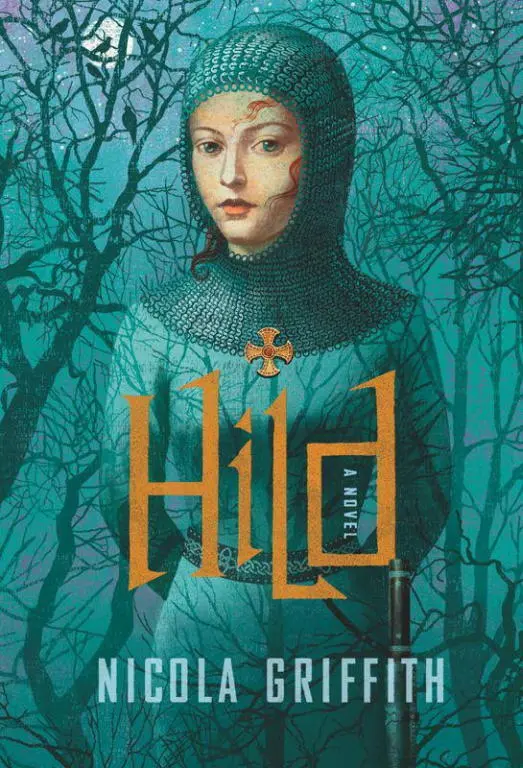
- Название:Hild
- Автор:
- Издательство:Farrar, Straus and Giroux
- Жанр:
- Год:2013
- Город:New York
- ISBN:978-0-374-28087-1
- Рейтинг книги:5 / 5. Голосов: 1
-
Избранное:Добавить в избранное
- Отзывы:
-
Ваша оценка:
Hild: краткое содержание, описание и аннотация
Предлагаем к чтению аннотацию, описание, краткое содержание или предисловие (зависит от того, что написал сам автор книги «Hild»). Если вы не нашли необходимую информацию о книге — напишите в комментариях, мы постараемся отыскать её.
But now she has only the powerful curiosity of a bright child, a will of adamant, and a way of seeing the world—of studying nature, of matching cause with effect, of observing her surroundings closely and predicting what will happen next—that can seem uncanny, even supernatural, to those around her.
Her uncle, Edwin of Northumbria, plots to become overking of the Angles, ruthlessly using every tool at his disposal: blood, bribery, belief. Hild establishes a place for herself at his side as the king’s seer. And she is indispensable—unless she should ever lead the king astray. The stakes are life and death: for Hild, for her family, for her loved ones, and for the increasing numbers who seek the protection of the strange girl who can read the world and see the future.
Hild is a young woman at the heart of the violence, subtlety, and mysticism of the early Middle Ages—all of it brilliantly and accurately evoked by Nicola Griffith’s luminous prose. Working from what little historical record is extant, Griffith has brought a beautiful, brutal world—and one of its most fascinating, pivotal figures, the girl who would become St. Hilda of Whitby—to vivid, absorbing life.
Hild — читать онлайн бесплатно полную книгу (весь текст) целиком
Ниже представлен текст книги, разбитый по страницам. Система сохранения места последней прочитанной страницы, позволяет с удобством читать онлайн бесплатно книгу «Hild», без необходимости каждый раз заново искать на чём Вы остановились. Поставьте закладку, и сможете в любой момент перейти на страницу, на которой закончили чтение.
Интервал:
Закладка:
Both men were sagging in their ropes. One had been so badly beaten his mother wouldn’t recognise him. The right side of the one closest to her was sopping with blood from a wound Hild couldn’t see. Probably in his armpit. She knew from songs that was a good place to stab a man in armour. But this man wasn’t armoured. He wore a checked cloak.
Hild knew him. The memory was sudden and sharp: the elm wood, the geese in the distance, this man standing with his brother in Ceredig’s hall. You have your father’s hair , and, later, Edwin Snakebeard will come.
Gwynedd. Marro. Cadwallon.
She wished she could run upstairs to bed with Hereswith, wished Onnen would be there to comb her hair. She made herself step closer. She nodded at the unconscious, beaten man and asked Lilla, “Will he die of his wounds?”
“No. Though he’ll never be pretty.”
Hild turned to Edwin. “Edwin king. Uncle. These are Cadfan’s own men.” She saw his twitch of surprise, which he covered with a lift of his goblet. “The bloody one will die. The beaten one can’t talk. Or not soon. Give him to me, and the first will talk before he dies.”
Edwin’s eyes flashed green. “We don’t have time for spells and sacrifice.”
“No.”
Silence. “Oh, very well.” He waved his goblet as though the matter were of no account and stepped to the door flap to speak to Coelgar.
Hild turned back to the blood-soaked man. He was watching her. She said swiftly in British, which she knew Lilla barely understood, “I still have my father’s hair, and my uncle’s. And the serpent has come to you. No, say nothing. You have no time. Marro, you are dying.” Marro stirred at the use of his name. “You are dying, but your brother”—and now he jerked in his ropes; she had guessed right—“your brother will live, I’ll see to it, if you tell me true. Cadfan king is dying, yes or no?”
“Who are you?” It was little more than a whisper, but the same voice from long ago.
“I am the king’s light.”
He blinked as though he couldn’t see well. “Are you real?”
She reached out and touched her thumb to his forehead. “Tell me now, is Cadfan dying?”
“Yes.”
“And Cadwallon will be king.”
“He is king now in all but name.”
“And he plots with whom?”
A long silence. “You are not a man. Are you a demon?”
“I am the king’s light.” King’s light. King’s trembling leaf who hid up a tree. “Who does Cadwallon plot with?”
“You will keep my brother safe, demon, you swear it?”
“I swear it. Who?”
“Eanfrith Iding. Cuelgils princeps. Neithon of Alt Clut. Eochaid Buide of the Dál—”
“You lie,” Hild said. “Alt Clut and Dál Riata would never ally.”
“Enough gold will make for the strange—” He coughed. His tunic glistened as fresh blood seeped from his wound. His hose were soaked and sagging. “… strangest bedfellows.”
“Cadwallon doesn’t have that much gold.”
“Edwin overking does, even when split among seven lords.” His voice was a faint rattle and sigh, like a stirring in the willow rhynes.
“Seven?”
His eyes closed. She shook him gently.
“You said seven lords. Who else? Marro, who else?”
She wasn’t sure but she thought perhaps the strange sound he made was a laugh. “You know. So close to you. Also Dunod…”
“Dunod of Craven?” He sighed, and this time the sigh went on and on. His eyes stayed open. “Marro?”
She blew on his eyes. He did not blink.
She stepped back. “He’s dead,” she said to Lilla. “Tie the other to a horse. When we have horses. Keep him safe.”
Coelgar lifted the door flap for the king to leave and the moans of Lindseymen filled the tent. Edwin said over his shoulder to Hild, “With me.” Lilla caught the eye of his man by the tent wall, gestured to the Welshman, and joined the king.
Eamer fell in behind them.
As they walked, Edwin and Coelgar talked of horses and supplies, and Lilla wiped at the gore on his mail, succeeding only in smearing it. The noise of the suffering Lindseymen was terrible, much louder than before. No one but Hild seemed to notice.
She said to Eamer, “Why don’t they kill them?”
Eamer shrugged. “It’s wealh work, and the wealh are on the other side of the river. Wealh work. Or women’s work.”
It was not like slitting the throat of a sucking pig. The pig had not looked into her eyes.
After the first one, the thrashing and choking and mess, Hild wiped her hands on the grass and asked Eamer to find her a spear, a short one. He brought her one broken halfway down the shaft. The pale ash was warm. She stooped to the second man, curled on his side with his leg almost off at the knee, and said, “Lie still now, and it will be quick.” She tugged off his helmet and felt with her thumb for the soft spot at the base of his skull, set the point of the broken spear, and killed him with one leaning thrust.
It was not unlike sticking a skewer in a roast to see if it was done. The same pop as the skin broke, then a good push through the meat gripping the iron. The juices that leaked were red, though, not clear, and the smell was quite different: shit and rust and mud.
Around her men cried out louder, some asking to be next, some saying that, for pity’s sake, it was a broken leg, only a broken leg, if she would just bind it, and bring water…
Hild moved in a bubble of quiet, her own sound shadow, but after the third man she found a knot of gesiths following her. She ignored them, knelt by the fourth man, and struggled with his helmet. He moaned, like a man in his sleep, but Hild thought he was probably too far gone to feel much. It was difficult to tell; half his face was missing. Behind her, the gesiths spoke in hushed voices.
She knew… she knew the Welshman’s name… knew they were brothers… had foreseen everything… she’d vanished from sight… fell from the sky like an eagle… wouldn’t die even when a score, twoscore, threescore Lindseymen attacked from ambush… hadn’t she saved them at Bebbanburg?… she had the true sight…
At the edge of the field a man shrieked; a sow rooted in his belly. “Eamer, please. Kill him.”
“Lady, I must stay at your—”
“Please.”
But it was another gesith who drew his sword, ran to the edge of the field, and brought his blade down hard, once, twice, three times, and threw a clod of dirt at the sow. She ran off, hoinking in outrage, but didn’t go far.
The gesith ran back. “He’s dead, lady.”
“Thank you.”
Another gesith drew his sword, and another. They looked at her, as though for permission. “I thank you, too.” They moved off through the strewn field, swords rising and falling. Killing at a seer’s bidding was fit work for gesiths.
Hild bent over and vomited stinging bile, then, through her weeping, killed the man at her feet.
They left their wounded with a handful of wealh to care for them and to strip the dead enemy of arms and armour, and rode hard for Lindum. Hild’s eyes would not stop leaking. Lilla dropped back through the ranks long enough to give her his flask. Mead. “Drinking helps.”
Sometime later her eyes dried. Not long after that, the horses dropped to a walk and the message came back: The king wants the maid. Hild and her shadow, Eamer, cantered forward. Others cantered behind her: the gesiths from the field. Nine, all told.
The gesiths they passed sang a cheerful, ugly song. One in four rode with poles topped by the brutalised heads of Lindseymen. They did not look human. Hild pretended they were not.
Читать дальшеИнтервал:
Закладка:
Похожие книги на «Hild»
Представляем Вашему вниманию похожие книги на «Hild» списком для выбора. Мы отобрали схожую по названию и смыслу литературу в надежде предоставить читателям больше вариантов отыскать новые, интересные, ещё непрочитанные произведения.


Обсуждение, отзывы о книге «Hild» и просто собственные мнения читателей. Оставьте ваши комментарии, напишите, что Вы думаете о произведении, его смысле или главных героях. Укажите что конкретно понравилось, а что нет, и почему Вы так считаете.