Nicola Griffith - Hild
Здесь есть возможность читать онлайн «Nicola Griffith - Hild» весь текст электронной книги совершенно бесплатно (целиком полную версию без сокращений). В некоторых случаях можно слушать аудио, скачать через торрент в формате fb2 и присутствует краткое содержание. Город: New York, Год выпуска: 2013, ISBN: 2013, Издательство: Farrar, Straus and Giroux, Жанр: Историческая проза, на английском языке. Описание произведения, (предисловие) а так же отзывы посетителей доступны на портале библиотеки ЛибКат.
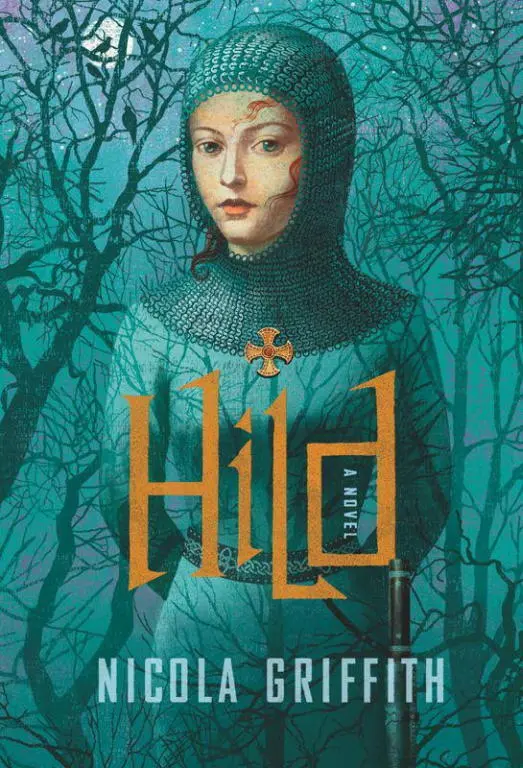
- Название:Hild
- Автор:
- Издательство:Farrar, Straus and Giroux
- Жанр:
- Год:2013
- Город:New York
- ISBN:978-0-374-28087-1
- Рейтинг книги:5 / 5. Голосов: 1
-
Избранное:Добавить в избранное
- Отзывы:
-
Ваша оценка:
Hild: краткое содержание, описание и аннотация
Предлагаем к чтению аннотацию, описание, краткое содержание или предисловие (зависит от того, что написал сам автор книги «Hild»). Если вы не нашли необходимую информацию о книге — напишите в комментариях, мы постараемся отыскать её.
But now she has only the powerful curiosity of a bright child, a will of adamant, and a way of seeing the world—of studying nature, of matching cause with effect, of observing her surroundings closely and predicting what will happen next—that can seem uncanny, even supernatural, to those around her.
Her uncle, Edwin of Northumbria, plots to become overking of the Angles, ruthlessly using every tool at his disposal: blood, bribery, belief. Hild establishes a place for herself at his side as the king’s seer. And she is indispensable—unless she should ever lead the king astray. The stakes are life and death: for Hild, for her family, for her loved ones, and for the increasing numbers who seek the protection of the strange girl who can read the world and see the future.
Hild is a young woman at the heart of the violence, subtlety, and mysticism of the early Middle Ages—all of it brilliantly and accurately evoked by Nicola Griffith’s luminous prose. Working from what little historical record is extant, Griffith has brought a beautiful, brutal world—and one of its most fascinating, pivotal figures, the girl who would become St. Hilda of Whitby—to vivid, absorbing life.
Hild — читать онлайн бесплатно полную книгу (весь текст) целиком
Ниже представлен текст книги, разбитый по страницам. Система сохранения места последней прочитанной страницы, позволяет с удобством читать онлайн бесплатно книгу «Hild», без необходимости каждый раз заново искать на чём Вы остановились. Поставьте закладку, и сможете в любой момент перейти на страницу, на которой закончили чтение.
Интервал:
Закладка:
They wanted her dead…
On the east bank of the Derwent the day glittered with scent-of-winter sunshine. The women sat at their heckling benches, wooden boards set with dense clusters of iron spikes. In the distance Coelgar supervised the hammering and adzing of the snug new settlement rising alongside the shell of the broken Roman remains. The king was with the queen. The gesiths had taken the dogs hunting. The few housefolk not labouring with adzes were asleep and the place was quiet.
Hild sat with the women. Her mother had told her she’d been spending too much time alone—the rumours of hægtes and etin blood were starting again. Hild wasn’t sure how sitting with a handful of tow before the spikes of what looked like an etin’s comb would dispel those rumours.
Pulling the fibres through the spikes, over and over, until the tow was fined down to line, was normally hot and dusty work, but the Winterfylleth sun was as cool as glass and the air damp with the burly river and soon-to-fall leaves. Every now and again a light ruffle of wind brought the scent of pork roasting with wildling apples and damson—legacy of the Roman gardens—and Hild’s mouth watered.
Over the last few days she had rarely lifted her hand from her seax and had eaten nothing not prepared by Gwladus. Then she had begun to wonder about even Gwladus. She started awake at the sound of footsteps, stood more than a sword’s length from every gesith, and listened and listened and listened, until she thought her ears might start twitching like a cat’s.
But no one popped from behind a mulberry bush with an axe, no one slipped poison in her beer, and even fear lost its grip after a while. Now, at the scent of pork and apples, she was hungry.
She sat with her mother, next to old Burgen and Æffe. Æffe was bundled in a scarf and a cloak, as was Burgen. Hild, after years of roaming the valleys and ridges, or sitting in the top of a tree in the moonlight, had long since hardened off. She was warm. She considered unpinning her sleeves and hanging them in her belt but decided not to: She would be the only one, and the muscles in her shoulders would just fuel the rumours.
Four of the queen’s women sat at the next bench. Their chatter was flat with Jutish vowels; Breguswith’s vowels sometimes flattened in sympathy. Beyond them were Teneshild, the old queen’s gemæcce, and Ædilgith, whose gemæcce, Folcwyn, had died in childbirth last year—though some thought the ague more to blame—and with them the young pair girdled only the summer before last, Cille and Leofe. Leofe, who barely came to Hild’s shoulder, was already big with Forthere’s child.
“What are you shaking your head at?” her mother asked.
“Leofe. Forthere is so big and she’s so small.”
Old Æffe leaned forward and leered. “Not as big as I hear your sister’s man is.”
“Eh?” said Burgen.
Æffe repeated herself at a shout.
“Does she remember my advice about goose grease?” Burgen said. “Ask her. I did tell you young ones about goose grease, didn’t I?”
Æffe shouted, “I can’t ask her, you old fool, she’s long gone, away in that infested swamp with her new man, Æthelric Short Leg.” She cackled. “Short leg!”
But Burgen was getting anxious. “I did tell you?” she asked Hild. “I did, didn’t I?”
“You did, Mother,” Hild said. She gestured at Leofe with a handful of tow. “And clearly one at least listened.”
“And you, young giant,” Æffe said, “do you have your eye on a man yet? I see those pretty beads of yours. Some heroic gesith, eh?”
“No, Mother. These were a gift from the princess Rhianmelldt.”
“Who?” Burgen looked about, fastened on the queen’s women. “Which one is Rhianmelldt?”
Æffe started a shouted explanation of the genealogy of Rheged—though she was getting it wrong, forgetting that Urien was long dead—and Hild was reminded of Alt Clut and the songs of the men of the north, and wondered if, even now, they were sharpening their swords and boasting of who would kill the king and his uncanny niece.
Her mother was looking at her.
“Æffe is old. But she’s not wrong. Unless I’m mistaken you’ll be bleeding by summer. We should consider husbands.”
Hild pulled her tow through the heckles. If she married and left court she would no longer be counted an Yffing.
“How do you find Oswine?”
Hild bent and brushed the rind dust from the hem of her skirts. Oswine, son of the treacherous badger Osric.
“He is handsome, don’t you think?”
“No.”
“His prospects are handsome,” Breguswith said, softly now, as the old women shouted in the background. “How would you like to be married to Oswine, to be, say, lady of Elmet?”
Hild had a fleeting memory of jackdaws in the elms, a smoky hall. “I like Elmet,” she said eventually. “But Ceredig king is said to be alive still, somewhere.” And Oswine’s father hadn’t stopped Fiachnae mac Báetáin from trying to kill them. At some point, Edwin would either have to publicly forgive Osric the trouble at Tinamutha or kill him.
“At some point your uncle will make it worth someone’s while to kill him.”
Hild nodded, then realised her mother wasn’t talking about Osric but Ceredig. With Ceredig gone, Elmet would get its own ealdorman—traditionally a royal kinsman. If Osric was still alive when Ceredig died, Elmet would go to him. “Would Osric step aside for his son?”
“What if he didn’t need to?”
Hild pondered her mother. Breguswith’s eyes were hard, bright blue, with none of that milky aging Hild saw in Æffe’s and Burgen’s eyes. Her fingers were beginning to thicken at the knuckles, yes, and her honey-gold hair looked dusty, but it was still thick, the skin at her throat was still firm, and her breasts full. She still bled every month. Bed games were one thing, keys another.
“Will you marry Osric?”
“Your uncle would not permit it.” Her mother’s voice was rich and round with secrets. Hild tried a trick she had learnt from Gwladus, and studied her mother through half-closed eyes while she lowered her head to her apparent task. Breguswith was smiling to herself.
Hild changed direction. “Would my uncle want me to marry Oswine?”
Her mother lowered her own eyes and said conversationally, “Your uncle won’t live forever.”
Hild’s heart squeezed.
Breguswith nodded at Hild’s hands: keep working. Hild pulled the tow through the heckles. Behind them, Burgen was cackling about something, and the other women were calling out good-natured insults. She leaned forward a little.
Breguswith’s voice was very soft. “At Arbeia, a West Saxon has been indiscreet. You know something of this.”
It wasn’t a question. She should have expected her mother to know she knew.
“Osric doesn’t understand his danger, though the danger is nigh. But a word in the right ear, a careful word, would break that egg before it hatches.”
“I don’t—”
“It will hatch soon.”
“But—”
“Are you whispering about love?” Æffe shouted. “Of course you are. Empty-headed youngsters—look at that tow. You’ve heckled it to ruination.”
When the moon was up, Gwladus brought Fursey to the byre.
“What is it that won’t wait for me to finish my food? The last of the damson and fresh-killed pork. And I don’t know where they found those apples but they were the sweetest…” Hild stepped forward so the moon caught her face, thin and pale. “Ach. Well, at least it’s warm in here.”
Gwladus turned to leave, but Fursey barred her way.
“Gwladus, my honey, bring us food. Bring us a lot of it. Your lady is all bone; her face looks sharp enough to cut cheese.”
Читать дальшеИнтервал:
Закладка:
Похожие книги на «Hild»
Представляем Вашему вниманию похожие книги на «Hild» списком для выбора. Мы отобрали схожую по названию и смыслу литературу в надежде предоставить читателям больше вариантов отыскать новые, интересные, ещё непрочитанные произведения.


Обсуждение, отзывы о книге «Hild» и просто собственные мнения читателей. Оставьте ваши комментарии, напишите, что Вы думаете о произведении, его смысле или главных героях. Укажите что конкретно понравилось, а что нет, и почему Вы так считаете.