Nicola Griffith - Hild
Здесь есть возможность читать онлайн «Nicola Griffith - Hild» весь текст электронной книги совершенно бесплатно (целиком полную версию без сокращений). В некоторых случаях можно слушать аудио, скачать через торрент в формате fb2 и присутствует краткое содержание. Город: New York, Год выпуска: 2013, ISBN: 2013, Издательство: Farrar, Straus and Giroux, Жанр: Историческая проза, на английском языке. Описание произведения, (предисловие) а так же отзывы посетителей доступны на портале библиотеки ЛибКат.
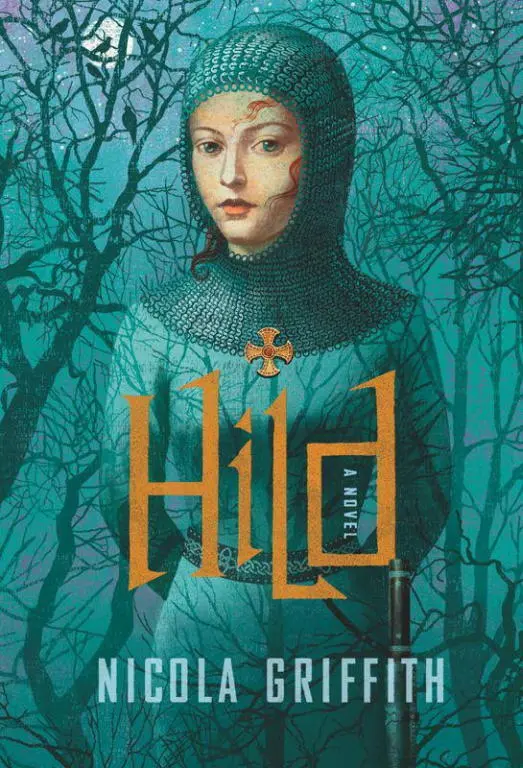
- Название:Hild
- Автор:
- Издательство:Farrar, Straus and Giroux
- Жанр:
- Год:2013
- Город:New York
- ISBN:978-0-374-28087-1
- Рейтинг книги:5 / 5. Голосов: 1
-
Избранное:Добавить в избранное
- Отзывы:
-
Ваша оценка:
Hild: краткое содержание, описание и аннотация
Предлагаем к чтению аннотацию, описание, краткое содержание или предисловие (зависит от того, что написал сам автор книги «Hild»). Если вы не нашли необходимую информацию о книге — напишите в комментариях, мы постараемся отыскать её.
But now she has only the powerful curiosity of a bright child, a will of adamant, and a way of seeing the world—of studying nature, of matching cause with effect, of observing her surroundings closely and predicting what will happen next—that can seem uncanny, even supernatural, to those around her.
Her uncle, Edwin of Northumbria, plots to become overking of the Angles, ruthlessly using every tool at his disposal: blood, bribery, belief. Hild establishes a place for herself at his side as the king’s seer. And she is indispensable—unless she should ever lead the king astray. The stakes are life and death: for Hild, for her family, for her loved ones, and for the increasing numbers who seek the protection of the strange girl who can read the world and see the future.
Hild is a young woman at the heart of the violence, subtlety, and mysticism of the early Middle Ages—all of it brilliantly and accurately evoked by Nicola Griffith’s luminous prose. Working from what little historical record is extant, Griffith has brought a beautiful, brutal world—and one of its most fascinating, pivotal figures, the girl who would become St. Hilda of Whitby—to vivid, absorbing life.
Hild — читать онлайн бесплатно полную книгу (весь текст) целиком
Ниже представлен текст книги, разбитый по страницам. Система сохранения места последней прочитанной страницы, позволяет с удобством читать онлайн бесплатно книгу «Hild», без необходимости каждый раз заново искать на чём Вы остановились. Поставьте закладку, и сможете в любой момент перейти на страницу, на которой закончили чтение.
Интервал:
Закладка:
No one but her uncle knew that under Fursey’s tutelage she could make her letters or that she understood Latin if it was spoken slowly—and even he seemed content to let her learn privately. Until she knew how these newcomers thought and what they wanted, she would keep it that way, keep her dice rattling in her cup. It was foolish to throw before all bets were on the table.
More Latin. More writing on the tablet. Rebuilding didn’t make sense to her. If the priests wanted a place by the river, they should just tear these ruins down and start afresh.
“Why do you care about this broken place?”
“The people remember Rome. Old and mighty, it stands as a wise father to errant children.” Breath whistled through his bony nose and his olive cheeks darkened. “Here Rome will rise again, shining like a beacon for those who have eyes. We will rebuild here and at Campodunum and at York, at Malton and along the wall, and the people will see Rome come again, and they will fear us and praise us. Even the kings of this isle will fear us and praise us. The faithful will flock to our standard.”
He stood straight and stern, and Hild understood he wasn’t seeing the overking’s tufa but his own silk banner of a cross sewn with pearls, and himself standing at the head of a congregation of faithful, the chief Christ priest of the isle. His ambition was so naked she wondered why the king allowed it.
No doubt her uncle had his reasons. She thrust her hands in her pockets and turned her snakestone over and over. She found it helped her think.
Her uncle had to have reasons for such big changes. Six priests, a deacon—like the trader she had seen at Gipswīc, he had charcoal skin—and a bishop was more god people than the household had ever held. Coifi was unhappy. He wasn’t the only one. The rhythms of the household had changed. The queen and her women, and the Kentish warriors—no longer king’s gesiths but queen’s men—who escorted her everywhere when the king did not, ate only fish on one day of the week. They went to a ceremony called Mass on another. Their housefolk brought different traditions: at the turn of the moon, turn all the silver. They liked watered wine with breakfast rather than small beer. Their clothes were different.
The king had to have a reason.
As she turned her stone and watched Stephanus make neat rows of letters on his wax, she wondered if that was it. Something to do with writing. But that’s what he’d kept Fursey for, to teach her—though since she’d returned from the Bay of the Beacon her uncle had ignored her. Everything a king does is a lie. She would watch and learn. Find out why Paulinus was taking such an interest in her, the king’s niece, why he seemed to want to persuade her of his god.
Gwladus, on her way to the kitchens, told her Fursey was back. Hild ran all the way to the byre and got there in time to see him beating the dirt of travel from his skirts and a young byre hand lead his horse away. She shouted and laughed and surprised them both by hugging him.
“Christ’s sweet smile, but you’ve grown again!” He held her at arm’s length. “You seem well.”
“Yes,” she said, “I am, now that you’re here.” And it was true; she was glad, very glad, to see him. “Fursey, I’m sorry. For making you go. You were right, I wasn’t sorry before, but I am now.” He smiled again, pleased, but it didn’t hide the tightness in his jaw, the worry and weariness. “What’s wrong?”
“We’ll talk in the byre,” he said in Irish, and bent to his saddlebags.
“Let me.” She slung them over her shoulder without effort.
The guest byre, recently rebuilt and stinking of raw timber, was full, but the other animals had been tended to long since. The only person about the place was the boy rubbing down Fursey’s horse.
“Will we be sitting here now?” she said, and pointed to the hay bales along the wall opposite the stalls.
“Your fine dress—”
“This?” She regarded her beautifully embroidered overdress in dark blue. “I suppose it is fine, isn’t it? But Gwladus insists, especially since the queen and her ladies arrived.” She dropped the bags and sat. She brushed at the dust on her shoulder. “Well, sit before you fall. Say your piece then we’ll find you food and clean clothes.”
“It’s not an easy message to deliver quick off the tongue.”
Something horrible had happened to Cian or Begu. Or Onnen. She closed her eyes.
“Ach, no, no, they’re all well.” She blinked. “I’m tired to stupidity. My apologies. No, everyone is well. But Onnen bids me give you news. She reminds you that she is cousin to the wife of the lord of Craven—”
Hild nodded while her heart calmed down. Cousin to the sister of Ceredig of Elmet, Dwynai, who married Dunod ap Pabo of Craven, whom some called prince of that land—the first guest she had ever offered the cup to.
“—and messages are exchanged with kin often and often, especially in times of unrest.”
Unrest. Hild fixed him with her gaze.
“Onnen, the lady of Mulstanton should I say, has word from her cousin Lady Dwynai that Cadfan of Gwynedd is not long for this world, may his soul find swift peace. And that his son, Cadwallon, wishes you dead.”
“Me?” Dead?
“You and every root and branch of Edwin’s kin.”
“Yes, but I’m only—”
“Only? You are Edwin’s bringer of light and seer. You saved Bebbanburg. You are his niece, his peaceweaver. Must we have this conversation again? There is no more only for you.” He tapped her on the knee. “Listen, now. Cadwallon has boasted at mead that when he is king he will wipe the Yffings from the face of the earth. He has sworn it. To that end he is talking now to any lordling who will listen. He has talked to Cuelgils of Lindsey—”
The man who called himself princeps, who had fed them on their journey south, at Lindum.
“—and to Ciniod of the Picts.”
“But Ciniod is sending a man to my uncle in friendship! Or so said the messenger in hall last night.”
“Yes. No doubt Ciniod sends a man in friendship because, indeed, he refused Cadwallon’s embassy.”
“I don’t—”
“But his fosterling did not.”
“His…” Hild was momentarily at a loss. Then she remembered. “Eanfrith Iding.”
“The same.” The eldest son of Æthelfrith and his first wife, Bebba. Ciniod’s fosterling. Enemy.
“We had heard Eanfrith took a Pictish princess to wife.”
“Indeed. And now they have a son, Talorcan.”
The name said it all. Talorc, like Beli, was one of the names reserved for potential Pictish overkings.
She thought furiously. “Will Ciniod lend Eanfrith his war band?”
“Perhaps. Unofficially.”
“But my uncle’s war band is huge now, easily twice the size of any other. It would be madness. They couldn’t hope to— Ah, but if Cuelgils…”
Fursey was nodding. “Yes. If Cadwallon persuades Lindsey, then the Saxons might throw in their bet, too—at which point Ciniod might see an opportunity, using Eanfrith as a puppet. Then your uncle would be caught between the hammer of the Picts and the anvil of the massed Saxons and Lindseymen and Welsh.”
“Not just the Picts,” said Hild.
If the Pictish war band rose and joined Gwynedd, Cadwallon and Eanfrith between them might also carry the men of the north, the Bryneich and Gododdin, who might bring Alt Clut. Even Rheged. It would be like watching the birth of a winter bourne: a trickle becomes a chattering stream then a roaring spate tumbling boulders before it, tearing out trees. Hundreds upon hundreds marching, singing their songs of wealh glory.
All would go down in red ruin.
But there was nothing she could do. Ciniod’s mouthpiece, when he came, would smile and know nothing. Seer or not, no one would listen until there was something to point at. Something she could prove. She would have to wait until it began.
Читать дальшеИнтервал:
Закладка:
Похожие книги на «Hild»
Представляем Вашему вниманию похожие книги на «Hild» списком для выбора. Мы отобрали схожую по названию и смыслу литературу в надежде предоставить читателям больше вариантов отыскать новые, интересные, ещё непрочитанные произведения.






Обсуждение, отзывы о книге «Hild» и просто собственные мнения читателей. Оставьте ваши комментарии, напишите, что Вы думаете о произведении, его смысле или главных героях. Укажите что конкретно понравилось, а что нет, и почему Вы так считаете.