Min Lee - Pachinko
Здесь есть возможность читать онлайн «Min Lee - Pachinko» весь текст электронной книги совершенно бесплатно (целиком полную версию без сокращений). В некоторых случаях можно слушать аудио, скачать через торрент в формате fb2 и присутствует краткое содержание. Город: NYC, Год выпуска: 2017, ISBN: 2017, Издательство: Grand Central Publishing, Жанр: Проза, на английском языке. Описание произведения, (предисловие) а так же отзывы посетителей доступны на портале библиотеки ЛибКат.
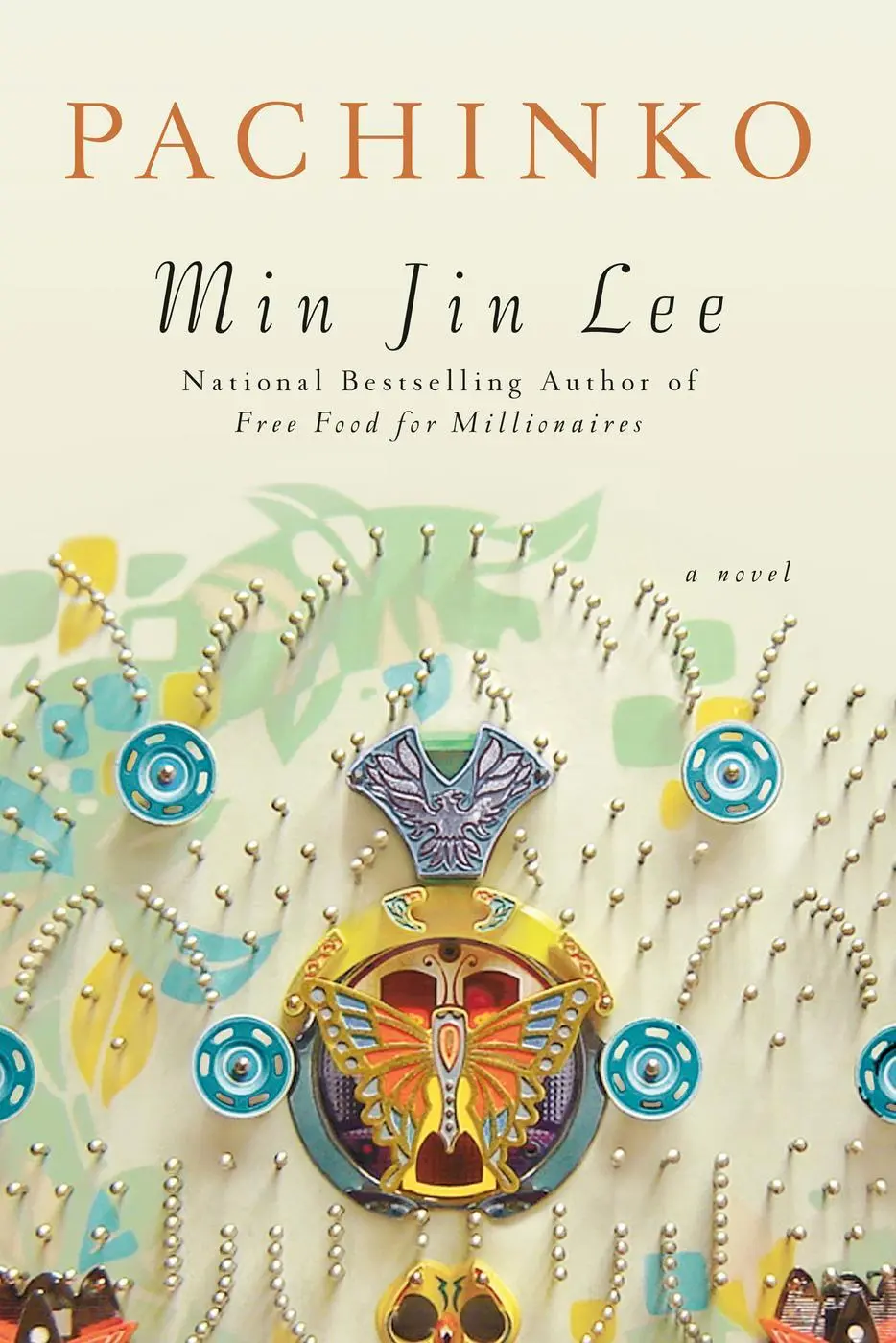
- Название:Pachinko
- Автор:
- Издательство:Grand Central Publishing
- Жанр:
- Год:2017
- Город:NYC
- ISBN:978-1-4555-6391-3
- Рейтинг книги:4.5 / 5. Голосов: 2
-
Избранное:Добавить в избранное
- Отзывы:
-
Ваша оценка:
Pachinko: краткое содержание, описание и аннотация
Предлагаем к чтению аннотацию, описание, краткое содержание или предисловие (зависит от того, что написал сам автор книги «Pachinko»). Если вы не нашли необходимую информацию о книге — напишите в комментариях, мы постараемся отыскать её.
Profoundly moving and gracefully told, PACHINKO follows one Korean family through the generations, beginning in early 1900s Korea with Sunja, the prized daughter of a poor yet proud family, whose unplanned pregnancy threatens to shame them. Betrayed by her wealthy lover, Sunja finds unexpected salvation when a young tubercular minister offers to marry her and bring her to Japan to start a new life.
So begins a sweeping saga of exceptional people in exile from a homeland they never knew and caught in the indifferent arc of history. In Japan, Sunja's family members endure harsh discrimination, catastrophes, and poverty, yet they also encounter great joy as they pursue their passions and rise to meet the challenges this new home presents. Through desperate struggles and hard-won triumphs, they are bound together by deep roots as their family faces enduring questions of faith, family, and identity.
Pachinko — читать онлайн бесплатно полную книгу (весь текст) целиком
Ниже представлен текст книги, разбитый по страницам. Система сохранения места последней прочитанной страницы, позволяет с удобством читать онлайн бесплатно книгу «Pachinko», без необходимости каждый раз заново искать на чём Вы остановились. Поставьте закладку, и сможете в любой момент перейти на страницу, на которой закончили чтение.
Интервал:
Закладка:
Isak came out momentarily, holding his felt hat.
“Are you well?” Isak stood parallel to her, not knowing where they should go. He’d never been out with a young woman before — not in this way, and never with the intention of asking her to marry him. He tried to pretend that he was counseling a female parishioner — something he had done many times back home.
“Would you like to go into town? We could take the ferry.” The suggestion came to him spontaneously.
Sunja nodded and draped her head with a thick muslin scarf to cover her exposed ears. She resembled the women selling fish in the market.
They walked quietly toward the Yeongdo ferry, not knowing what the others who saw them together might think. The boatman accepted their fares.
The wooden boat was mostly empty, so they sat together for the duration of the short trip.
“Your mother spoke to you,” Isak said, trying to keep his voice level.
“Yes.”
He tried to read her feelings in her young, pretty face. She looked terrified.
“Thank you,” she said.
“What do you think of it?”
“I’m very grateful. It’s a heavy burden that you’ve taken off our shoulders. We don’t know how to thank you.”
“My life is nothing. It wouldn’t have any meaning without putting it to good use. Don’t you think?”
Sunja played with the side edge of her chima .
“I have a question,” Isak said.
Sunja kept her eyes lowered.
“Do you think you can love God?” He inhaled. “If you could love God, then I know everything will be all right. It’s a lot, I think, to ask of you. It might not make sense now. It will take time. I do understand that.”
This morning, it had occurred to Sunja that he’d ask her something like this, and she’d given thought to this God that the pastor believed in. Spirits existed in the world — she believed this even though her father had not. After he died, she felt that he was with her. When they went to his grave for the jesa , it was easy to feel his comforting presence. If there were many gods and dead spirits, then she felt that she could love his god, especially if his god could encourage Baek Isak to be such a kind and thoughtful person.
“Yes,” she said. “I can.”
The boat docked, and Isak helped her off. The mainland was very cold, and Sunja tucked her hands into her jacket sleeves to warm them. The sharp winds cut through their bodies. She worried that the bitter weather would be bad for the pastor.
Neither knew where they should go next, so she pointed to the main shopping street not far from the ferry. It was the only place she’d ever gone with her parents on the mainland. She walked in that direction, not wanting to take the lead, but he did not seem to care about that. He followed her steps.
“I’m glad you’ll try — try to love God. It means a great deal. I think we can have a good marriage if we share this faith.”
She nodded again, not entirely understanding what he meant, but she trusted that he had a sound reason for his request.
“Our lives will be strange at first, but we’ll ask God for his blessing — on us and the child.”
Sunja imagined that his prayer would act like a thick cloak to shield them.
Gulls hovered, shrieking loudly, then flew away. She realized that the marriage had a condition, but it was easy to accept it; there was no way for him to test her devotion. How do you prove that you love God? How do you prove that you love your husband? She would never betray him; she would work hard to care for him — this she could do.
Isak paused in front of a tidy Japanese restaurant that served noodles.
“Have you ever had udon?” He raised his eyebrows.
She shook her head no.
He led her inside. The customers there were Japanese, and she was the only female. The owner, a Japanese man in a spotless apron, greeted them in Japanese. The couple bowed.
Isak asked for a table for two in Japanese, and the owner relaxed upon hearing his language spoken so well. They chatted amiably, and the owner offered them seats at the edge of the communal table near the door with no one beside them. Isak and Sunja sat opposite each other, making it impossible to avoid each other’s faces.
Sunja couldn’t read the hand-painted menus on the plywood walls but recognized some of the Japanese numbers. Office workers and shopkeepers sat on three long tables covered in wax cloths and slurped from their steaming bowls of soupy noodles. A Japanese boy with a shaved head went around pouring brown tea from a heavy brass kettle. He tipped his head to her slightly.
“I’ve never been to a restaurant before,” she found herself saying, more out of surprise than from a wish to talk.
“I haven’t been to many myself. This place looks clean, though. My father said that’s important when you eat outside your home.” Isak smiled, wanting Sunja to feel more comfortable. The warmth of being inside had brought color to her face. “Are you hungry?”
Sunja nodded. She hadn’t eaten anything that morning.
Isak ordered two bowls of udon for them.
“It’s like kalguksu , but the broth is different. I thought maybe you might like it. I’m sure it’s sold everywhere in Osaka. Everything there will be new for us.” More and more, Isak liked the idea of having her go with him.
Sunja had heard many stories about Japan from Hansu already, but she couldn’t tell Isak this. Hansu had said that Osaka was an enormous place where you’d hardly ever see the same person twice.
As he talked, Isak observed her. Sunja was a private person. Even at the house, she did not talk much to the girls who worked there or even to her mother. Was she always this way? he wondered. It was hard to imagine that she’d had a lover.
Isak spoke to her quietly, not wishing to be heard by the others.
“Sunja, do you think you could care for me? As your husband?” Isak clasped his hands as if in prayer.
“Yes.” The answer came quickly because this felt true to her. She cared for him now, and she didn’t want him to think otherwise.
Isak felt light and clean inside, as if his diseased lungs had been scoured back to health. He took a breath.
“I expect it will be difficult, but would you try to forget him?” There, he said it. They would not have secret thoughts.
Sunja winced, not having expected him to speak of this.
“I’m not different from other men. I have my pride, which I know is probably wrong.” He frowned. “But I’ll love this child, and I will love you and honor you.”
“I’ll do my best to be a good wife.”
“Thank you,” he said. He hoped he and Sunja would be close, the way his parents were.
When the noodles arrived, he bowed to say grace, and Sunja laced her fingers together, copying his movements.
10
A week later, Yangjin, Sunja, and Isak took the morning ferry to Busan. The women wore freshly laundered hanbok made of white hemp beneath padded winter jackets; Isak’s suit and coat had been brushed clean and his shoes polished bright. Pastor Shin was expecting them after breakfast.
Upon their arrival, the church servant recognized Isak and led them to Pastor Shin’s office.
“You’re here,” the elder pastor said, rising from his seat on the floor. He spoke with a northern accent. “Come in, come in.” Yangjin and Sunja bowed deeply. They’d never been inside a church before. Pastor Shin was a thin man whose clothes were too big for him. The sleeve hems on his aging black suit were frayed, but the white collar at his throat was clean and well starched. His unwrinkled dark clothes appeared to flatten the bent C-curve of his shoulders.
The servant girl brought three floor cushions for the guests and laid them near the brazier in the center of the poorly heated room.
Читать дальшеИнтервал:
Закладка:
Похожие книги на «Pachinko»
Представляем Вашему вниманию похожие книги на «Pachinko» списком для выбора. Мы отобрали схожую по названию и смыслу литературу в надежде предоставить читателям больше вариантов отыскать новые, интересные, ещё непрочитанные произведения.












Обсуждение, отзывы о книге «Pachinko» и просто собственные мнения читателей. Оставьте ваши комментарии, напишите, что Вы думаете о произведении, его смысле или главных героях. Укажите что конкретно понравилось, а что нет, и почему Вы так считаете.