Min Lee - Pachinko
Здесь есть возможность читать онлайн «Min Lee - Pachinko» весь текст электронной книги совершенно бесплатно (целиком полную версию без сокращений). В некоторых случаях можно слушать аудио, скачать через торрент в формате fb2 и присутствует краткое содержание. Город: NYC, Год выпуска: 2017, ISBN: 2017, Издательство: Grand Central Publishing, Жанр: Проза, на английском языке. Описание произведения, (предисловие) а так же отзывы посетителей доступны на портале библиотеки ЛибКат.
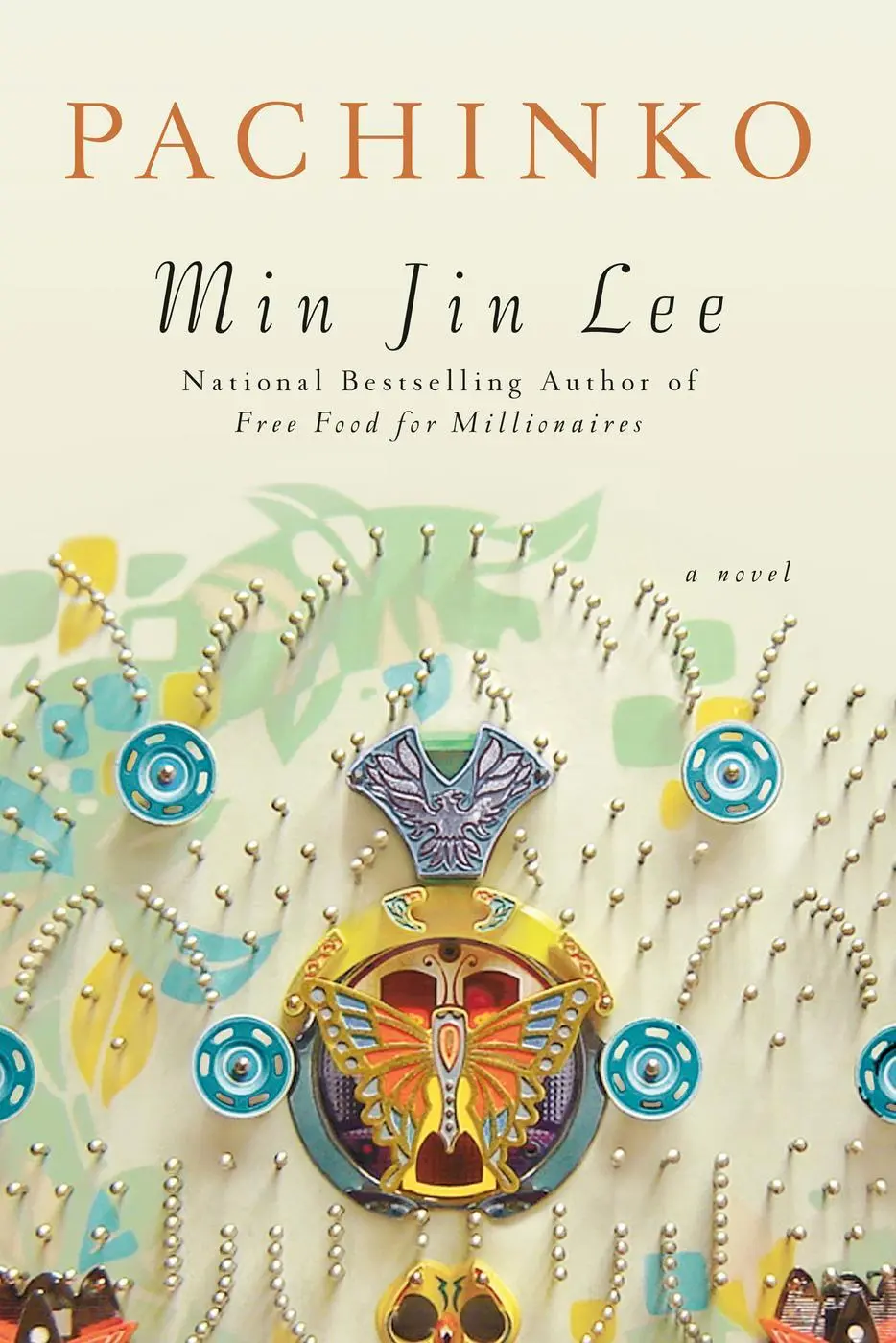
- Название:Pachinko
- Автор:
- Издательство:Grand Central Publishing
- Жанр:
- Год:2017
- Город:NYC
- ISBN:978-1-4555-6391-3
- Рейтинг книги:4.5 / 5. Голосов: 2
-
Избранное:Добавить в избранное
- Отзывы:
-
Ваша оценка:
Pachinko: краткое содержание, описание и аннотация
Предлагаем к чтению аннотацию, описание, краткое содержание или предисловие (зависит от того, что написал сам автор книги «Pachinko»). Если вы не нашли необходимую информацию о книге — напишите в комментариях, мы постараемся отыскать её.
Profoundly moving and gracefully told, PACHINKO follows one Korean family through the generations, beginning in early 1900s Korea with Sunja, the prized daughter of a poor yet proud family, whose unplanned pregnancy threatens to shame them. Betrayed by her wealthy lover, Sunja finds unexpected salvation when a young tubercular minister offers to marry her and bring her to Japan to start a new life.
So begins a sweeping saga of exceptional people in exile from a homeland they never knew and caught in the indifferent arc of history. In Japan, Sunja's family members endure harsh discrimination, catastrophes, and poverty, yet they also encounter great joy as they pursue their passions and rise to meet the challenges this new home presents. Through desperate struggles and hard-won triumphs, they are bound together by deep roots as their family faces enduring questions of faith, family, and identity.
Pachinko — читать онлайн бесплатно полную книгу (весь текст) целиком
Ниже представлен текст книги, разбитый по страницам. Система сохранения места последней прочитанной страницы, позволяет с удобством читать онлайн бесплатно книгу «Pachinko», без необходимости каждый раз заново искать на чём Вы остановились. Поставьте закладку, и сможете в любой момент перейти на страницу, на которой закончили чтение.
Интервал:
Закладка:
“Before you do anything, I would like to meet her. And her mother.”
“I’ll ask them to come. That is if Sunja agrees to marry me. She doesn’t know me really.”
“That hardly matters.” Shin shrugged. “I didn’t see my wife until the wedding day. I understand your impulse to help, but marriage is a serious covenant made before God. You know that. Please bring them when you can.”
The elder pastor put his hands on Isak’s shoulders and prayed over him before he left.
When Isak returned to the boardinghouse, the Chung brothers were sprawled out on the heated floor. They had eaten their supper, and the women were clearing away the last of the dishes.
“Ah, has the pastor been walking around town? You must be well enough now to have a drink with us?” Gombo, the eldest brother, winked. Getting Isak to have a drink with them was a joke the brothers had kept up for months.
“How was the catch?” Isak asked.
“No mermaids,” Fatso, the youngest brother, answered with disappointment.
“That’s a shame,” Isak said.
“Pastor, would you like your dinner now?” Yangjin asked.
“Yes, thank you.” Being outdoors had made him hungry, and it felt wonderful to want food in his stomach again.
The Chung brothers had no intention of sitting up properly, but they made room for him. Gombo patted Isak on the back like an old friend.
Around the lodgers, especially the good-natured Chung brothers, Isak felt more like a man, not a sickly student who’d spent most of his life indoors with books.
Sunja carried in a low dinner table for him, its small surface covered with side dishes, a piping hotpot brimming with stew, and a generously rounded portion of steamed millet and barley rice.
Isak bowed his head in prayer, and everyone else remained silent, feeling awkward, until he raised his head again.
“So, the good-looking pastor gets far more rice than I do,” complained Fatso. “Why should I be surprised?” He tried to make an angry face at Sunja, but she didn’t pay him any mind.
“Have you eaten?” Isak lifted his bowl to Fatso. “There’s plenty here—”
The middle Chung brother, the sensible one, pulled back the pastor’s outstretched arm.
“Fatso ate three bowls of millet and two bowls of soup. This one has never missed a meal. If we don’t make sure that he’s well fed, he’d chew off my arm! He’s a pig.”
Fatso poked his brother in the ribs.
“A strong man has a strong appetite. You’re just jealous because mermaids prefer me to you. One day, I’m going to marry a beautiful market girl and have her work for me the rest of my days. You can repair the fishing nets by yourself.”
Gombo and the middle brother laughed, but Fatso ignored them.
“Maybe I should have another bowl of rice. Is there any left in the kitchen?” he asked Sunja.
“Don’t you want to leave some for the women?” Gombo interjected.
“Is there enough food for the women?” Isak put down his spoon.
“Yes, yes, there’s plenty of food for us. Please don’t worry. If Fatso wants more food, we can bring him some,” Yangjin assured him.
Fatso looked sheepish.
“I’m not hungry. We should smoke a pipe.” He rooted in his pockets for his tobacco.
“So, Pastor Isak, will you be leaving us soon for Osaka? Or will you join us on the boat and look for mermaids? You look strong enough to pull in the nets now,” Fatso said. He lit the pipe and handed it to his eldest brother before smoking it himself. “Why would you leave this beautiful island for a cold city?”
Isak laughed. “I’m waiting for a reply from my brother. And as soon as I feel well enough to travel, I’ll go to my church in Osaka.”
“Think of the mermaids of Yeongdo.” Fatso waved at Sunja, who was heading to the kitchen. “They will not be the same in Japan.”
“Your offer is tempting. Perhaps I should find a mermaid to go with me to Osaka.”
Isak raised his eyebrows.
“Is the pastor making a joke?” Fatso slapped the floor with delight.
Isak took a sip of his tea.
“It might be better if I had a wife for my new life in Osaka.”
“Put down your tea. Let’s pour this groom a real drink!” Gombo shouted.
The brothers laughed out loud and the pastor laughed, too.
In the small house, the women overheard everything the men said. At the thought of the pastor marrying, Dokhee’s neck flushed scarlet with desire, and her sister shot her a look like she was crazy. In the kitchen, Sunja unloaded the dinner trays; she crouched down before the large brass basin and began to wash the dishes.
9
After she finished cleaning up in the kitchen, Sunja said good night to her mother and retreated to the makeshift bedroom they shared with the servant girls. Normally, Sunja went to bed at the same time as the others, but in the past month, she’d been more tired than she’d ever been; it was no longer possible to wait for them to finish their work. Waking up was no less difficult; in the morning, strong hands seemed to clamp down on her shoulders to keep her from rising. Sunja undressed quickly in the cold room and slipped under the thick quilt. The floor was warm; Sunja rested her heavy head on the lozenge-shaped pillow. Her first thought was of him.
Hansu was no longer in Busan. The morning after she’d left him at the beach, she’d asked her mother to go to the market in her place, claiming that she was nauseous and couldn’t be far from the outhouse. For a week, she didn’t go to the market. When Sunja finally returned to her usual routine of food shopping for the house, Hansu was no longer there. Each morning that she went to the market, she had looked for him, but he was not there.
The heat from the ondol floor warmed the pallet beneath her; all day she had been feeling chilled. Her eyes finally closed, Sunja rested her hands over the slight swell of her stomach. She could not yet feel the child, but her body was changing. Her keener sense of smell was the most noticeable change and hard to bear: Walking through the fish stalls made her feel sick; the worst was the smell of crabs and shrimp. Her limbs felt puffier, almost spongy. She knew nothing about having a baby. What she was growing inside her was a secret — mysterious even to herself. What would the child be like? she wondered. Sunja wanted to talk about these things with him.
Since Sunja’s confession to her mother, neither of them talked again about the pregnancy. Anguish had deepened the lines along her mother’s mouth like a frown setting in for good. During the day, Sunja went about her work faithfully, but at night, before she went to bed, she wondered if he thought about her and their child.
If she had agreed to remain his mistress and waited for him to visit her, she would have been able to keep him. He could’ve gone to see his wife and daughters in Japan whenever he wanted. Yet this arrangement had felt impossible to her, and even in her present weakness, it felt untenable. She missed him, but she couldn’t imagine sharing him with another woman he also loved.
Sunja had been foolish. Why had she supposed that a man of his age and position wouldn’t have a wife and children? That he could want to marry some ignorant peasant girl was absurd indeed. Wealthy men had wives and mistresses, sometimes even in the same household. She couldn’t be his mistress, however. Her crippled father had loved her mother, who had grown up even poorer than most; he had treasured her. When he was alive, after the boardinghouse guests were served their meals, the three would eat together as a family at the same low dinner table. Her father could’ve eaten before the women, but he’d never wanted that. At the table, he’d make sure that her mother had as much meat and fish on her plate as he did. In the summer, after finishing a long day, he’d tend to the watermelon patch because it was his wife’s favorite fruit. Each winter, he’d procure fresh cotton wool to pad their jackets, and if there wasn’t enough, he’d claim his own jacket didn’t need new filling.
Читать дальшеИнтервал:
Закладка:
Похожие книги на «Pachinko»
Представляем Вашему вниманию похожие книги на «Pachinko» списком для выбора. Мы отобрали схожую по названию и смыслу литературу в надежде предоставить читателям больше вариантов отыскать новые, интересные, ещё непрочитанные произведения.











Обсуждение, отзывы о книге «Pachinko» и просто собственные мнения читателей. Оставьте ваши комментарии, напишите, что Вы думаете о произведении, его смысле или главных героях. Укажите что конкретно понравилось, а что нет, и почему Вы так считаете.