Эптон Синклер - Oil!
Здесь есть возможность читать онлайн «Эптон Синклер - Oil!» весь текст электронной книги совершенно бесплатно (целиком полную версию без сокращений). В некоторых случаях можно слушать аудио, скачать через торрент в формате fb2 и присутствует краткое содержание. Год выпуска: 1927, ISBN: 1927, Издательство: Amereon Ltd, Жанр: Проза, на английском языке. Описание произведения, (предисловие) а так же отзывы посетителей доступны на портале библиотеки ЛибКат.
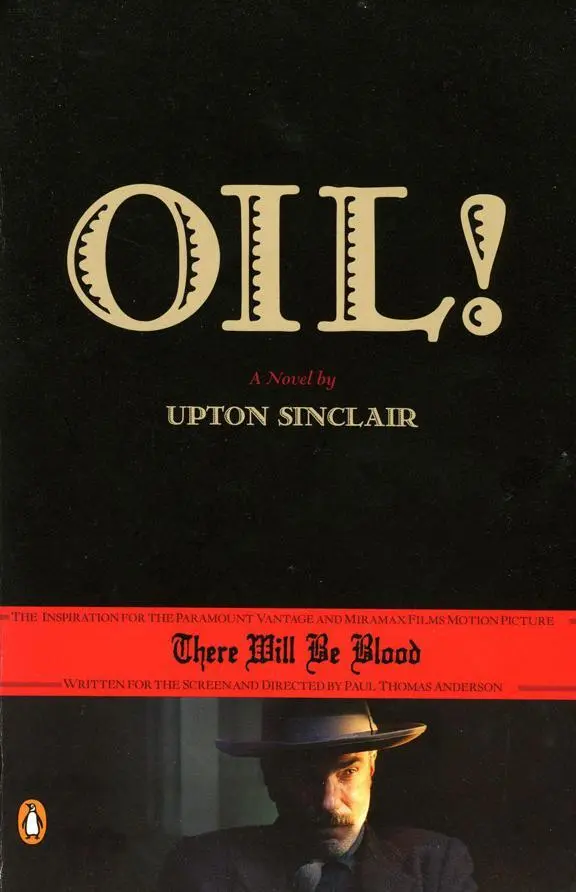
- Название:Oil!
- Автор:
- Издательство:Amereon Ltd
- Жанр:
- Год:1927
- ISBN:9780848823917
- Рейтинг книги:3 / 5. Голосов: 1
-
Избранное:Добавить в избранное
- Отзывы:
-
Ваша оценка:
Oil!: краткое содержание, описание и аннотация
Предлагаем к чтению аннотацию, описание, краткое содержание или предисловие (зависит от того, что написал сам автор книги «Oil!»). Если вы не нашли необходимую информацию о книге — напишите в комментариях, мы постараемся отыскать её.
In Oil! Upton Sinclair fashioned a novel out of the oil scandals of the Harding administration, providing in the process a detailed picture of the development of the oil industry in Southern California. Bribery of public officials, class warfare, and international rivalry over oil production are the context for Sinclair's story of a genial independent oil developer and his son, whose sympathy with the oilfield workers and socialist organizers fuels a running debate with his father. Senators, small investors, oil magnates, a Hollywood film star, and a crusading evangelist people the pages of this lively novel.
Oil! — читать онлайн бесплатно полную книгу (весь текст) целиком
Ниже представлен текст книги, разбитый по страницам. Система сохранения места последней прочитанной страницы, позволяет с удобством читать онлайн бесплатно книгу «Oil!», без необходимости каждый раз заново искать на чём Вы остановились. Поставьте закладку, и сможете в любой момент перейти на страницу, на которой закончили чтение.
Интервал:
Закладка:
It was a happy family, and a fine place to be, because it took Dad’s mind off his wells, and his trouble with one of his best foremen, that had gone and got married to a fool flapper, and didn’t have his mind on his work no more. They got the lumber from the dealer at Roseville, and Paul was the “boss-carpenter,” and Bunny was the “jack-carpenter,” and Dad kind of fussed around until he got to perspiring too hard, and then he went and sat under the bougainvillea blossoms, and Ruth opened him a bottle of grape-juice, that was part of the fancy stuff he had brought in.
And then in the evening they would drive into Paradise and get the mail, and there came a little local paper that old Mr. Watkins took, and Bunny began to look it over, and gosh amighty, look at this, Dad—a story on the front page, about the marvelous meeting that Eli had held at Santa Lucia, and how frenzied the worshipers had got, and Eli had made the announcement that he had been commissioned to build the Tabernacle of the Third Revelation, which was to be all of snow-white marble, with a frieze of gold, and was to occupy one entire block in Angel City, and be of exactly the dimensions which had been revealed to Eli in a dream. The dimensions were given, and Dad said they were bigger than any block that Eli would find in Angel City, but no doubt they’d find a way to get round that, and call it a new Revelation. The Roseville “Eagle”—that was the name of the paper—was boastful of Eli, who was “putting the San Elido valley on the map,” it said. The Apostolic Church of Paradise was to be rebuilt out of the “free will offerings” at Eli’s meetings; but the old structure would be preserved, so that pilgrims might come to visit the place where the True Word had been handed down.
And then came Mr. Hardacre, meeting them on the street. He said that young Bandy had got tired of his idea that Dad was going to drill; he wanted to take his parents to the city and be a business man, so the family would take Dad’s offer if it was still open. Dad said all right, to let him know, he’d come in any time, and they’d put it into escrow. Next day Mr. Hardacre drove out to the Rascum place, and said he’d taken the escrow offer out to the Bandy place, and old Mr. Bandy and his wife had signed the agreement to deliver the deed; and so Dad and Bunny got into their car, and drove to the bank, and Dad put up four thousand dollars, and signed a contract to pay eight thousand more when the title search was completed. Then, when they were out of the bank, he grinned and said, “All right, son, now you can drill your tract!”
Of course, Bunny wanted to go right to it—wanted Dad to telephone for his head foreman, and get a road contractor at work! But Dad said they’d finish the cabin first, and meantime he’d be thinking. So Bunny went back to work, nailing shingles on the roof, and he was happy as a youngster could be—except for one uncomfortable thought that was gnawing like a worm in his soul. How could he tell Paul and Ruth about their decision to drill, and would Paul and Ruth consider that Dad had got the Watkins ranch upon false pretences?
Fate was kind to Bunny. Something happened—you could never guess it in a thousand years! Only three days had passed since they put through the Bandy deal, and Dad was still thinking matters over, when Meelie Watkins came walking from her home—with a big blue sun-bonnet to protect her from the midday sun—and brought an amazing piece of news. Old Mr. Wrinkum, driving in from town, had stopped by, and told Pap that a big oil concern, the Excelsior Petroleum Company, had leased the Carter ranch, on the other side of the valley, about a mile west of Paradise, and was going to start drilling for oil! Meelie gave this news to Dad, who was sitting under the bougainvillea; and Dad shouted to Bunny and Paul, who were up laying the floor of the cabin. The two came running, and Ruth came running from her chicken-yard, and when they heard the news, Bunny cried, “Excelsior Pete! Why, Dad, that’s one of the Big Five!”
They stared at each other, and suddenly Dad clenched his hands and exclaimed, “By golly, them people don’t drill unless they know what they’re doin’. Bunny, I believe I’ll try a well here on our place, and see what we get!”
“Oh, Mr. Ross!” exclaimed Ruth. “You ought to do it—my Uncle Eby always used to say there was oil here!”
“Is that so?” said Dad. “Well, I’ll take a chance then, jist for fun.” And he looked at Bunny, with just the flicker of a smile. It told Bunny a lot, when he came to think it over; Dad had guessed that Bunny was worried, and exactly what was his dilemma with the Watkinses; and Dad had had the wit to save Bunny’s face, and avoid the need of confessing. Dear, kind old Dad, that was anxious to do everything for his boy—that would even do his lying for him! How could any boy refuse to be content with such a happy solution of his ethical problems?
CHAPTER VI THE WILD-CAT
Dad had thought things over, and studied his bank account, and given his decision; they would drill the Ross Junior-Paradise No. 1, and do it quick, and give the “Excelsior Pete” crowd a run for their money; there was no use letting the Big Five think they owned the whole oil industry. Dad would stick here and see things started; so he phoned for his geologist, and hunted up a contractor to figure over a well for water.
Mr. Banning, the geologist, came next day, and gave Bunny’s hopes a knock over the head at the very outset. He said Dad was right in his idea that you couldn’t count very much on that streak of oil on the top of the ground. You might come on oil sands one or two hundred feet down, but they wouldn’t be likely to amount to much; if that was all you were looking for, you might bring in one of those little drilling-rigs on wheels such as they used back in Pennsylvania! But out here, said Mr. Banning, the real oil sands lay deep, and you never knew what you’d find till you got there. But he liked the looks of the district, and thought it worth a chance; he spent a couple of days wandering over the hills with Dad and Bunny, studying the slope of the strata, and finally he and Dad chose the side of a hill on the Watkins ranch, not far from the place where Bunny had sat and talked with Ruth while she tended the goats.
The water-well man came, offering to drill a four-inch well for $2.12 a foot; and Dad signed a contract with him, on the basis of his making so many feet a day, and getting a bonus if he went above that, and paying a forfeit if he fell below it. After which Dad and Bunny drove over to pay a visit to Mr. Jeremiah Carey, a rancher near Roseville, who was chairman of the county board of supervisors, which had to do with the all-important question of road construction.
A great part of the road passed through Dad’s own property; and it had been Bunny’s naive idea that Dad would call in a contractor, and pay the price, as in the case of the water well. But Dad said no, that wasn’t the way you did with roads; it was a public road, running from Paradise to Roseville, down along the slide, and it would be graded and paved at public expense. To be sure, Dad would use this road more than anyone else, but also he would pay some of the taxes; all the people owning property along the slide would pay a share, and the new road would increase the value of their property.
All this Dad explained, first to Bunny, and then to Mr. Carey, a friendly old fellow who grew apricots and peaches on the slopes of a ridge overlooking the San Elido valley. Mr. Carey was evidently pleased to meet a famous oil operator, and he took them up to the house and made them sit comfortable in big porch chairs, and called to Mrs. Carey to bring some lemonade for Bunny. Dad produced his gold-foil cigars, and told the chairman of the county board of supervisors what a great thing it was going to mean for this whole section if oil developments came in; he told about the Bankside lease at Prospect Hill, and the million and more which he had paid to the Bankside family, and the palace on the beach front which Mr. Bankside was now occupying; you could see the eyes of Mr. and Mrs. Carey open wider and wider, as Dad visioned this slope covered with a forest of oil derricks. Absolutely, the whole thing depended upon one problem, that of roads. Manifestly, you couldn’t bring in derrick materials and drilling tools and heavy machinery over that sheep-track which they now had, and which had jist broken a spring on Dad’s new motor-car; nor could the county expect Dad to improve a public road at his own expense, in order to have the privilege of paying tens of thousands of dollars of new taxes into the county treasury. To all of which Mr. Carey agreed.
Читать дальшеИнтервал:
Закладка:
Похожие книги на «Oil!»
Представляем Вашему вниманию похожие книги на «Oil!» списком для выбора. Мы отобрали схожую по названию и смыслу литературу в надежде предоставить читателям больше вариантов отыскать новые, интересные, ещё непрочитанные произведения.







Обсуждение, отзывы о книге «Oil!» и просто собственные мнения читателей. Оставьте ваши комментарии, напишите, что Вы думаете о произведении, его смысле или главных героях. Укажите что конкретно понравилось, а что нет, и почему Вы так считаете.