Charlie Brooker - Inside Black Mirror
Здесь есть возможность читать онлайн «Charlie Brooker - Inside Black Mirror» весь текст электронной книги совершенно бесплатно (целиком полную версию без сокращений). В некоторых случаях можно слушать аудио, скачать через торрент в формате fb2 и присутствует краткое содержание. Город: London, Год выпуска: 2018, ISBN: 2018, Издательство: Ebury Publishing, Жанр: cine, на английском языке. Описание произведения, (предисловие) а так же отзывы посетителей доступны на портале библиотеки ЛибКат.
- Название:Inside Black Mirror
- Автор:
- Издательство:Ebury Publishing
- Жанр:
- Год:2018
- Город:London
- ISBN:978-15-2910-258-1
- Рейтинг книги:3 / 5. Голосов: 1
-
Избранное:Добавить в избранное
- Отзывы:
-
Ваша оценка:
Inside Black Mirror: краткое содержание, описание и аннотация
Предлагаем к чтению аннотацию, описание, краткое содержание или предисловие (зависит от того, что написал сам автор книги «Inside Black Mirror»). Если вы не нашли необходимую информацию о книге — напишите в комментариях, мы постараемся отыскать её.
This first official book logs the entire Black Mirror journey, from its origins in creator Charlie Brooker’s mind to its current status as one of the biggest cult TV shows to emerge from the UK. Alongside a collection of astonishing behind-the-scenes imagery and ephemera, Brooker and producer Annabel Jones will detail the creative genesis, inspiration and thought process behind each film for the first time, while key actors, directors and other creative talents relive their own involvement. cite – The Hollywood Reporter cite – Telegraph
Inside Black Mirror — читать онлайн бесплатно полную книгу (весь текст) целиком
Ниже представлен текст книги, разбитый по страницам. Система сохранения места последней прочитанной страницы, позволяет с удобством читать онлайн бесплатно книгу «Inside Black Mirror», без необходимости каждый раз заново искать на чём Вы остановились. Поставьте закладку, и сможете в любой момент перейти на страницу, на которой закончили чтение.
Интервал:
Закладка:
Charlie Brooker:Of course, in the final cut it looks like we were confident enough to do the ending that way all along, but we absolutely weren’t!
When we finally cut to the real world, suddenly we see logos and bottles of beer, and you realise how different and stylised the world that you’ve been in for the whole episode was. Suddenly it’s this messy, loud world with licensed music playing.
Georgina Campbell:I love my and Joe’s reactions, when we first see each other in the real world. It’s just so romantic!
Annabel Jones:When we’ve made an emotionally upbeat film, I often have a little cry when we watch the final cut in the edit. Mostly to make Charlie feel uncomfortable, but also because I’m pleased we’ve managed to realise the script so well. Every time I watch that final scene in the pub, my heart swells with happiness and the tears aren’t far away. You understand that Amy and Frank know this is special.
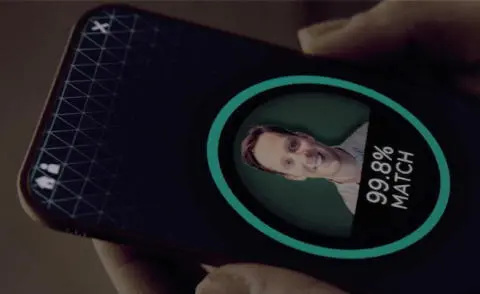
Charlie Brooker: Hang the DJ has the kind of simple, happy ending I resisted writing for ages. I do have these adolescent urges to make really shocking and nasty things happen all the time, but in some ways the slightly more gooey stuff is harder. Because it would have been easy to have a nasty ending instead. In an alternate universe, Amy and Frank have a 99.8% match and meet in the pub… and then, round the back of the pub, she clubs him over the head with a brick, looks down the camera lens and says, “It’s Black Mirror , what did you fucking expect?”
METALHEAD
In Conversation
Charlie Brooker – writer and executive producer
Annabel Jones – executive producer
David Slade – director
Joel Collins – series production designer
Louise Sutton – producer
Russell McLean – VFX producer
Michael Bell – VFX supervisor, DNEG
Susie Coulthard – costume designer
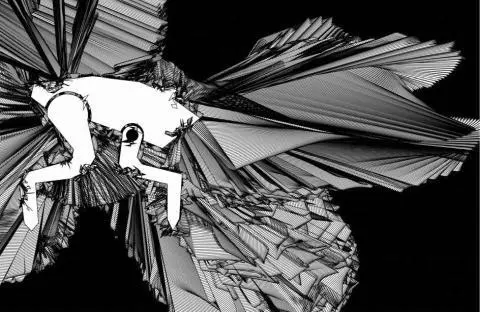
Bella and her friends Clarke and Anthony are hunting for something across an endlessly barren landscape. When they search through an abandoned warehouse, a deadly, resourceful and seemingly unstoppable dog-like automaton starts hunting them instead.
Charlie Brooker: Metalhead felt like the best way for us to do robots. We’d wanted to do a robot episode, and Be Right Back was sort of that. But there are so many robot shows around…
Annabel Jones: …and they’re usually about a robot suddenly acquiring feelings, which I don’t ever understand. So this was a way of doing the exact opposite: a robot that has zero feelings.
Charlie Brooker:Robots usually tend to want only two things. They either want to be free or they want to fall in love. What boring bastards. Although I suppose they do occasionally decide humanity is a virus that must be destroyed.
Annabel Jones:We wanted a relentless chase. The idea was to take the spirit of [Steven Spielberg’s 1971 film] Duel , but make a scarier version with a solar-powered robot predator that would stop at nothing to follow you. That dread was the starting point.
Charlie Brooker:It was Duel , Jaws and [the 2013 film] All Is Lost , which I’d enjoyed. That’s basically Robert Redford on a sinking boat for an hour and a half. Things go wrong on the boat and because he’s the only person on board, there’s not really any dialogue. I think he says “Shit” to himself and that’s about it. You don’t even know his name.
Annabel Jones:We loved that simplicity. We didn’t want Metalhead to be a film about outwitting an AI robot, because that would have felt very different. We wanted this to feel basic and raw. One woman stranded, with this thing pursuing her.
Charlie Brooker:Originally, I did think we needed something else going on. So in the first draft, you discovered the robot was being controlled by a drone operator across the ocean in America. When our main character Bella was in the tree, the operator put the robot on ‘automatic wait’ mode then walked out of the room, and you realised he was in his house. So he’s a freelance drone operator, who goes off to put his kids in the bath. His wife’s pregnant and he helps her with something, then makes himself a drink… this stuff was all written. There was a point where something distracted him, and one of his kids went into the room and started playing with the robot, which is how Bella escaped from the tree. I thought that was a nice moment: a five year old unwittingly starting up a death machine.
Annabel Jones:Except, this sequence took you out of the film. There were nice details, but it wasn’t really giving us anything. And then it felt unexplained. An unnecessary layer.
Charlie Brooker:It also felt like it was saying, “Drone operators, eh? Tsk!”
Annabel Jones:There was something far scarier in the robot having autonomy. There was nothing to stop or control this dog.
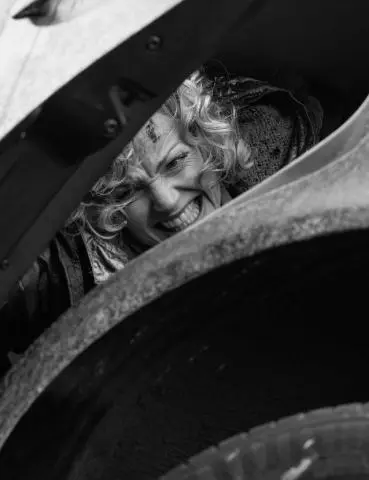
Charlie Brooker:Partly because we’re at a warehouse at the start, it feels like the robot is guarding the goods, but that wasn’t the intention. It doesn’t matter why it’s there, but about 50 per cent of viewers assume it’s a security dog for that building. We never explain this, but it’s meant to be a military robot. A war has happened and these things are all over the place, having killed everything. They could have been unleashed by some other country or whatever.
David Slade (director):Our actors asked a lot of questions about what exactly had happened in the world, but Charlie and I said, “It’s just the end of the world.” We weren’t really interested in that part, even though the script had the essence of a number of post-apocalyptic ideas that I gravitated towards. It reminded me of black-and-white films like [Chris Marker’s 1962 short film] La Jetée and [George A Romero’s 1968 film] Night of the Living Dead , but also The Terminator and [the 1994 Japanese-British sci-fi film] Death Machine . So I knew exactly what Metalhead was, but I also knew it had to be something heavy and serious.
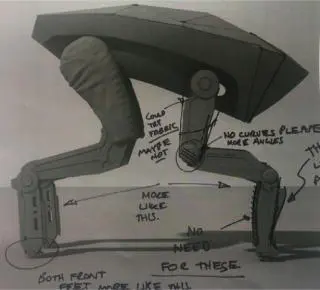
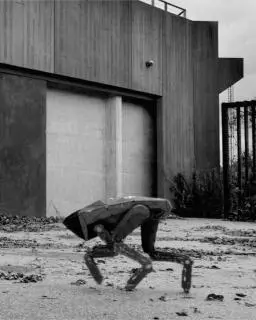
Annabel Jones:We thought very carefully about the design of the dog. We didn’t want it to look too sophisticated or over-designed, because why would it be? It just needed to look functional. A pragmatic killing machine.
Joel Collins (series production designer):I wanted our robot headless. The most terrifying thing is to be hunted by something without a face, because how does it know where you are? But it doesn’t need a head to hunt you.
Читать дальшеИнтервал:
Закладка:
Похожие книги на «Inside Black Mirror»
Представляем Вашему вниманию похожие книги на «Inside Black Mirror» списком для выбора. Мы отобрали схожую по названию и смыслу литературу в надежде предоставить читателям больше вариантов отыскать новые, интересные, ещё непрочитанные произведения.

Обсуждение, отзывы о книге «Inside Black Mirror» и просто собственные мнения читателей. Оставьте ваши комментарии, напишите, что Вы думаете о произведении, его смысле или главных героях. Укажите что конкретно понравилось, а что нет, и почему Вы так считаете.