Charlie Brooker - Inside Black Mirror
Здесь есть возможность читать онлайн «Charlie Brooker - Inside Black Mirror» весь текст электронной книги совершенно бесплатно (целиком полную версию без сокращений). В некоторых случаях можно слушать аудио, скачать через торрент в формате fb2 и присутствует краткое содержание. Город: London, Год выпуска: 2018, ISBN: 2018, Издательство: Ebury Publishing, Жанр: cine, на английском языке. Описание произведения, (предисловие) а так же отзывы посетителей доступны на портале библиотеки ЛибКат.
- Название:Inside Black Mirror
- Автор:
- Издательство:Ebury Publishing
- Жанр:
- Год:2018
- Город:London
- ISBN:978-15-2910-258-1
- Рейтинг книги:3 / 5. Голосов: 1
-
Избранное:Добавить в избранное
- Отзывы:
-
Ваша оценка:
Inside Black Mirror: краткое содержание, описание и аннотация
Предлагаем к чтению аннотацию, описание, краткое содержание или предисловие (зависит от того, что написал сам автор книги «Inside Black Mirror»). Если вы не нашли необходимую информацию о книге — напишите в комментариях, мы постараемся отыскать её.
This first official book logs the entire Black Mirror journey, from its origins in creator Charlie Brooker’s mind to its current status as one of the biggest cult TV shows to emerge from the UK. Alongside a collection of astonishing behind-the-scenes imagery and ephemera, Brooker and producer Annabel Jones will detail the creative genesis, inspiration and thought process behind each film for the first time, while key actors, directors and other creative talents relive their own involvement. cite – The Hollywood Reporter cite – Telegraph
Inside Black Mirror — читать онлайн бесплатно полную книгу (весь текст) целиком
Ниже представлен текст книги, разбитый по страницам. Система сохранения места последней прочитанной страницы, позволяет с удобством читать онлайн бесплатно книгу «Inside Black Mirror», без необходимости каждый раз заново искать на чём Вы остановились. Поставьте закладку, и сможете в любой момент перейти на страницу, на которой закончили чтение.
Интервал:
Закладка:
Joel Collins:When it came to designing the hand-held devices that tell everyone how long their relationships will last, I thought of Legoland. If you pay an extra fee, you can get a device that tells you when you can queue-jump a ride. So the ideology for the device was a bit like that. We needed to clarify to the audience that it was not a mobile phone. I think we called it The Oracle.
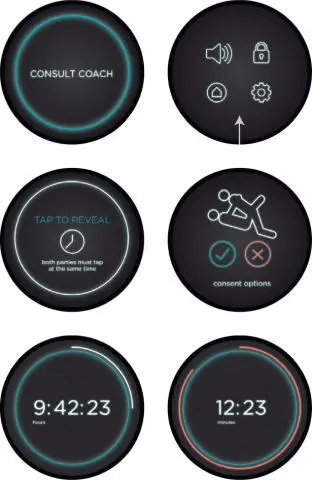
Charlie Brooker:I needed a reason for Amy to rebel against the place – something that tells her something’s not right here. And if this was a simulation, there would be some things that they wouldn’t bother putting a variance in. By this point, we already knew the devices were going to be round, and Amy happened to be standing by some water with a disc-shaped thing in her hand… so it was one of those things where you go, “Oh, this is handy…”
When Amy first skims the stones, and notices that there are four skips, you’re focussing on what’s going on with Frank, so it doesn’t play on your mind too much. But if you did think about it, you’d think they must be clearly in a simulation, because the stone always skims across the water four times.
I’d had the idea of 1,000 simultaneous simulations producing one result for a while, but it remained an orphan until I finally found a home for it here. While we were doing White Christmas , someone asked whether a confession made by a virtual version of someone really would be admissible as evidence. And I said, “Well, okay, it’s a simulation, so what if they could run it 1,000 times simultaneously, then say that Potter confessed in 997 of the cases?”
To rule out the argument that he only confessed because he was sent mad by the isolation of this Arctic outpost, you could have him in a different place in each simulation – the outpost, a spaceship, a cabin in the woods, 1920s Egypt. That spaceship idea, by the way, also then informed USS Callister .
Nick Pitt:Charlie wrote a climactic scene set in a void. This scene came after our heroes had escaped from the world of overweening algorithms, but before they reached the ‘real world’ bar to enjoy The Smiths – whose song Panic , with its ‘Hang the DJ’ lyrics, plays in the pub and informed the title – and each other. On the page, in this void, it was clear that stuff was turning into other stuff… but beyond that it was hard to be sure.

Joel Collins:Nailing the ending down was very difficult, because the visual complexity was vast and Charlie’s script was uber-vague. When you’re coming out of a mobile phone, but you’re not really coming out of a mobile phone because it’s a simulation… what the fuck does that look like?
Charlie Brooker:That script was written in quite a hurry, because of where it fell in the production cycle. I had not quite worked out how the system worked at the end, or what we should see. Frank and Amy climb up a ladder into a void. They look around and see thousands of other ‘thems’, then they gradually break into bits and go up into the sky. No-one, including some of the cast, really knew what was going on. They’d ask me, and I’d go, “Well, er, yeah, it’s because they’re in a simulation and there’s thousands of them…”
Nick Pitt:We looked at the creepy and masterful [2013 art/sci-fi film] Under the Skin , and drew a shiver of inspiration. Our director Tim Van Patten and our director of photography Stuart Bentley gamely harvested a crop we weren’t sure was entirely edible. Actors on black floors against green screen, looking meaningfully into the middle distance, thinking, “I hope this looks better than it feels.”
Georgina Campbell:I had no idea what we were doing! We were in front of a green screen changing our outfits every five seconds and trying to react differently to this unknown ‘void’ over and over again. By the end I was just in a giggling fit, because our reactions were getting more and more broad and ridiculous by the second.
Charlie Brooker:Annabel usually shows our films to her partner Craig, and I’ll often show them to Konnie at home, and then we’ll see if they understand them. They’re our guinea pigs. So Craig and Konnie were really enjoying it… and then it got to the end. It was a rough cut with place-marker effects at that point, but they were like, “I don’t know what happened at all.” We knew this was a real problem, but it was one of those situations where you tinker away until you fix it in post. We had really abstract conversations about what we needed to see as they ascend to this heaven.

Joel Collins:We tried loads of different things, creating versions of it on the computer. Our VFX producer Russell McLean was losing his mind! It was just very complex, trying to make it not look weird. Because it just is weird. We went round in circles, because when anything’s possible it’s really hard to settle on something.
Annabel Jones:People weren’t understanding that what they’d just seen was a simulation, so we realised we needed to see that word on the ring. Then we needed to summarise that Amy and Frank’s ‘rebellion’ had happened 998 times out of 1000 simulations and that this revolt against the system was necessary to successfully count as a match. It probably sounds really obvious but it took forever to achieve that simplicity.
Nick Pitt:Many edits and VFX iterations later, we pulled Charlie and Annabel into a small room with a big TV. Neil Riley, our VFX supervisor, had miraculously found a way of dematerialising people so they didn’t look like they were being broken, squashed or incinerated. He’d achieved a graceful leaving of their body, with elegant and fluid spheres ascending. The characters suddenly looked reassured, fracturing without fear, and happy to swap the ethereal soundtrack of Sigur Rós for the more raucous pleasures of Johnny Marr’s guitar.
‘Ever since we’ve met, this world has been toying with us. It’s trying to keep us apart. It’s a test, I swear it is, and the two of us rebelling together is something to do with passing it’
– AmyCharlie Brooker:That final void became more like Tron [the 1982 Disney film set inside a computer]. The words and figures you see in the sky took an awful lot of working out, after the fact. Then I rewrote quite a lot of Amy’s dialogue in the last scene where she and Frank are in the restaurant, adding lines for her to say about what was going on. Previously in that scene, there’d been more confusing back-and-forth, so it was easier and shorter when Amy basically said, “I know what’s going on, just trust me, let’s go.”
Georgina Campbell:On the day, I just felt really overwhelmed by that restaurant scene. It was really beautifully written and I just felt totally in it. I kept crying and Tim had to tell me to stop, because he didn’t want Amy teary – he wanted her strong and in control! That intensity really bled into the final scene in the pub.
Читать дальшеИнтервал:
Закладка:
Похожие книги на «Inside Black Mirror»
Представляем Вашему вниманию похожие книги на «Inside Black Mirror» списком для выбора. Мы отобрали схожую по названию и смыслу литературу в надежде предоставить читателям больше вариантов отыскать новые, интересные, ещё непрочитанные произведения.



Обсуждение, отзывы о книге «Inside Black Mirror» и просто собственные мнения читателей. Оставьте ваши комментарии, напишите, что Вы думаете о произведении, его смысле или главных героях. Укажите что конкретно понравилось, а что нет, и почему Вы так считаете.