C. Lewis - Miracles
Здесь есть возможность читать онлайн «C. Lewis - Miracles» — ознакомительный отрывок электронной книги совершенно бесплатно, а после прочтения отрывка купить полную версию. В некоторых случаях можно слушать аудио, скачать через торрент в формате fb2 и присутствует краткое содержание. Жанр: unrecognised, на английском языке. Описание произведения, (предисловие) а так же отзывы посетителей доступны на портале библиотеки ЛибКат.
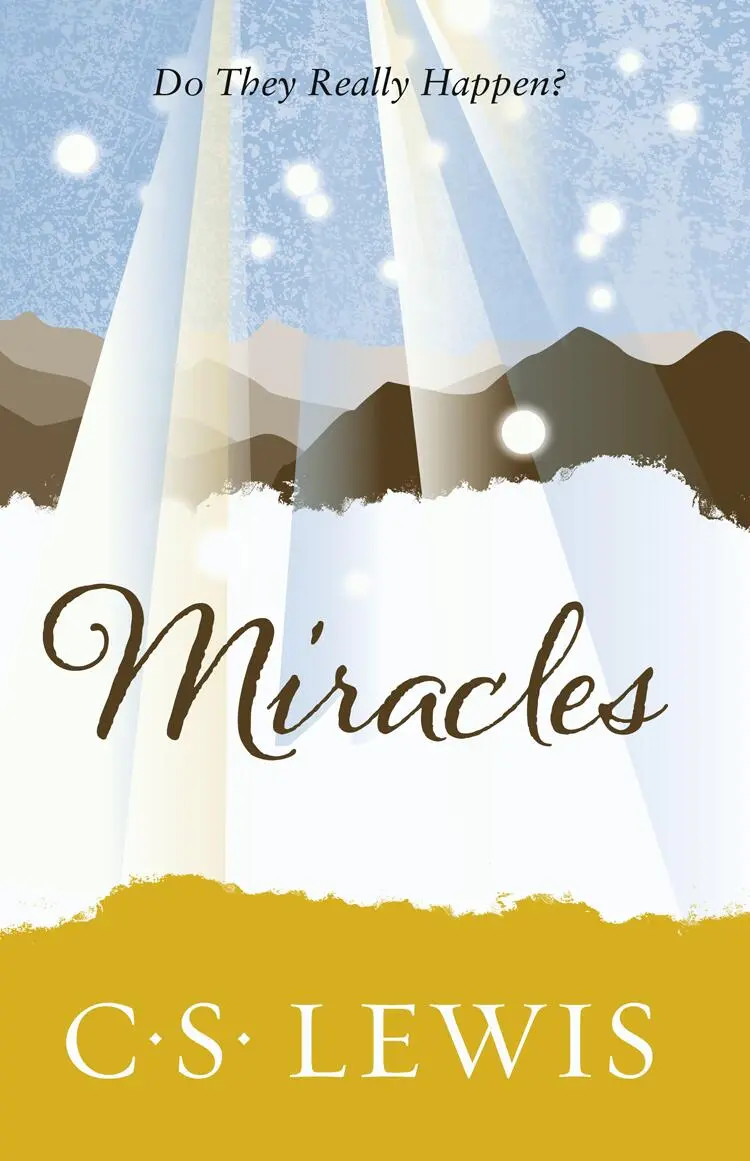
- Название:Miracles
- Автор:
- Жанр:
- Год:неизвестен
- ISBN:нет данных
- Рейтинг книги:5 / 5. Голосов: 1
-
Избранное:Добавить в избранное
- Отзывы:
-
Ваша оценка:
Miracles: краткое содержание, описание и аннотация
Предлагаем к чтению аннотацию, описание, краткое содержание или предисловие (зависит от того, что написал сам автор книги «Miracles»). Если вы не нашли необходимую информацию о книге — напишите в комментариях, мы постараемся отыскать её.
Miracles — читать онлайн ознакомительный отрывок
Ниже представлен текст книги, разбитый по страницам. Система сохранения места последней прочитанной страницы, позволяет с удобством читать онлайн бесплатно книгу «Miracles», без необходимости каждый раз заново искать на чём Вы остановились. Поставьте закладку, и сможете в любой момент перейти на страницу, на которой закончили чтение.
Интервал:
Закладка:
2 2 The Naturalist and the Supernaturalist 3 The Cardinal Difficulty of Naturalism 4 Nature and Supernature 5 A Further Difficulty in Naturalism 6 Answers to Misgivings 7 A Chapter of Red Herrings 8 Miracles and the Laws of Nature 9 A Chapter not Strictly Necessary 10 ‘Horrid Red Things’ 11 Christianity and ‘Religion’ 12 The Propriety of Miracles 13 On Probability 14 The Grand Miracle 15 Miracles of the Old Creation 16 Miracles of the New Creation 17 Epilogue Appendix A: On the Words ‘spirit’ and ‘spiritual’ Appendix B: On ‘special Providences’ About the Author Other Books by C. S. Lewis About the Publisher Конец ознакомительного фрагмента. Текст предоставлен ООО «ЛитРес». Прочитайте эту книгу целиком, купив полную легальную версию на ЛитРес. Безопасно оплатить книгу можно банковской картой Visa, MasterCard, Maestro, со счета мобильного телефона, с платежного терминала, в салоне МТС или Связной, через PayPal, WebMoney, Яндекс.Деньги, QIWI Кошелек, бонусными картами или другим удобным Вам способом.
THE NATURALIST AND THE SUPERNATURALIST 2 The Naturalist and the Supernaturalist 3 The Cardinal Difficulty of Naturalism 4 Nature and Supernature 5 A Further Difficulty in Naturalism 6 Answers to Misgivings 7 A Chapter of Red Herrings 8 Miracles and the Laws of Nature 9 A Chapter not Strictly Necessary 10 ‘Horrid Red Things’ 11 Christianity and ‘Religion’ 12 The Propriety of Miracles 13 On Probability 14 The Grand Miracle 15 Miracles of the Old Creation 16 Miracles of the New Creation 17 Epilogue Appendix A: On the Words ‘spirit’ and ‘spiritual’ Appendix B: On ‘special Providences’ About the Author Other Books by C. S. Lewis About the Publisher Конец ознакомительного фрагмента. Текст предоставлен ООО «ЛитРес». Прочитайте эту книгу целиком, купив полную легальную версию на ЛитРес. Безопасно оплатить книгу можно банковской картой Visa, MasterCard, Maestro, со счета мобильного телефона, с платежного терминала, в салоне МТС или Связной, через PayPal, WebMoney, Яндекс.Деньги, QIWI Кошелек, бонусными картами или другим удобным Вам способом.
‘Gracious!’ exclaimed Mrs Snip, ‘and is there a place where people venture to live above ground?’ ‘I never heard of people living under ground,’ replied Tim, ‘before I came to Giant-Land’. ‘Came to Giant-Land!’ cried Mrs Snip, ‘why, isn’t everywhere Giant-Land?’
ROLAND QUIZZ, Giant-Land, chap xxxii.
I use the word Miracle to mean an interference with Nature by supernatural power. 1Unless there exists, in addition to Nature, something else which we may call the supernatural, there can be no miracles. Some people believe that nothing exists except Nature; I call these people Naturalists. Others think that, besides Nature, there exists something else: I call them Supernaturalists. Our first question, therefore, is whether the Naturalists or the Supernaturalists are right. And here comes our first difficulty.
Before the Naturalist and the Supernaturalist can begin to discuss their difference of opinion, they must surely have an agreed definition both of Nature and of Supernature. But unfortunately it is almost impossible to get such a definition. Just because the Naturalist thinks that nothing but Nature exists, the word Nature means to him merely ‘everything’ or ‘the whole show’ or ‘whatever there is’. And if that is what we mean by Nature, then of course nothing else exists. The real question between him and the Supernaturalist has evaded us. Some philosophers have defined Nature as ‘What we perceive with our five senses’. But this also is unsatisfactory; for we do not perceive our own emotions in that way, and yet they are presumably ‘natural’ events. In order to avoid this deadlock and to discover what the Naturalist and the Supernaturalist are really differing about, we must approach our problem in a more roundabout way.
I begin by considering the following sentences (1) Are those his natural teeth or a set? (2) The dog in his natural state is covered with fleas. (3) I love to get away from tilled lands and metalled roads and be alone with Nature. (4) Do be natural. Why are you so affected? (5) It may have been wrong to kiss her but it was very natural.
A common thread of meaning in all these usages can easily be discovered. The natural teeth are those which grow in the mouth; we do not have to design them, make them, or fit them. The dog’s natural state is the one he will be in if no one takes soap and water and prevents it. The countryside where Nature reigns supreme is the one where soil, weather and vegetation produce their results unhelped and unimpeded by man. Natural behaviour is the behaviour which people would exhibit if they were not at pains to alter it. The natural kiss is the kiss which will be given if moral or prudential considerations do not intervene. In all the examples Nature means what happens ‘of itself’ or ‘of its own accord’: what you do not need to labour for; what you will get if you take no measures to stop it. The Greek word for Nature (Physis) is connected with the Greek verb for ‘to grow’; Latin Natura, with the verb ‘to be born’. The Natural is what springs up, or comes forth, or arrives, or goes on, of its own accord: the given, what is there already: the spontaneous, the unintended, the unsolicited.
What the Naturalist believes is that the ultimate Fact, the thing you can’t go behind, is a vast process in space and time which is going on of its own accord. Inside that total system every particular event (such as your sitting reading this book) happens because some other event has happened; in the long run, because the Total Event is happening. Each particular thing (such as this page) is what it is because other things are what they are; and so, eventually, because the whole system is what it is. All the things and events are so completely interlocked that no one of them can claim the slightest independence from ‘the whole show’. None of them exists ‘on its own’ or ‘goes on of its own accord’ except in the sense that is exhibits, at some particular place and time, that general ‘existence on its own’ or ‘behaviour of its own accord’ which belongs to ‘Nature’ (the great total interlocked event) as a whole. Thus no thoroughgoing Naturalist believes in free will: for free will would mean that human beings have the power of independent action, the power of doing something more or other than what was involved by the total series of events. And any such separate power of originating events is what the Naturalist denies. Spontaneity, originality, action ‘on its own’, is a privilege reserved for ‘the whole show’, which he calls Nature.
The Supernaturalist agrees with the Naturalist that there must be something which exists in its own right; some basic Fact whose existence it would be nonsensical to try to explain because this Fact is itself the ground or starting-point of all explanations. But he does not identify this Fact with ‘the whole show’. He thinks that things fall into two classes. In the first class we find either things or (more probably) One Thing which is basic and original, which exists on its own. In the second we find things which are merely derivative from that One Thing. The one basic Thing has caused all the other things to be. It exists on its own; they exist because it exists. They will cease to exist if it ever ceases to maintain them in existence; they will be altered if it ever alters them.
Читать дальшеИнтервал:
Закладка:
Похожие книги на «Miracles»
Представляем Вашему вниманию похожие книги на «Miracles» списком для выбора. Мы отобрали схожую по названию и смыслу литературу в надежде предоставить читателям больше вариантов отыскать новые, интересные, ещё непрочитанные произведения.



Обсуждение, отзывы о книге «Miracles» и просто собственные мнения читателей. Оставьте ваши комментарии, напишите, что Вы думаете о произведении, его смысле или главных героях. Укажите что конкретно понравилось, а что нет, и почему Вы так считаете.