C. Lewis - Miracles
Здесь есть возможность читать онлайн «C. Lewis - Miracles» — ознакомительный отрывок электронной книги совершенно бесплатно, а после прочтения отрывка купить полную версию. В некоторых случаях можно слушать аудио, скачать через торрент в формате fb2 и присутствует краткое содержание. Жанр: unrecognised, на английском языке. Описание произведения, (предисловие) а так же отзывы посетителей доступны на портале библиотеки ЛибКат.
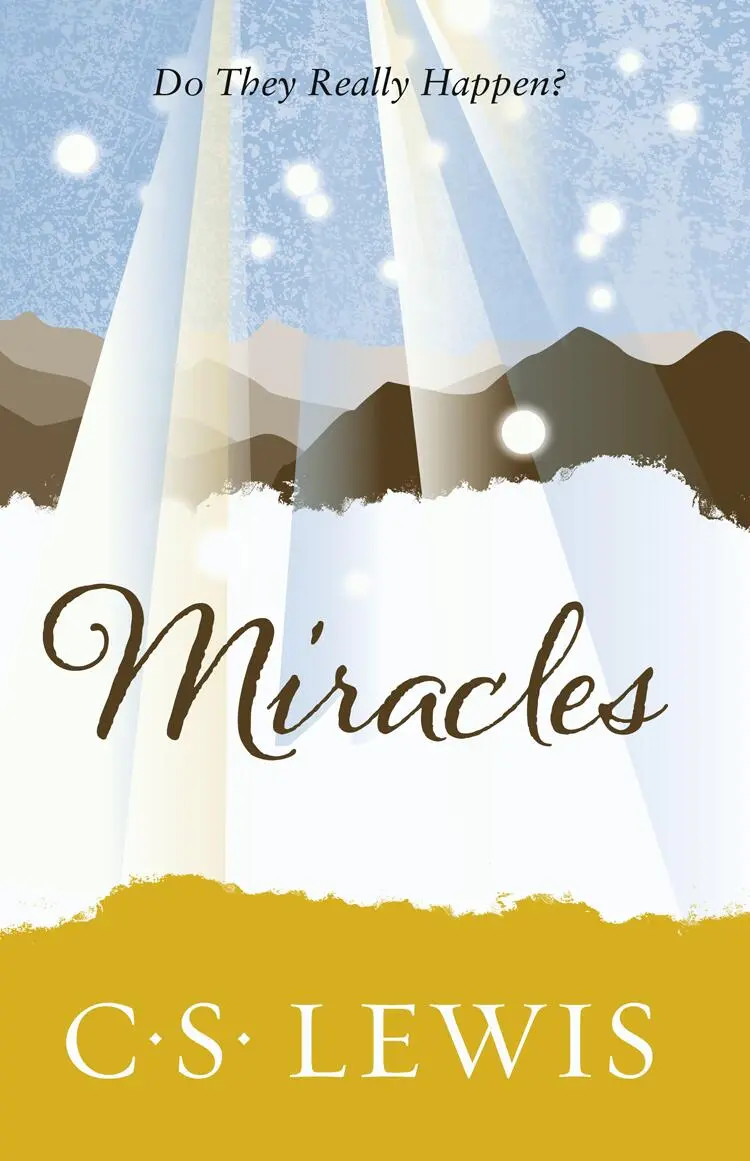
- Название:Miracles
- Автор:
- Жанр:
- Год:неизвестен
- ISBN:нет данных
- Рейтинг книги:5 / 5. Голосов: 1
-
Избранное:Добавить в избранное
- Отзывы:
-
Ваша оценка:
Miracles: краткое содержание, описание и аннотация
Предлагаем к чтению аннотацию, описание, краткое содержание или предисловие (зависит от того, что написал сам автор книги «Miracles»). Если вы не нашли необходимую информацию о книге — напишите в комментариях, мы постараемся отыскать её.
Miracles — читать онлайн ознакомительный отрывок
Ниже представлен текст книги, разбитый по страницам. Система сохранения места последней прочитанной страницы, позволяет с удобством читать онлайн бесплатно книгу «Miracles», без необходимости каждый раз заново искать на чём Вы остановились. Поставьте закладку, и сможете в любой момент перейти на страницу, на которой закончили чтение.
Интервал:
Закладка:
This account may (or may not) explain why men do in fact make moral judgements. It does not explain how they could be right in making them. It excludes, indeed, the very possibility of their being right. For when men say ‘I ought’ they certainly think they are saying something, and something true, about the nature of the proposed action, and not merely about their own feelings. But if Naturalism is true, ‘I ought’ is the same sort of statement as ‘I itch’ or ‘I’m going to be sick.’ In real life when a man says ‘I ought’ we may reply, ‘Yes. You’re right. That is what you ought to do,’ or else, ‘No. I think you’re mistaken.’ But in a world of Naturalists (if Naturalists really remembered their philosophy out of school) the only sensible reply would be, ‘Oh, are you?’ All moral judgements would be statements about the speaker’s feelings, mistaken by him for statements about something else (the real moral quality of actions) which does not exist.
Such a doctrine, I have admitted, is not flatly self-contradictory. The Naturalist can, if he chooses, brazen it out. He can say, ‘Yes. I quite agree that there is no such thing as wrong and right. I admit that no moral judgement can be “true” or “correct” and, consequently, that no one system of morality can be better or worse than another. All ideas of good and evil are hallucinations—shadows cast on the outer world by the impulses which we have been conditioned to feel.’ Indeed many Naturalists are delighted to say this.
But then they must stick to it; and fortunately (though inconsistently) most real Naturalists do not. A moment after they have admitted that good and evil are illusions, you will find them exhorting us to work for posterity, to educate, revolutionise, liquidate, live and die for the good of the human race. A Naturalist like Mr H. G. Wells spent a long life doing so with passionate eloquence and zeal. But surely this is very odd? Just as all the books about spiral nebulae, atoms and cave men would really have led you to suppose that the Naturalists claimed to be able to know something, so all the books in which Naturalists tell us what we ought to do would really make you believe that they thought some ideas of good (their own, for example) to be somehow preferable to others. For they write with indignation like men proclaiming what is good in itself and denouncing what is evil in itself, and not at all like men recording that they personally like mild beer but some people prefer bitter. Yet if the ‘oughts’ of Mr Wells and, say, Franco are both equally the impulses which Nature has conditioned each to have and both tell us nothing about any objective right or wrong, whence is all the fervour? Do they remember while they are writing thus that when they tell us we ‘ought to make a better world’ the words ‘ought’ and ‘better’ must, on their own showing, refer to an irrationally conditioned impulse which cannot be true or false any more than a vomit or a yawn?
My idea is that sometimes they do forget. That is their glory. Holding a philosophy which excludes humanity, they yet remain human. At the sight of injustice they throw all their Naturalism to the winds and speak like men and like men of genius. They know far better than they think they know. But at other times, I suspect they are trusting in a supposed way of escape from their difficulty.
It works—or seems to work—like this. They say to themselves, ‘Ah, yes. Morality’—or ‘bourgeois morality’ or ‘conventional morality’ or ‘traditional morality’ or some such addition—‘Morality is an illusion. But we have found out what modes of behaviour will in fact preserve the human race alive. That is the behaviour we are pressing you to adopt. Pray don’t mistake us for moralists. We are under an entirely new management’ … just as if this would help. It would help only if we grant, firstly, that life is better than death and, secondly, that we ought to care for the lives of our descendants as much as, or more than, for our own. And both these are moral judgements which have, like all others, been explained away by Naturalism. Of course, having been conditioned by Nature in a certain way, we do feel thus about life and about posterity. But the Naturalists have cured us of mistaking these feelings for insights into what we once called ‘real value’. Now that I know that my impulse to serve posterity is just the same kind of thing as my fondness for cheese—now that its transcendental pretensions have been exposed for a sham—do you think I shall pay much attention to it? When it happens to be strong (and it has grown considerably weaker since you explained to me its real nature) I suppose I shall obey it. When it is weak, I shall put my money into cheese. There can be no reason for trying to whip up and encourage the one impulse rather than the other. Not now that I know what they both are. The Naturalists must not destroy all my reverence for conscience on Monday and expect to find me still venerating it on Tuesday.
There is no escape along those lines. If we are to continue to make moral judgements (and whatever we say we shall in fact continue) then we must believe that the conscience of man is not a product of Nature. It can be valid only if it is an offshoot of some absolute moral wisdom, a moral wisdom which exists absolutely ‘on its own’ and is not a product of non-moral, non-rational Nature. As the argument of the last chapter led us to acknowledge a supernatural source for rational thought, so the argument of this leads us to acknowledge a supernatural source for our ideas of good and evil. In other words, we now know something more about God. If you hold that moral judgement is a different thing from Reasoning you will express this new knowledge by saying, ‘We now know that God has at least one other attribute than rationality.’ If, like me, you hold that moral judgement is a kind of Reasoning, then you will say, ‘We now know more about the Divine Reason.’
And with this we are almost ready to begin our main argument. But before doing so it will be well to pause for the consideration of some misgivings or misunderstandings which may have already arisen.
6 6 Answers to Misgivings 7 A Chapter of Red Herrings 8 Miracles and the Laws of Nature 9 A Chapter not Strictly Necessary 10 ‘Horrid Red Things’ 11 Christianity and ‘Religion’ 12 The Propriety of Miracles 13 On Probability 14 The Grand Miracle 15 Miracles of the Old Creation 16 Miracles of the New Creation 17 Epilogue Appendix A: On the Words ‘spirit’ and ‘spiritual’ Appendix B: On ‘special Providences’ About the Author Other Books by C. S. Lewis About the Publisher Конец ознакомительного фрагмента. Текст предоставлен ООО «ЛитРес». Прочитайте эту книгу целиком, купив полную легальную версию на ЛитРес. Безопасно оплатить книгу можно банковской картой Visa, MasterCard, Maestro, со счета мобильного телефона, с платежного терминала, в салоне МТС или Связной, через PayPal, WebMoney, Яндекс.Деньги, QIWI Кошелек, бонусными картами или другим удобным Вам способом.
ANSWERS TO MISGIVINGS 6 Answers to Misgivings 7 A Chapter of Red Herrings 8 Miracles and the Laws of Nature 9 A Chapter not Strictly Necessary 10 ‘Horrid Red Things’ 11 Christianity and ‘Religion’ 12 The Propriety of Miracles 13 On Probability 14 The Grand Miracle 15 Miracles of the Old Creation 16 Miracles of the New Creation 17 Epilogue Appendix A: On the Words ‘spirit’ and ‘spiritual’ Appendix B: On ‘special Providences’ About the Author Other Books by C. S. Lewis About the Publisher Конец ознакомительного фрагмента. Текст предоставлен ООО «ЛитРес». Прочитайте эту книгу целиком, купив полную легальную версию на ЛитРес. Безопасно оплатить книгу можно банковской картой Visa, MasterCard, Maestro, со счета мобильного телефона, с платежного терминала, в салоне МТС или Связной, через PayPal, WebMoney, Яндекс.Деньги, QIWI Кошелек, бонусными картами или другим удобным Вам способом.
Интервал:
Закладка:
Похожие книги на «Miracles»
Представляем Вашему вниманию похожие книги на «Miracles» списком для выбора. Мы отобрали схожую по названию и смыслу литературу в надежде предоставить читателям больше вариантов отыскать новые, интересные, ещё непрочитанные произведения.

Обсуждение, отзывы о книге «Miracles» и просто собственные мнения читателей. Оставьте ваши комментарии, напишите, что Вы думаете о произведении, его смысле или главных героях. Укажите что конкретно понравилось, а что нет, и почему Вы так считаете.